No products in the cart.

DRAG

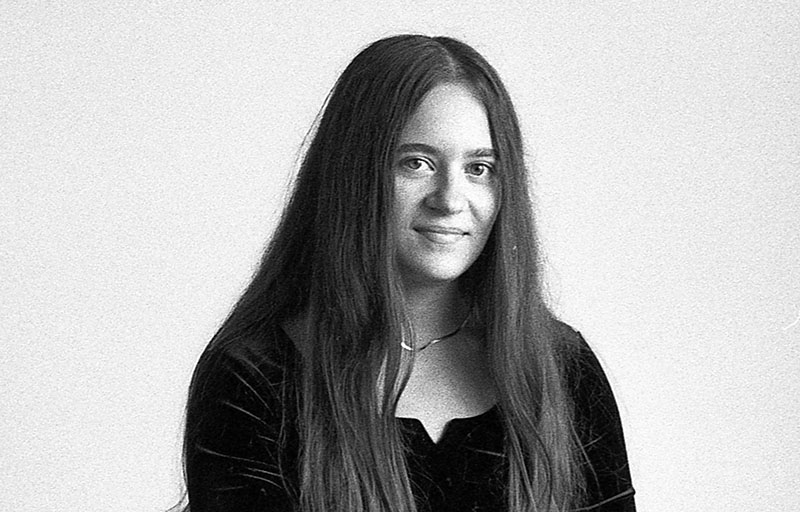
Danutė Vaitekūnaitė

Danutė Vaitekūnaitė (b. 1998, Šiauliai, Lithuania) is a visual artist and writer based in the UAE. Her practice combines painting, sculpture, found elements, and writing into storytelling performances and installations. Focusing on the mundane and the overlooked, she explores relationships between objects, people, and spaces through juxtaposition, play, and intuitive engagement with spaces.

Vaitekūnaitė is a recipient of the Tarek Al Ghoussein Fellowship (2024) and holds a bachelor’s degree in Fine Arts from La Haute École des Arts du Rhin in Strasbourg, France. Her work has been featured in exhibitions in the UAE and France, including Pressure Points at NYUAD Project Space (2024), Je ne reviens jamais sur mes pas at La Chaufferie, Strasbourg (2022), Je file, bon courage, à bientôt at Syndicat Potentiel, Strasbourg (2021). She co-wrote and performed in When Music Meets Poetry, a spoken word and music performance at NYUAD Arts Center (2024) and was a resident artist in Narrations du futur at Maillon Theatre, Strasbourg (2021). Her research on rural museology practices in Lithuania and Bosnia and Herzegovina received a study grant from New York University Abu Dhabi. She has worked in cultural diplomacy, theatre and film production in France, Tunisia, and the UAE.
Object arrives like a bride
2025

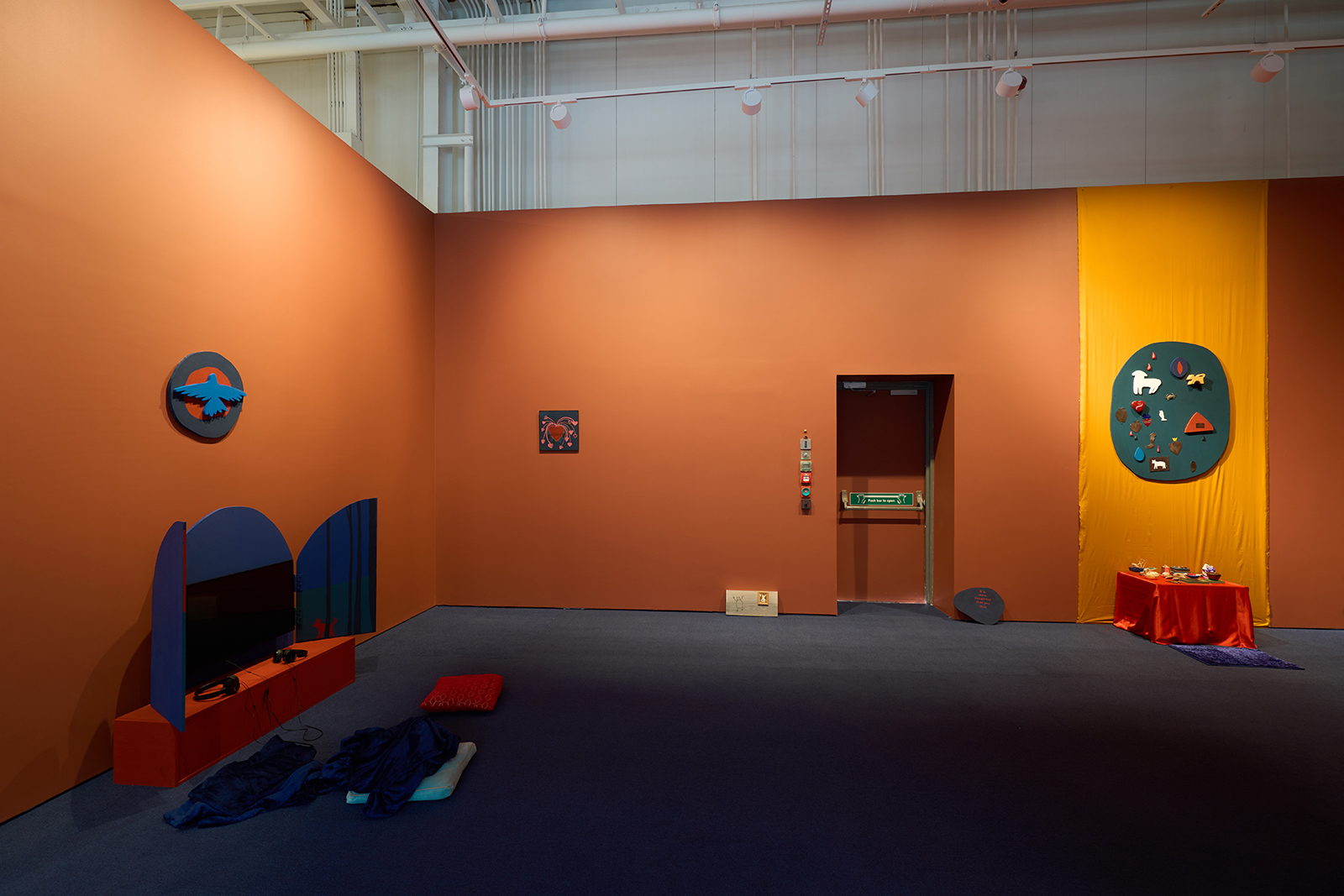
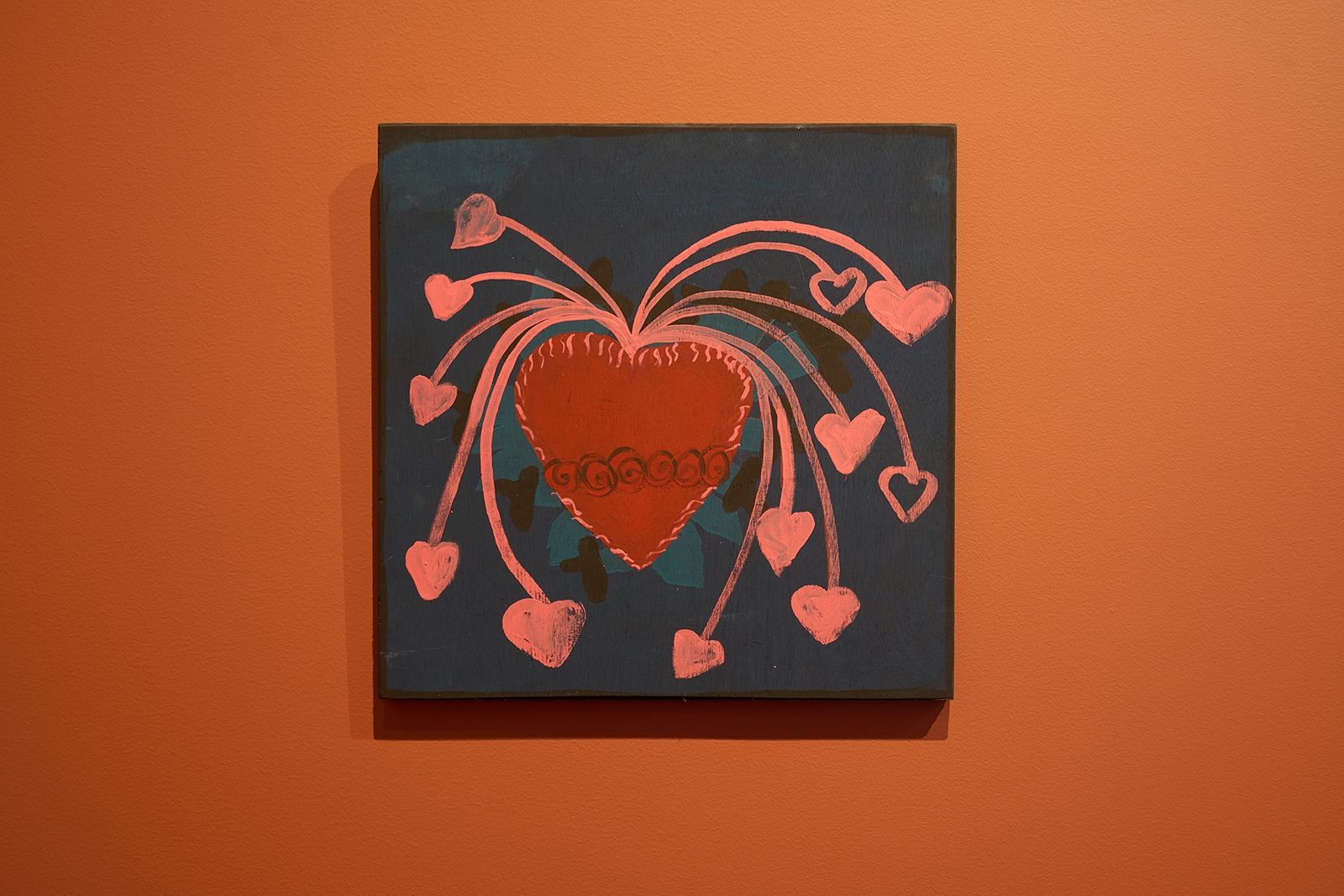
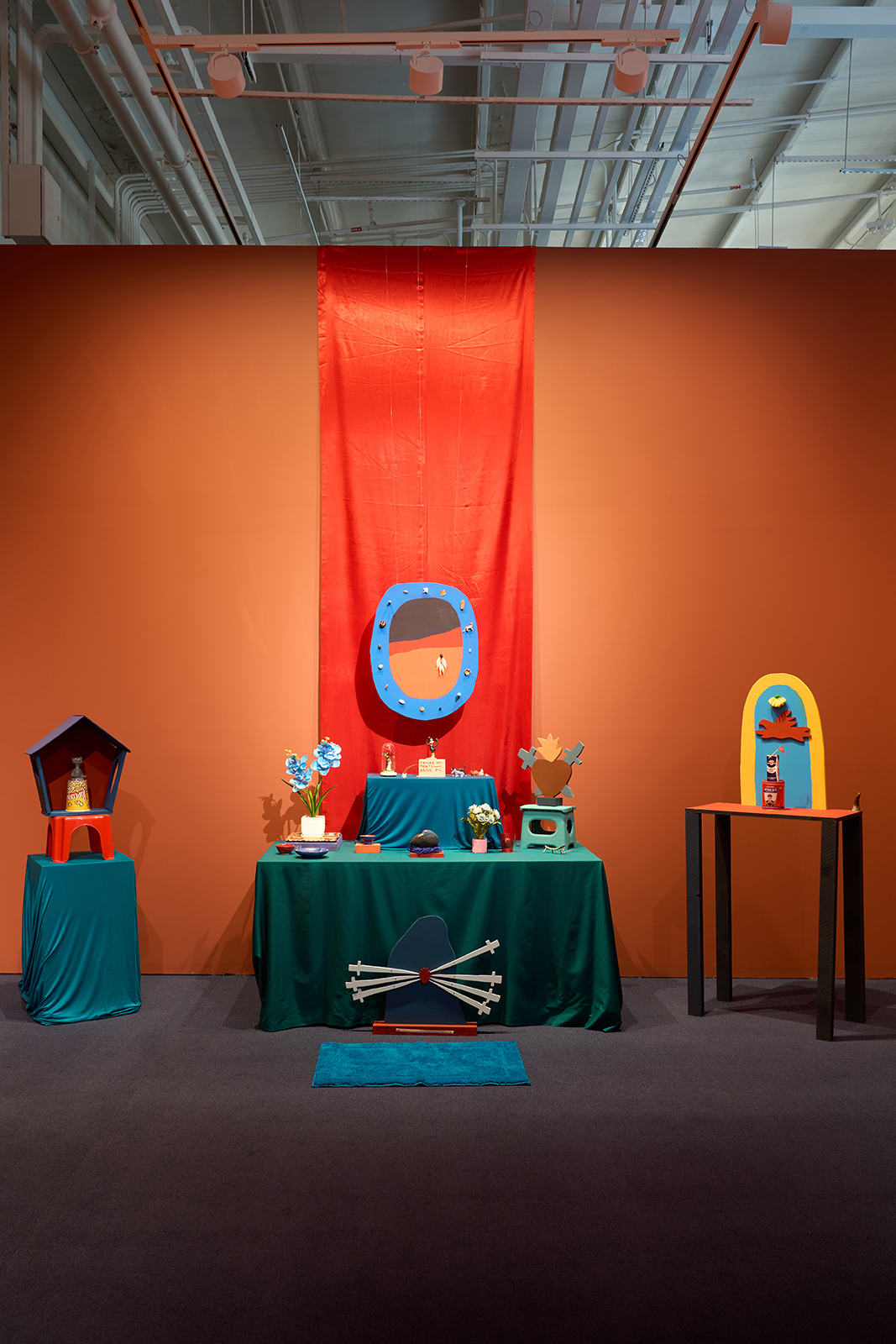
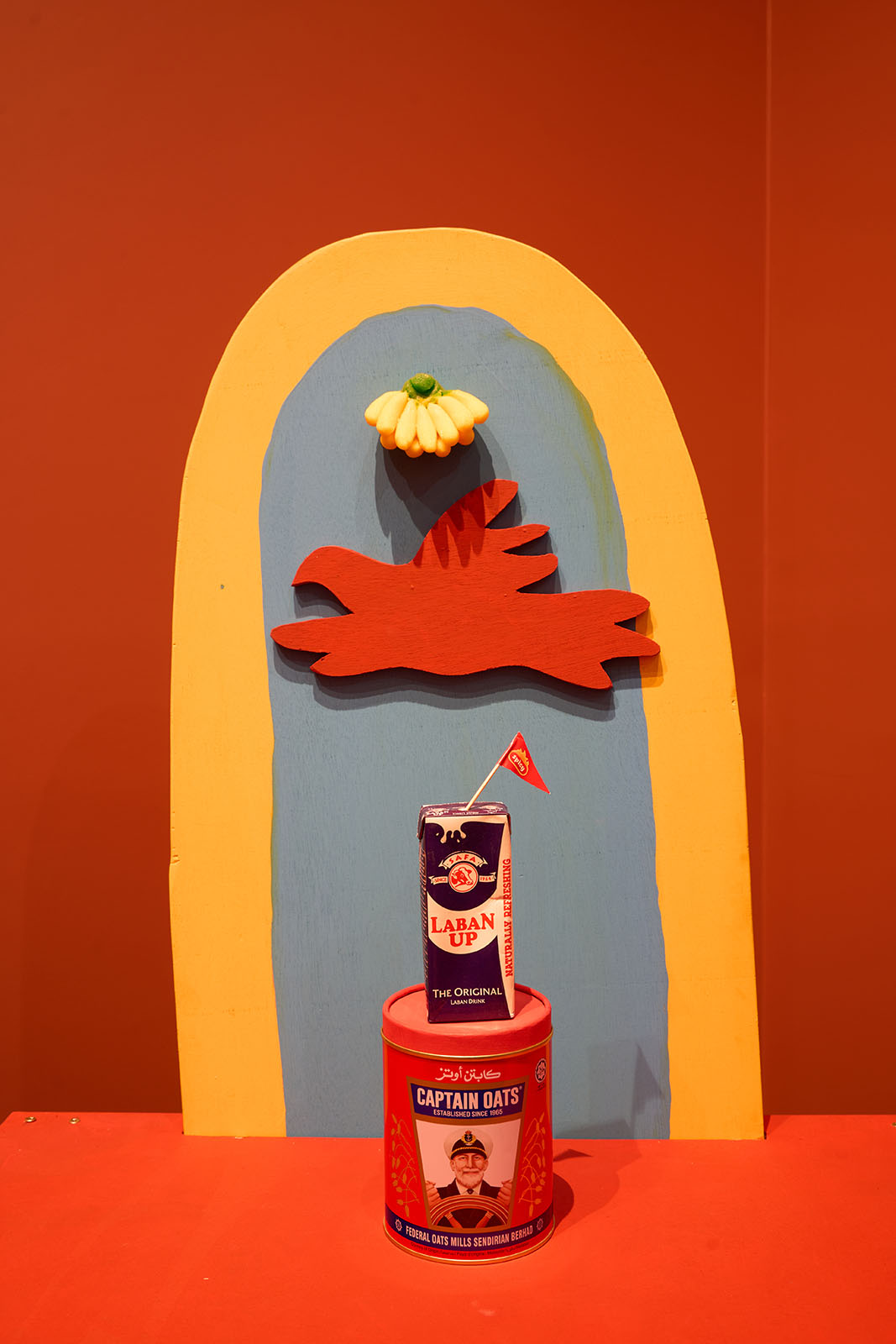
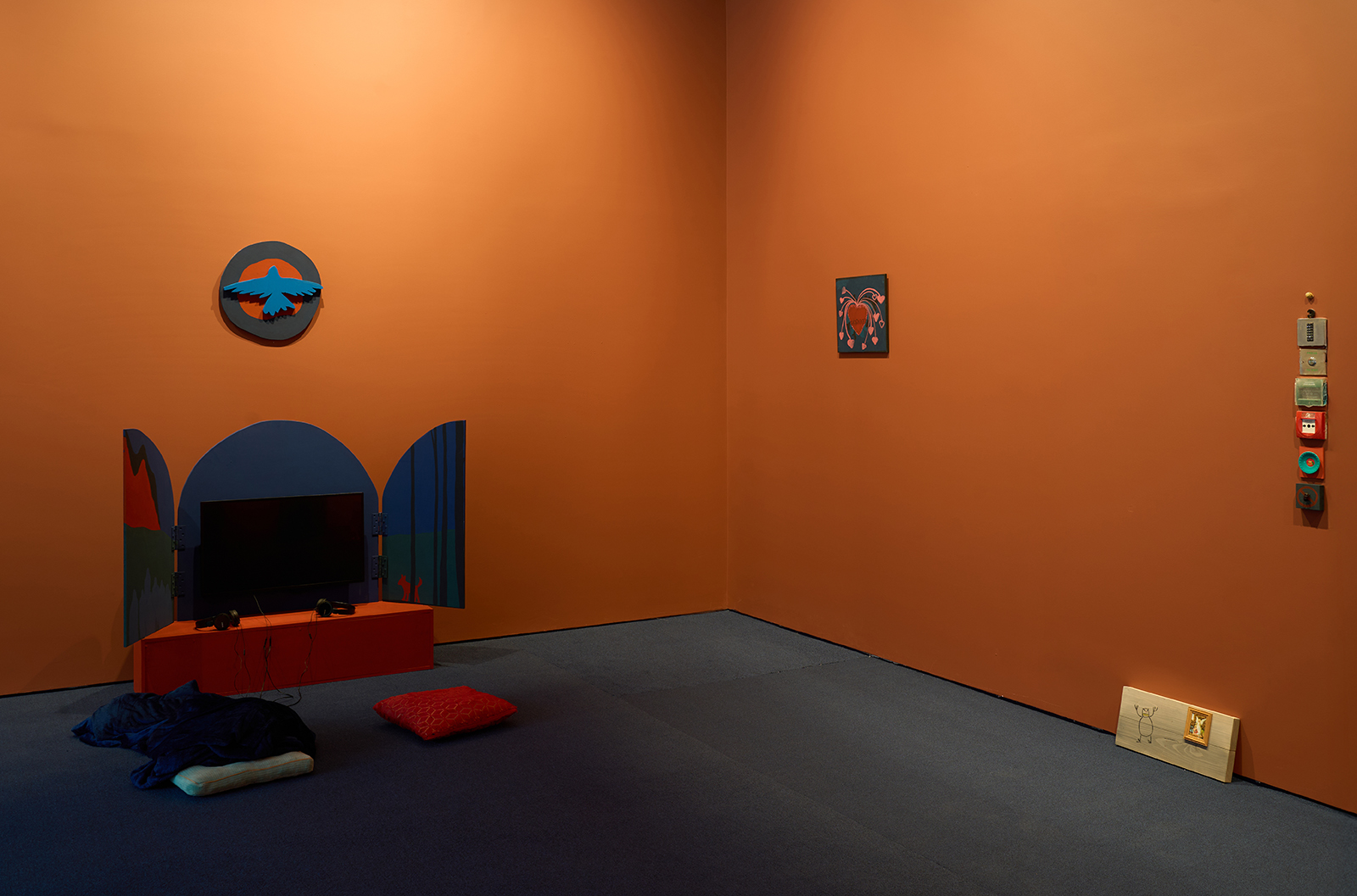
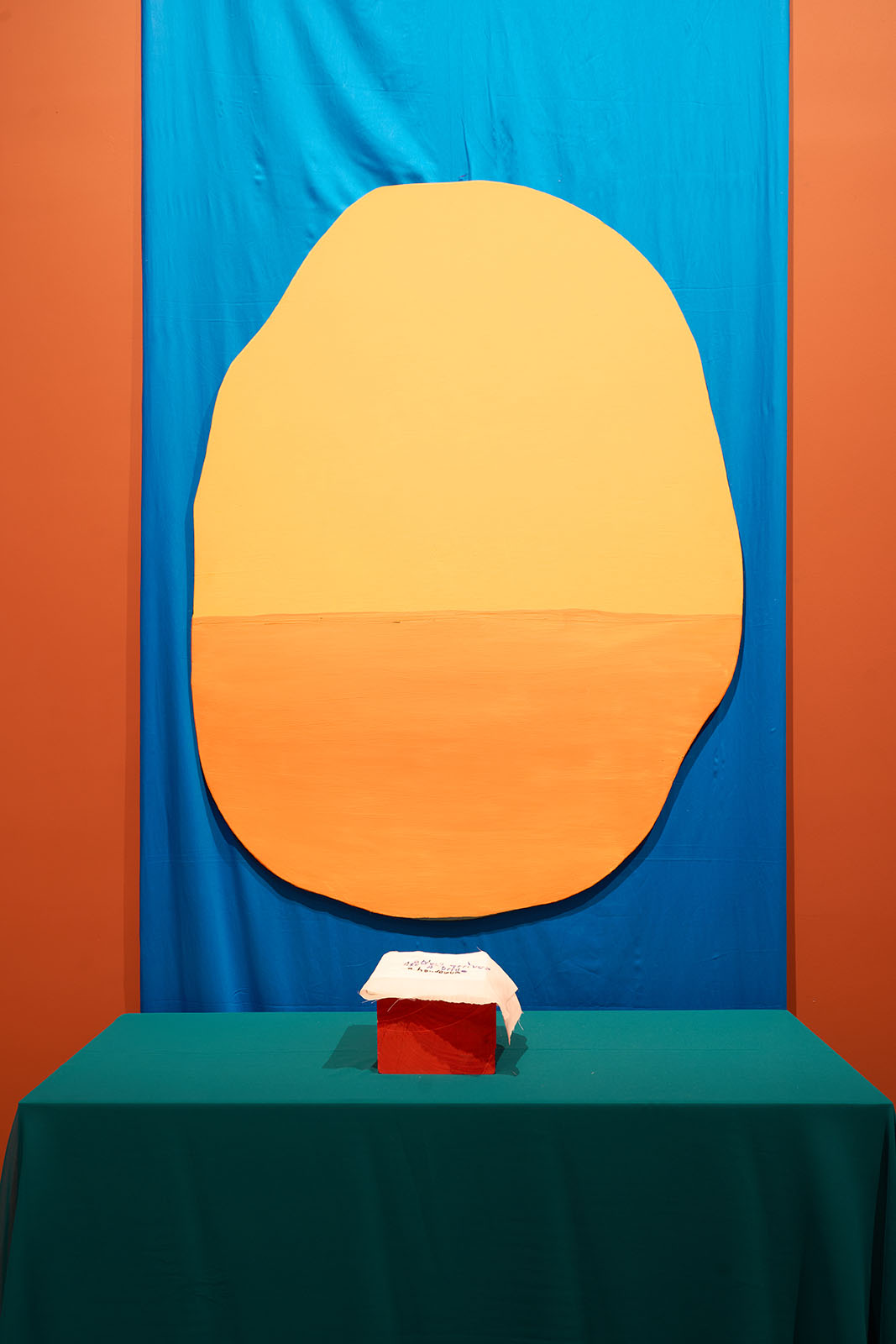
The installation object arrives like a bride is a walk-in landscape inhabited by objects, images, artifacts. Using mass-produced, handmade, found or gifted materials, the piece interrogates the fictions and power dynamics we inherit, exploring how objects exert agency—as relics and collaborators—in rituals and collective mythologies. Objects here act as markers of memory and connection, tying humans to non-human worlds.

The installation is a stage set, a museum of visions, a book chapter, an altar: utilitarian items, crafted artifacts, and painted forms create a third space where the familiar feels strange. Bright, child-like aesthetics lure viewers in–but stepping closer reveals a more sinister, dissonant world, where innocence meets spirituality, and personal narratives meet broader themes of consumerism and tenderness.

A video component, embedded in the installation, features excerpts from a TV show, where a televangelist guru—a presenter lost in her own mythos–activates objects through narration. The eerie nostalgia of the video mirrors the installation’s themes: how lack and desire are weaponized, how objects become relics of mythologies.

The accompanying publication-manifesto is a handbook offering keys to the installation. A participatory object, the book merges research and praxis through instructions, rituals, and traps. Like a portable museum, it invites tactile and sensorial engagement.

The work draws from folk art, animist spirituality, televised spectacle, and materialist critique, reframing the ordinary and the overlooked as active participants. It is created from what is available—reused, collected, fed by the world. It is a silent protest, a manifesto against the destructive gaze that transforms others into objects of satisfaction.

NEWSLETTER