Lion Attacking a Dromedary
2024
Copper plate etching on a museum sign podium
Lion Attacking a Dromedary is a 19th-century taxidermy diorama by Édouard Verreaux, previously housed at the Carnegie Museum of Natural History in Pittsburgh, Pennsylvania. It depicts a fictional scene of a Barbary lion attacking a native North African man on a dromedary, utilizing romantic Orientalist tropes to construct a violent encounter. Its racializing depiction is grounded not in material realities but in the European imagination of ‘exotic’ lands, North Africans, and their animals. The display became highly controversial in the 21st-century when it was revealed that not only was the Barbary lion taxidermied, so were parts of the human mannequin.
The Verreaux brothers were known to have previously stolen from Indigenous people’s graves for their taxidermy. For years before the permanent closure of the
display in 2023, the Carnegie Museum added a disclaimer to the display, with signage acknowledging its unethical and racialized origins.
This diorama and its accompanying sign raise questions of postmortem ethics, colonial legacies and ethical tensions that infuse contemporary museum spaces, highlighting the affinities of existence and suffering between the brown body and the barbary lion under colonial rule.
tooth and a folly
2024
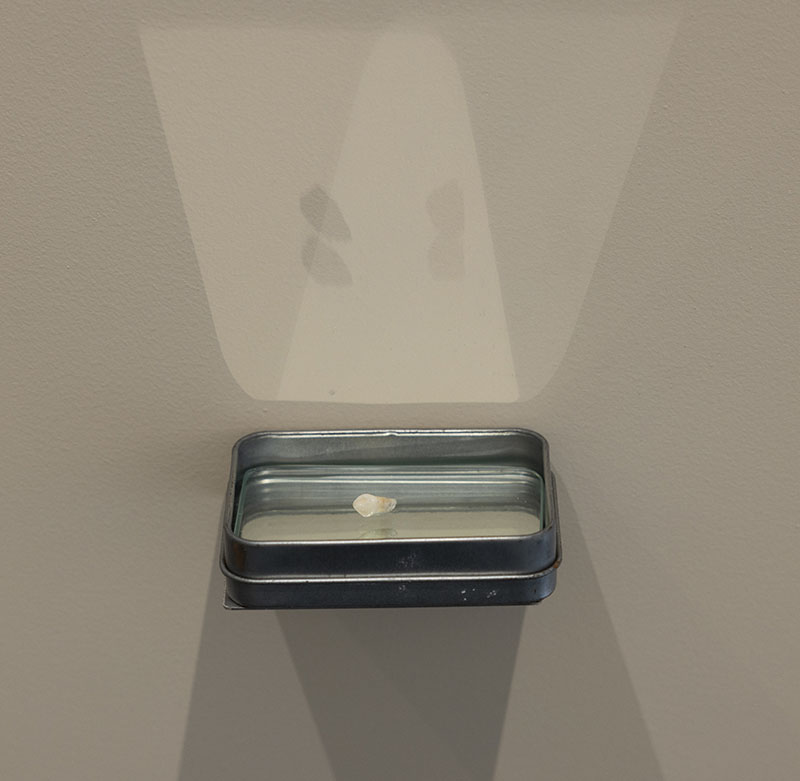
Tooth from father’s collection of artist’s baby teeth in metal container,
glass, mirror
Alla Abdunabi repurposes the original tin can in which her father stored all her baby teeth, modifying it with laser-cut glass and a mirrored bottom positioned to capture a tooth’s reflection. Here, a father’s ordinary act of preservation becomes an unconscious process of icon-making—extracting fragments of the body and safeguarding them as symbols of his child. The real tooth and its reflection gesture toward the boundary between material and representation, questioning what is ultimately preserved in our icons: the object itself or merely the memory of one’s objective desire?
Delacroix Foreign Bodies
2024
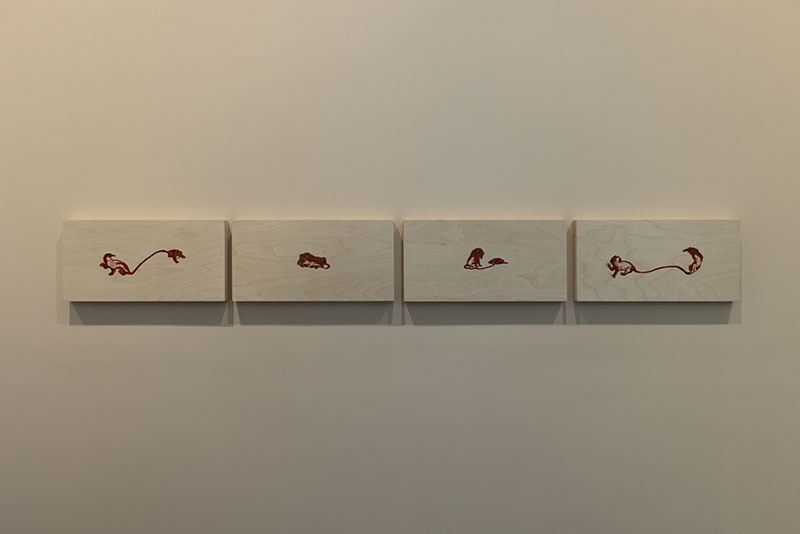
Oil paint on wood panel
French Romanticist Eugène Delacroix often painted hunting scenes influenced by the exotic and Orientalist tropes of his time. A journey to Morocco in 1832 notably shaped his practice. In its aftermath, he produced a series of paintings featuring Barbary lions and native figures in battle. However, he likely never witnessed these scenes or wild animals in their natural habitats. Instead, he fabricated them from imagination, marking a turning point in Western depictions of the Barbary lion. Delacroix’s Foreign Bodies extracts the lions from their aggressive postures in his original paintings, inducing a stillness he had denied them. Here, the creatures become hosts for sleeping bodies. In an act of decolonial imagination, they possess an interior depth, suggesting that their original exteriors were mere performances—reflections of the European subject’s hunger. Through concepts of stillness and sleep, we uncover a tenderness Delacroix was unwilling to contemplate.
taste sweet, taste bitter
2024
Large-scale concrete relief sculptures
In colonized Libya, ancient Roman ruins fueled a restoration industry eager to protect and connect the present to a ‘golden’ European past. In taste sweet, taste bitter, the slow, controlled, and strenuous act of piping concrete—akin to icing a cake— both mimics and mocks the perceived sweetness of delicate forms, contemplating beauty as aggression. While the work appears to reconstruct an image of the ruins, it deliberately falls short, presenting imperfect repetitions—icons that expose the labor concealed within their forms. The decorative facades challenge the allure of monumental beauty, prompting a deeper contemplation of the aesthetic object—one marked by the countless lives intertwined with it.
Love that Reassembles Fragments
2024
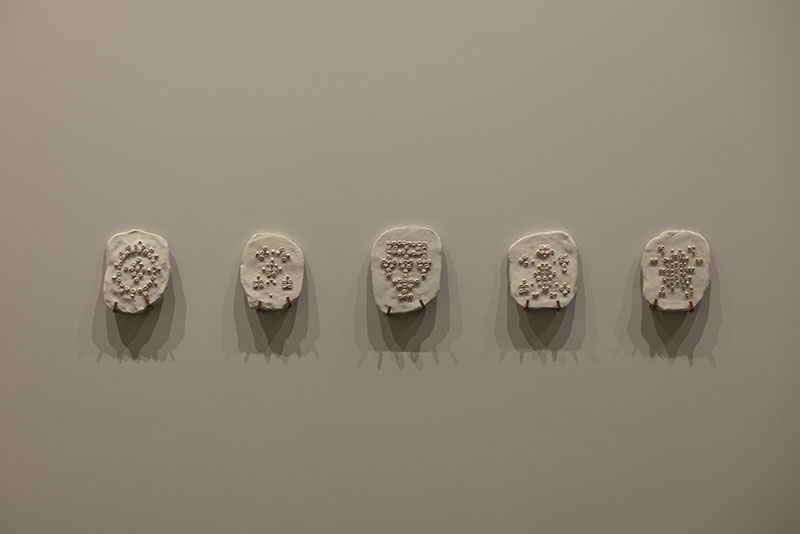
Ceramic sculptures made using casts of the artist’s baby teeth on a
slab, metal armature
At its core, Love that Reassembles Fragments invites reflection on the human body, its remnants, and its fragments through a father’s act of preserving his child’s baby teeth. Beyond personal narrative, the work also references a historical context: aggression manifesting through caretaking. This parallel extends to colonial archaeology in Libya, where preservation often served as an instrument of political expedience. By focusing on teeth, the work explores the subtle aggression embedded in a private familial gesture when it enters an economy of extraction, selective attention, and public display.
Yet, I endured for you
2024
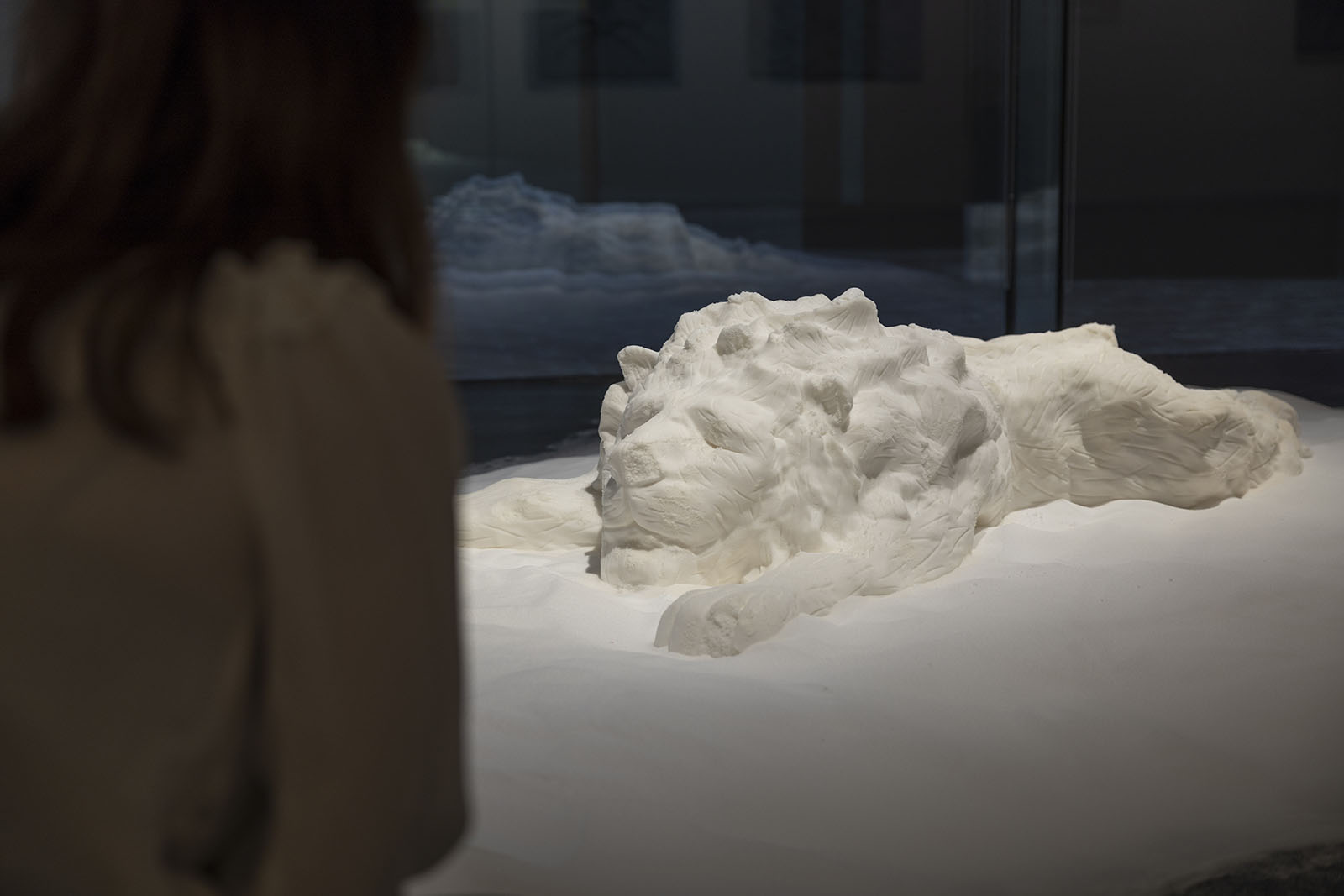
Installation; salt sculptures installed on beds of salt
The Barbary lions of North Africa were casualties of grand ecological destruction, inseparable from a broader process of resource extraction and imperial settlement. By 1950, they were extinct in the wild. Around the same time, excavations at the Tower of London uncovered the bones of two lions displaced to England under Richard I’s rule. These captives helped shape the Barbary iconography of English heraldry, becoming symbols of vigilant guardianship even as their undernourished bodies withered away.
Indeed, sick reversals are commonplace in this story. The symbolic lion was forged by the very powers that sought its physical destruction. Yet, I Endured for You finds the Barbary lions encrusted, lying on beds of salt. In this rendering, the creatures are suspended between fame and extinction. Finally freed from their enforced role as imperial guardians, they seem to reclaim life in stillness. No longer hunted or celebrated, these raw, unfinished bodies assert their right to exist—and to let be.