No products in the cart.

DRAG

Shiraz Bayjoo

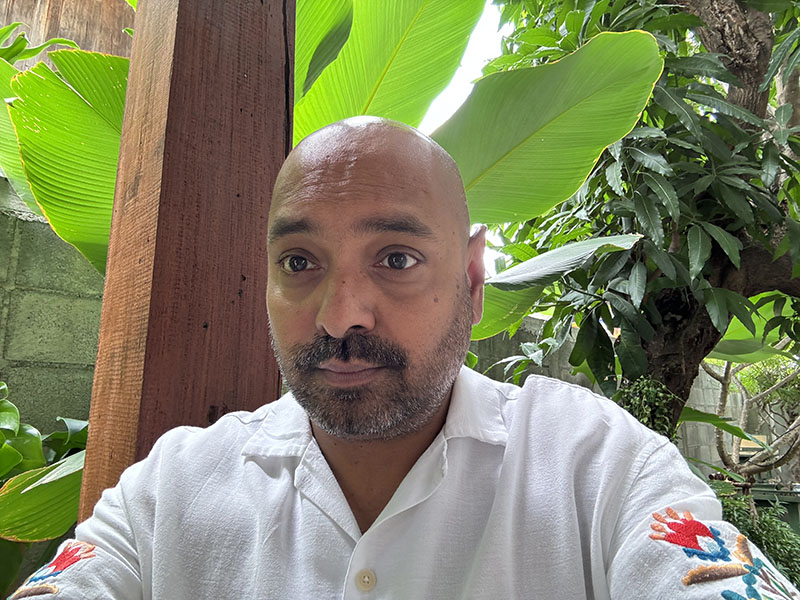
Shiraz Bayjoo (b. 1979, Mauritius) is a contemporary multi-disciplinary artist whose work spans film, painting, photography, performance, and installation. His research-based practice delves into personal and public archives, focusing on cultural memory and postcolonial nationhood in ways that challenge dominant cultural narratives.

Bayjoo has exhibited at the Gropius Bau in Berlin, Deichtorhallen in Hamburg, Kunsthal Charlottenborg in Copenhagen, Institute of International Visual Arts in London, and New Art Exchange in Nottingham. His work has also been featured at the 5th Dhaka Art Summit, the 14th Sharjah Biennale, the 13th Dakar Biennale, and the 21st Sydney Biennale.

Bayjoo is a recipient of the Gasworks Fellowship and the Arts Council of England and was commissioned for Art Night London in 2019. He was an artist-in-residence at the Delfina Foundation in 2021 and was awarded the Smithsonian Artist Research Fellowship. Bayjoo presented a solo exhibition at the Diaspora Pavilion for the 59th Venice Biennale in 2022 and at the 15th Sharjah Biennial in 2023.
An attunement to the oceanic horizon as a passageway of human, botanical, and material culture and economic histories lies at the core of Shiraz Bayjoo’s artistic world. He weaves together a range of creative genres in his projects from photography and film to textile, painting, installation, and collaborative performance. His research-led approach is archipelagic as he focuses on island geographies such as Mauritius, Madagascar, and the United Kingdom—and their imprints within public and familial archives.
​
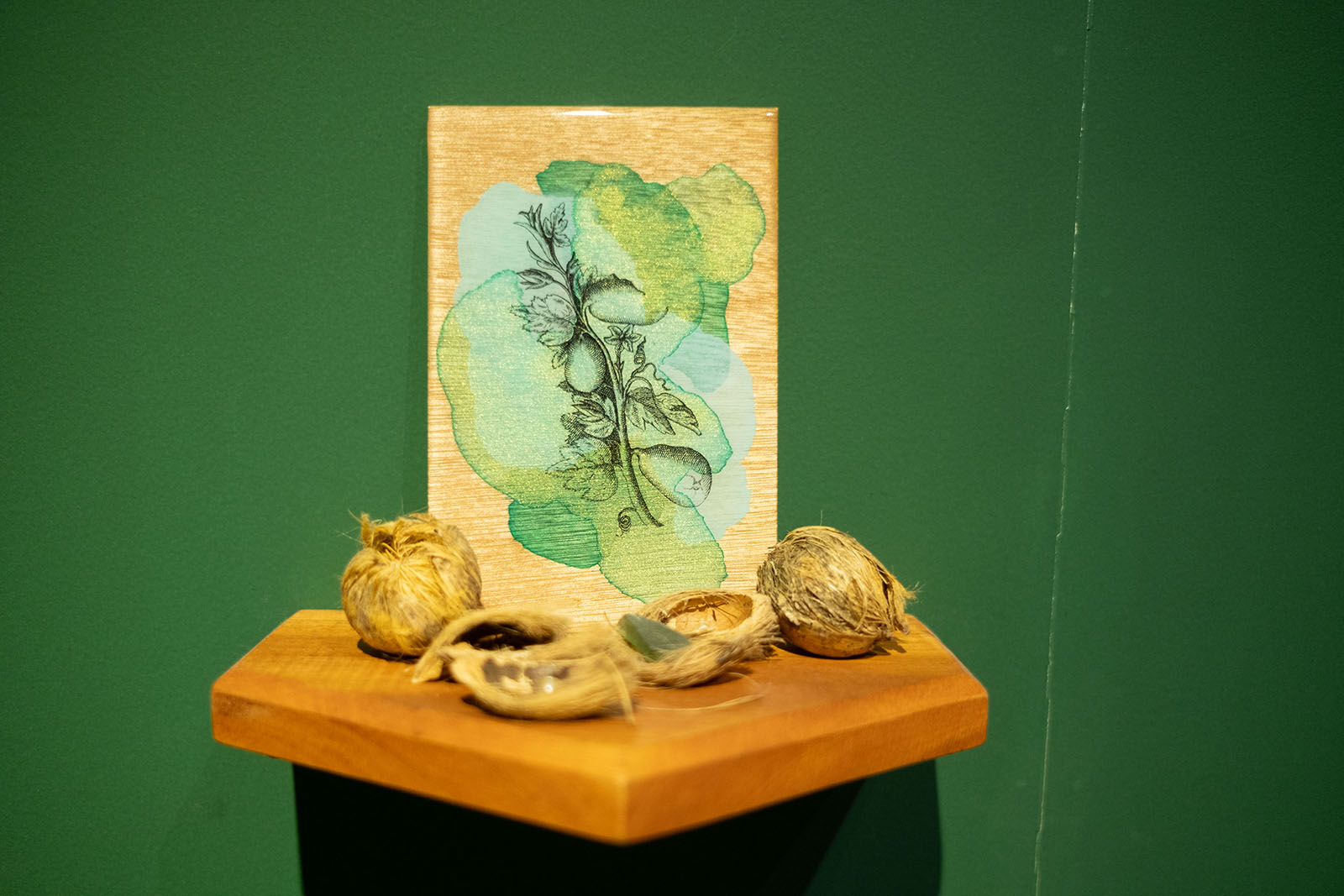
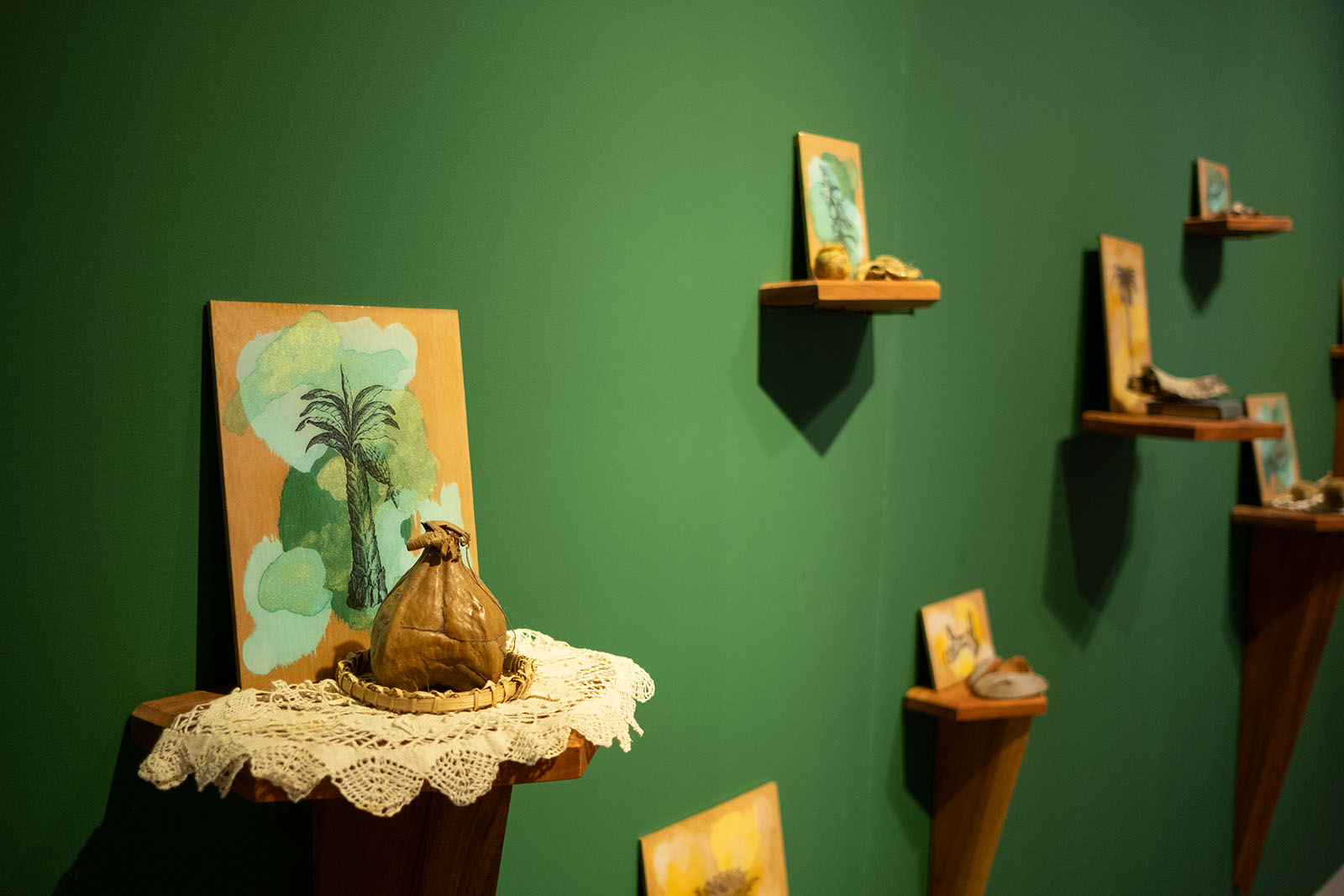
Seeds, pods and shells sit on wooden altars as memorials of survival and resistance in maroon settlements. Shiraz Bayjoo notes, “The work Botanical Shrines (2023), focuses on the network of botanical gardens, which evolved with every diminishing moment of the indigenous forests they extracted from. In Mauritius its forest interior rapidly vanished in the 17th-18th century, making way for the plantation, and reducing the sanctuary afforded to the maroons who escaped them. We, the descendants of the communities, through the misery of slavery and indenture, displaced to these tranquil islands, shared it all too briefly with the true indigenous of our islands, the Dodo, the Blue Parrot, the Red Wren, the Hibiscus Fragilis, or the Lonely Palm who bore the first irrevocable erasure.”
​
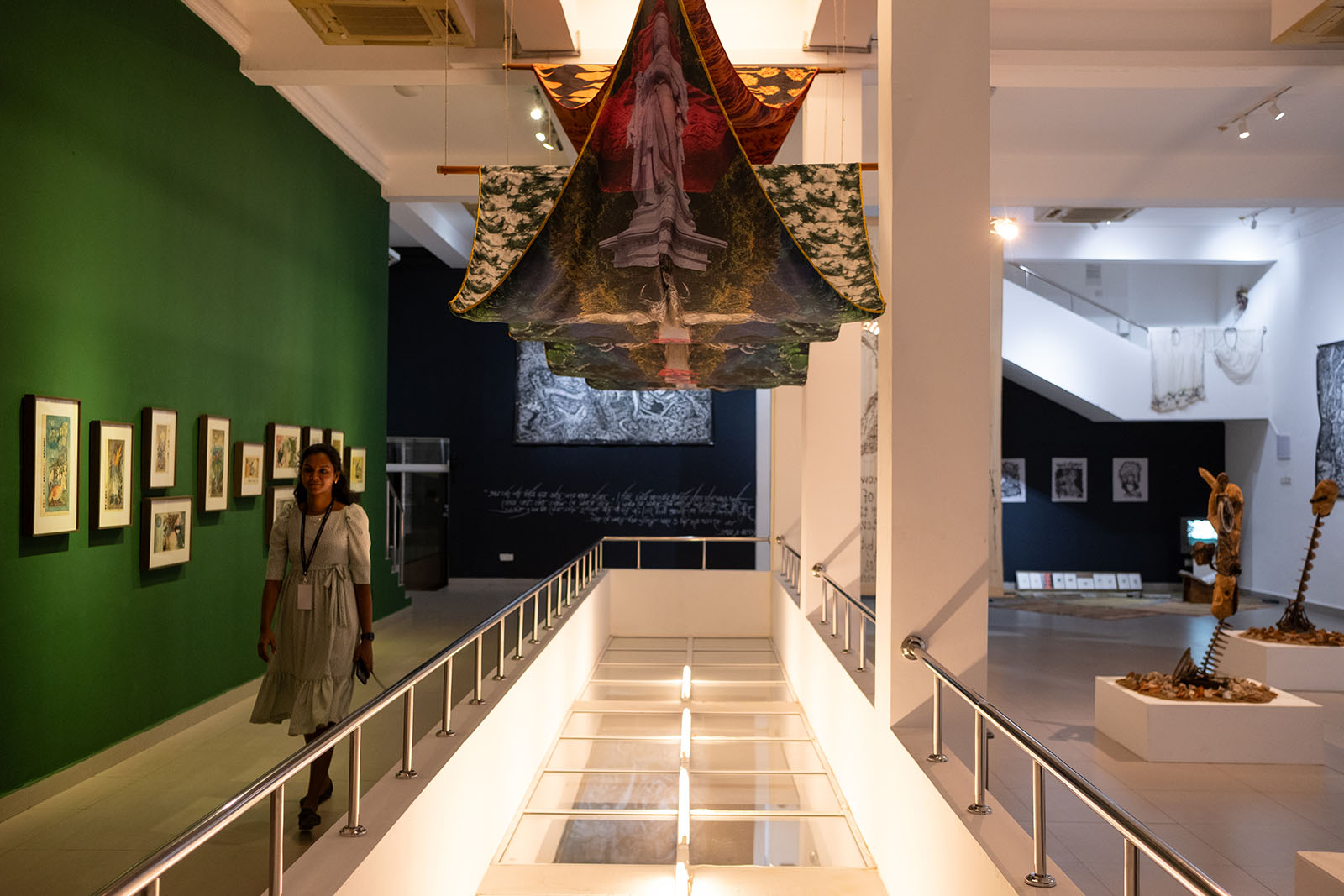
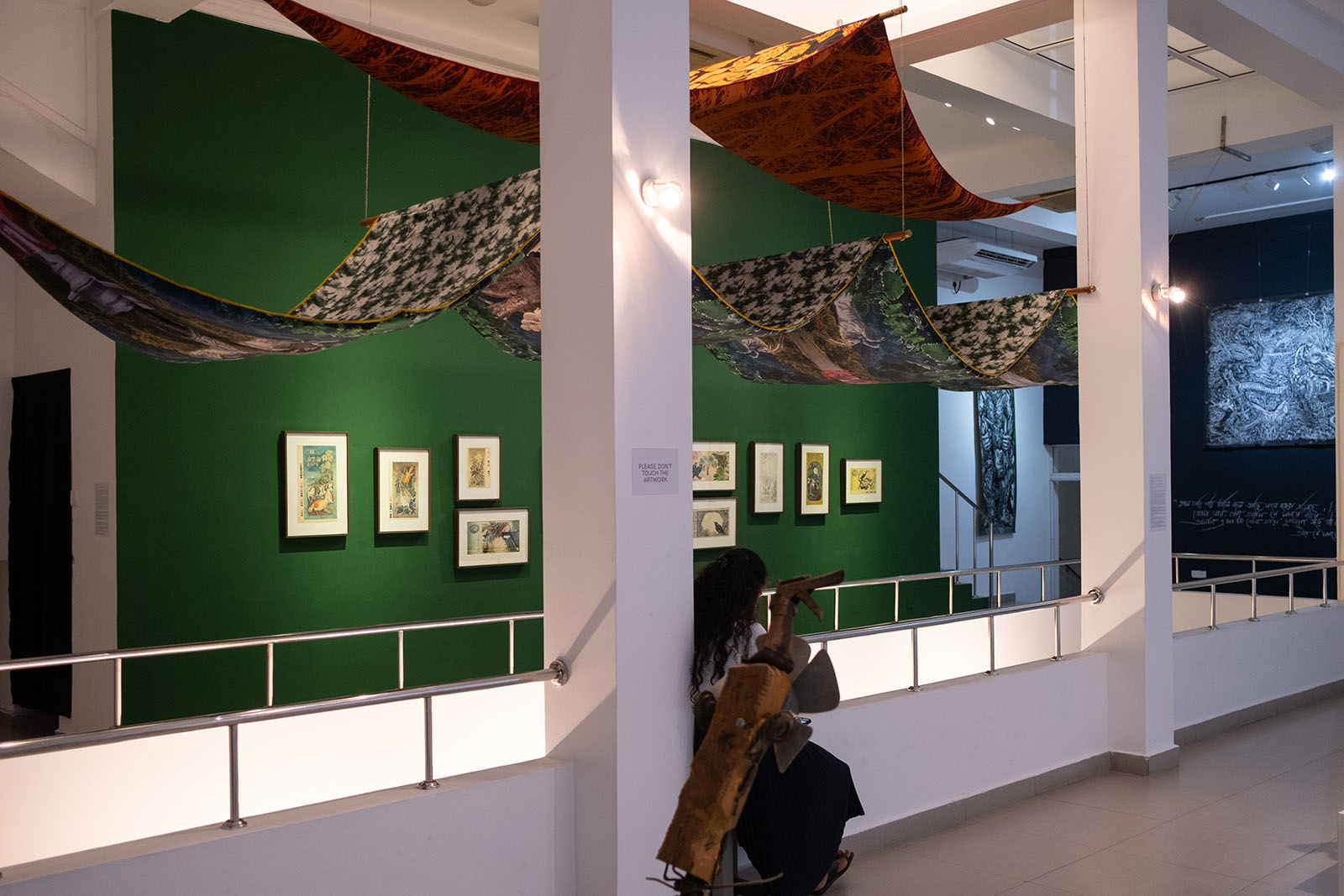
Adjacently, the fabric-based installation Lateb Larenn (The Queens Table) uses Kanga cloths as ‘coda’ gesturing to Indian Ocean transfers and placements, as a pattern culture in motion layered with archival photography from opposing shorelines of the western Indian Ocean, following the monsoon from South Africa to Mauritius, to Madagascar, and up the Swahili coast.

NEWSLETTER