Project Title: How To Love Many in Many Ways
Premise:
Engy Mohsen’s work was born in a moment of realization that the outbreak of the pandemic has pushed people everywhere to devise alternative ways and coping mechanisms to deal with isolation, as they navigate virtual spaces every day. Rooms, meetings, hangouts, groups, stories, emails, voice notes. There was a moment in time when we would link up with others online just to pass time. Then, it became a necessity, to make up for the longing for forms of human connection.
Engy’s initial proposal departed from conventional forms of speed dating and attempted to turn that into a virtual participatory performance. She wanted to invite participants to sign up by email to take part in an online conversation with an anonymous partner. After that, they were supposed to be randomly paired through video chat with another participant for a very brief encounter. The goal was to allow both of them to share a conversation, to vent, and reflect together on the situation they find themselves in while also protecting their privacy. The desired effect of this space was meant to be almost therapeutic for each of the participants, to briefly connect with another person, and let out what they think, and how they feel in this state of being collectively confined, and how to face this fear of the uncertainty created by something beyond all our control.
Engy’s early works explored ways of how conversations that happen through casual encounters can create a physical space or an image of one. Then, she started to explore the capacity of space to let conversations unravel. Her body of work, therefore, continues to foster an interest in the tension between spaces and conversations, and how one can lead to the creation and shaping of the other.
Process:
The project departed from the desire of finding different ways to connect with one another while experiencing on-again-and-off-again home confinement and the varying degrees of lockdown on a global scale. This started to manifest as a structure that looks deeper into the notions of mutual care and ‘love’, in the expanded sense of the term. Through ongoing conversations, the idea was to find ways in which individuals coming from different practices can invent their own categories to the topic of love and care, and apply them through a medium of their choice; a game or an exercise. Yet, the way the project was structured and developed is thought of as an open-source, print-at-home, easily accessible set of tools.
Outcome:
Engy’s project changed thoroughly during the course of the Homebound Residency and afterwards. She explored the feeling and state of love from an expanded perspective, which resulted in playful exercises through which we can communicate love, and exchange thoughts and experiences.
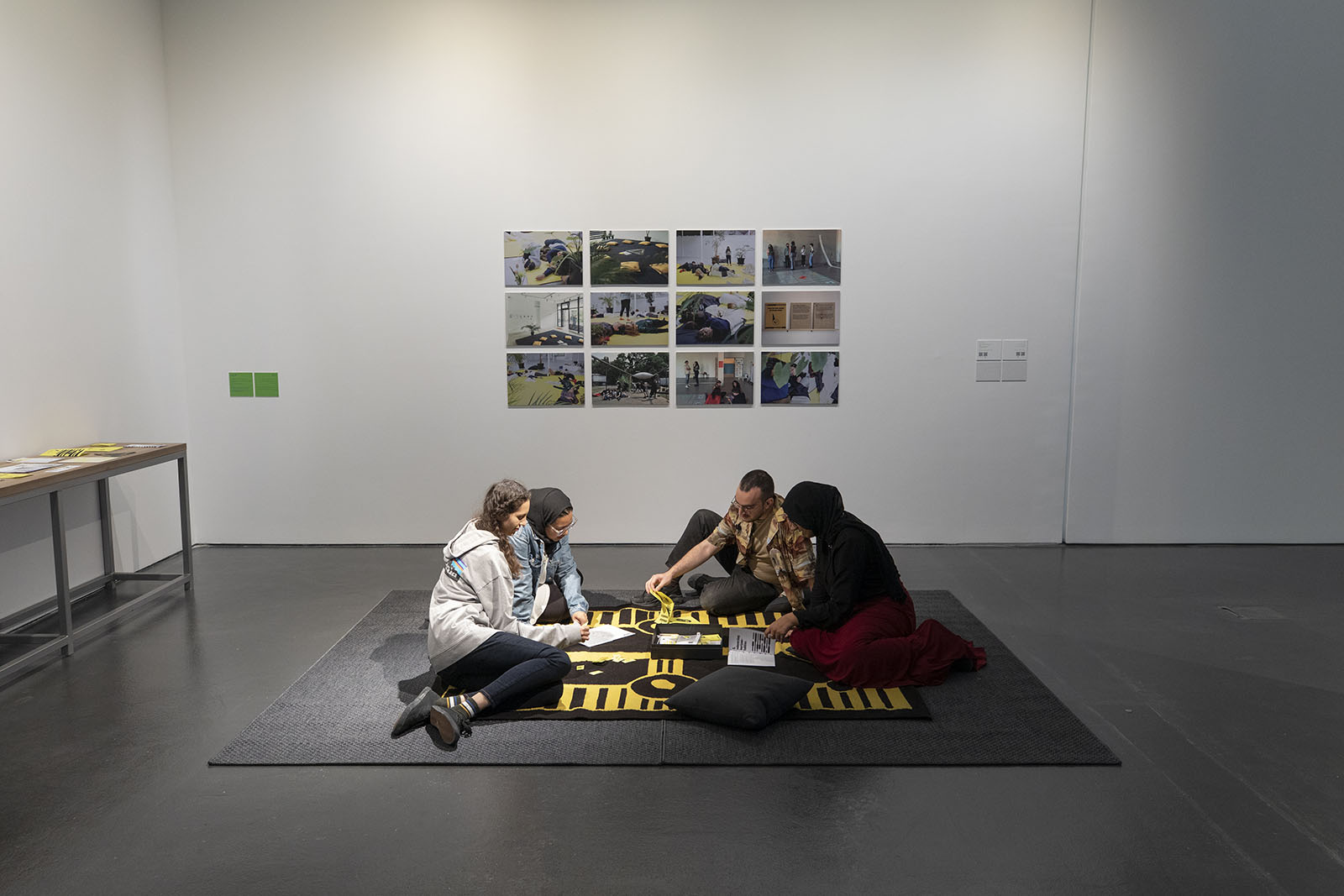
As a result, How to Love Many in Many Ways is an open-edition collection of games, exercises, and playful texts that depart from expanded notions of “love.” Love is so big a concept that it can be grasped and interpreted in innumerable ways; it frames our relationships and the way we connect with ourselves and everyone and everything in our surroundings. Stemming from a ground belief that this can only be addressed collectively, the culminating exercises or games respond to the titular question: How to Love Many in Many Ways?
Engy collaborated with Gabriel Hensche and together they invited a number of contributors that included artists, writers, game designers, among others.
The three rules that formed the parameters of contributions is:
1. It has to address an expanded notion of ‘Love’.
2. It has to be either a game or an exercise.
3. In the case of choosing a game, it has to be based on an existing game structure.
The games can be played by a diverse number of players who share different types of relationships; friends, family, couples, work colleagues, and so on. Therefore, these games are flexible enough to be played in many different situations. The project includes a collection of games and exercises in a printed edition, yet it is also available online to print and play at home (open-source). The games will be accompanied by instructions, a production manual, and so on.
The diverse disciplines and backgrounds that informed each game or exercise range from the artistic to the scientific, and from the somatic to the satirical.
Engy Mohsen and Gabriel Hensche, artists (Cairo/Berlin), kicked off with the namesake How to Love Many in Many Ways, a set of exercises that invite you to enact many rituals with many options for potential players: Yourself, Other/s, Other Other/s.
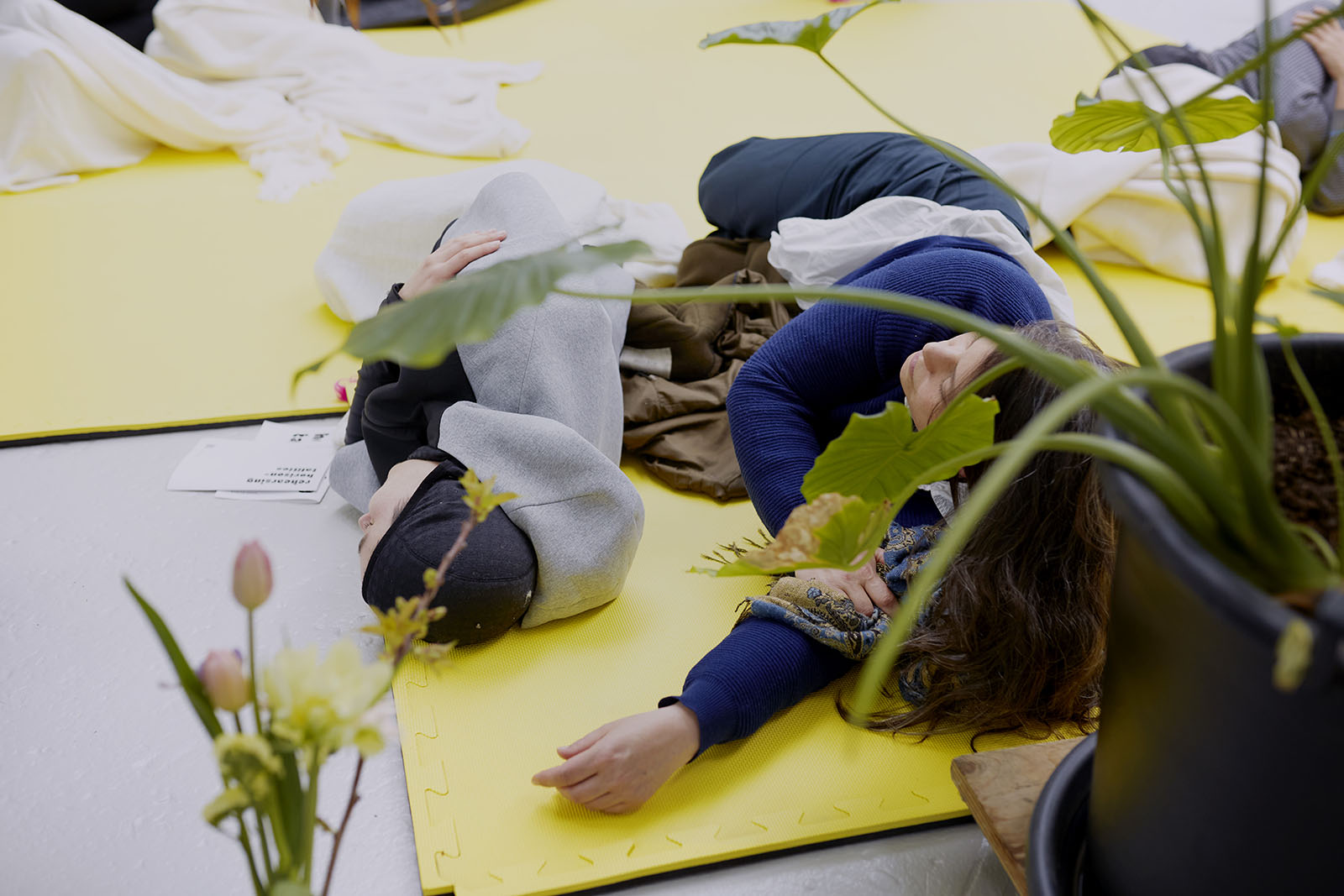
Eliana Otta, artist (Lima/Athens), responded with Rehearsing Horizontalities, a set of exercises that create scenarios in which players re-examine their relationship with others by playing with their spatial, choreographic, and acoustic awareness, all while maintaining what she calls a “horizontality pact” to re-examine our relationships with others.
Eleonora Toniolo, interdisciplinary designer (Berlin), responded with NOI Game, a card game that attempts to challenge usual modes of communication by playing with individual and collective silence.
Ingo Niermann (The Army of Love), writer and artist (Basel/Berlin), responded with Falling in Love with the World, an exercise that directs a group to overcome aversions and extend notions of love and care to others or objects.
Mohamed Al Bakeri, artist (Cairo/Sierre), responded with The Things We Do for Love, a board game that invites players to think of love as a material need and a commodity, drawing from the world of online dating.
Petra Mrša, artist and photographer (Berlin/Zagreb), responded with Shivering Throats, Breaking the Walls, playing with alternative notions of intimacy and encounter, presence and absence, and unconventional modes of communication and exchange.
Philip Ullrich, artist (Bern/Zürich), responded with Take That Loving Grace, a game in which aspects of love such as the similarities and differences between parties as well as the power struggles that are at play can be explored in pointed ways.
Rania Atef, artist (Cairo), responded with Bad Mother, a card game that critically and sarcastically scrutinizes the societal gaze on maternal love, mothers’ domestic performance, and the criteria for a “good mother.”
Raúl Hott, artist and architect (Santiago), created Total Body (RADIANCE), an invitation to understand radiance – an experience of new ways of relating to affect and affection by interacting with all living beings and reconnecting with our planet.
Shahd Omar, somatic practitioner (Cairo), responded with Embodied Encounters, a playful attempt to redefine consent as the process of establishing agreements, and how to communicate it beyond verbal exchanges.