No products in the cart.

DRAG

Dima Abou Zannad

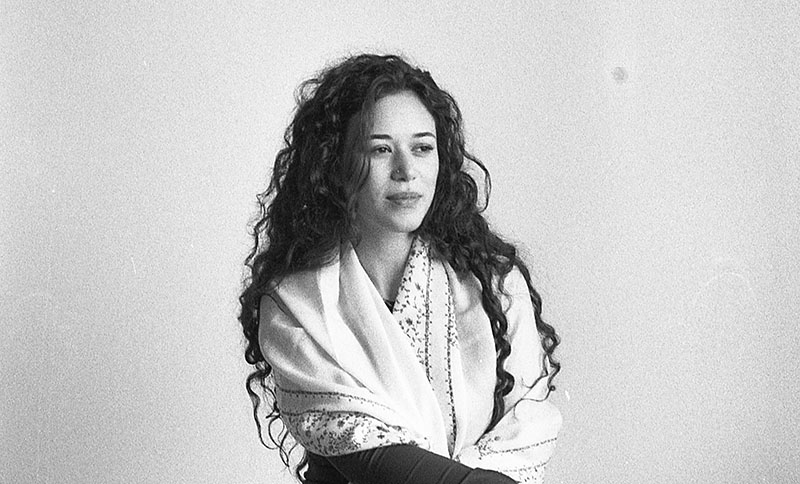
Dima Abou Zannad (b. 1999, Beirut) is an artist based in Abu Dhabi and Sharjah. Her practice engages language as material through writing, performance, and installation. She approaches translation not just as linguistic transfer, but as an act of slippage, an embodied process where meaning is shaped by repetition, deferral, and the impossibility of exact correspondence.


Her work interrogates the politics of immobilization, tracing how stillness can be both constraint and resistance. Through gestures of inscription and erasure, she explores the tension between surrender and refusal. Writing itself becomes a performative act–one that insists, hesitates, and lingers. Drawing from écriture féminine, Derrida’s notion of deferral, and the historical parallels between poetry and painting, her work navigates the edges of meaning, revealing language as both a site of rupture and a space of endurance.
Her work has been shown in Abu Dhabi Art; Pressure Points at the Project Space, NYU Abu Dhabi Arts Gallery; and Personal Structures at the 60th Venice Biennale (2024); Unwritten, Unspoken & Told at the Dubai Calligraphy Biennale; ʿāḥdūdil-baḥr at The Cube in NYU Abu Dhabi; Composite at Jameel Arts Centre, Dubai (2023); In-habit in Abu Dhabi, via Gulf art collective engage101; and in While the Coffee Grounds Settle at Fathom Gallery, Georgetown in Washington DC (2022).


In 2023, she founded lineعلىـline, a writing support service for creative practitioners. She holds a BA in Fine Arts from the University of Sharjah (2021).
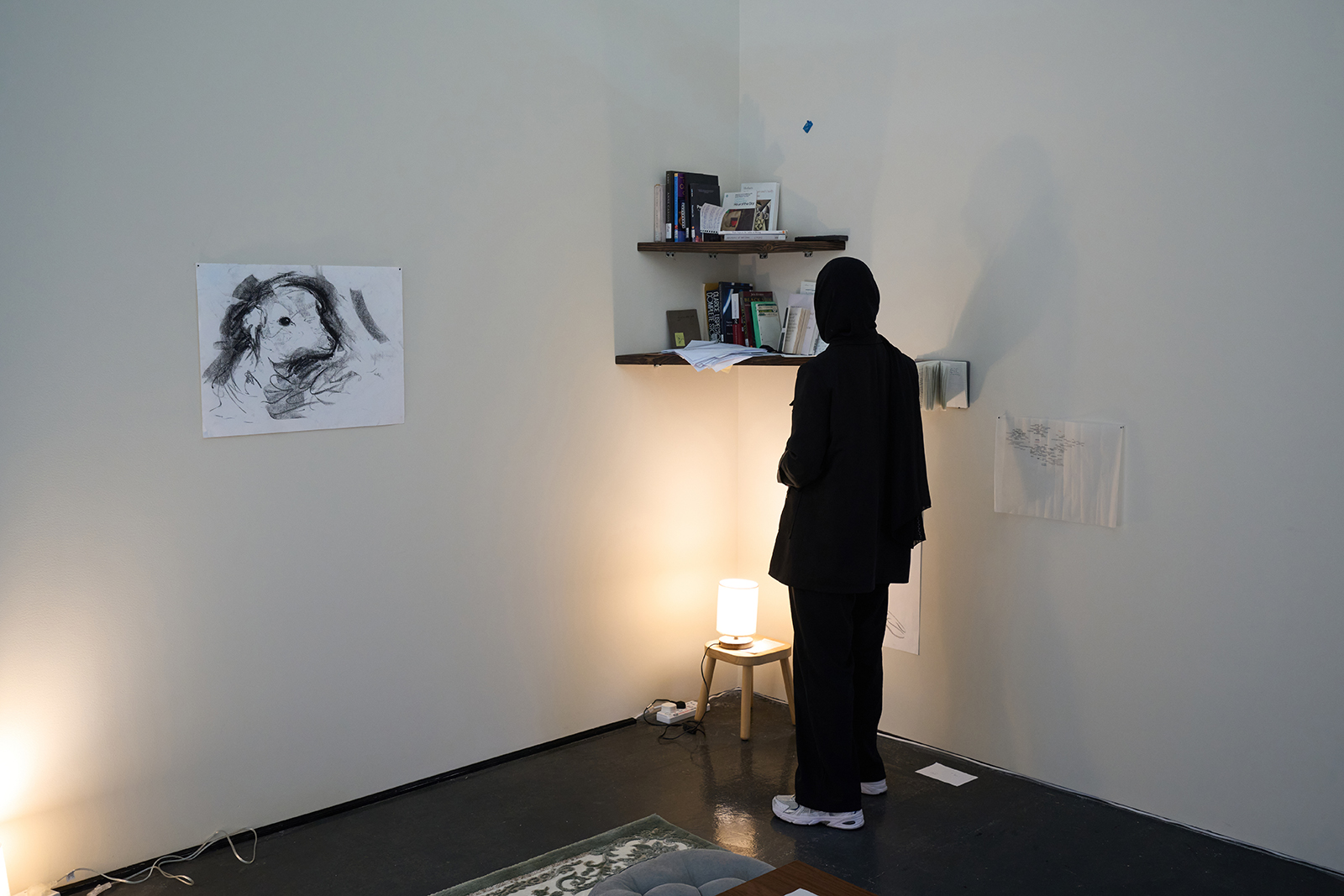
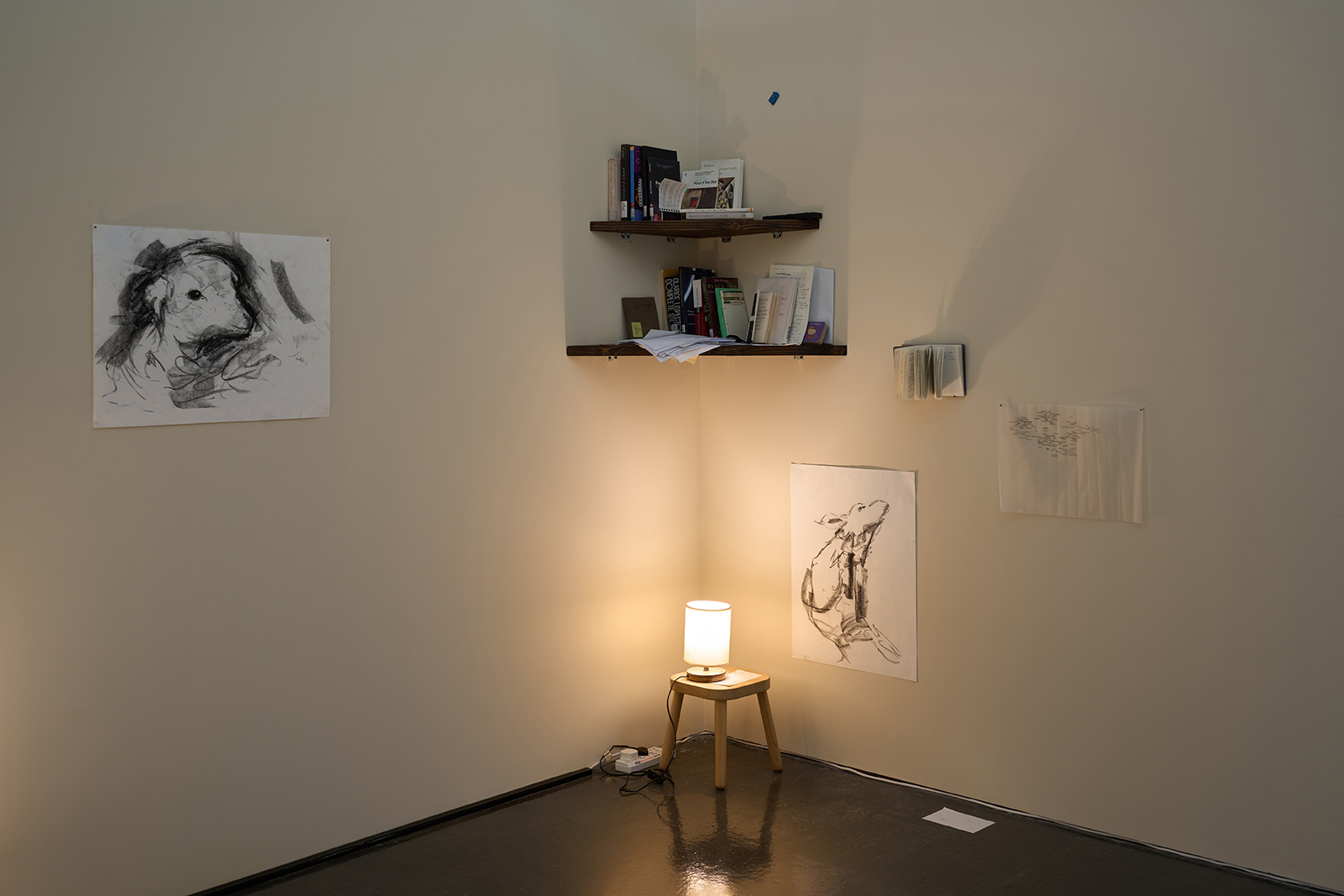
So tell me, do the dead long for mourning?
2025

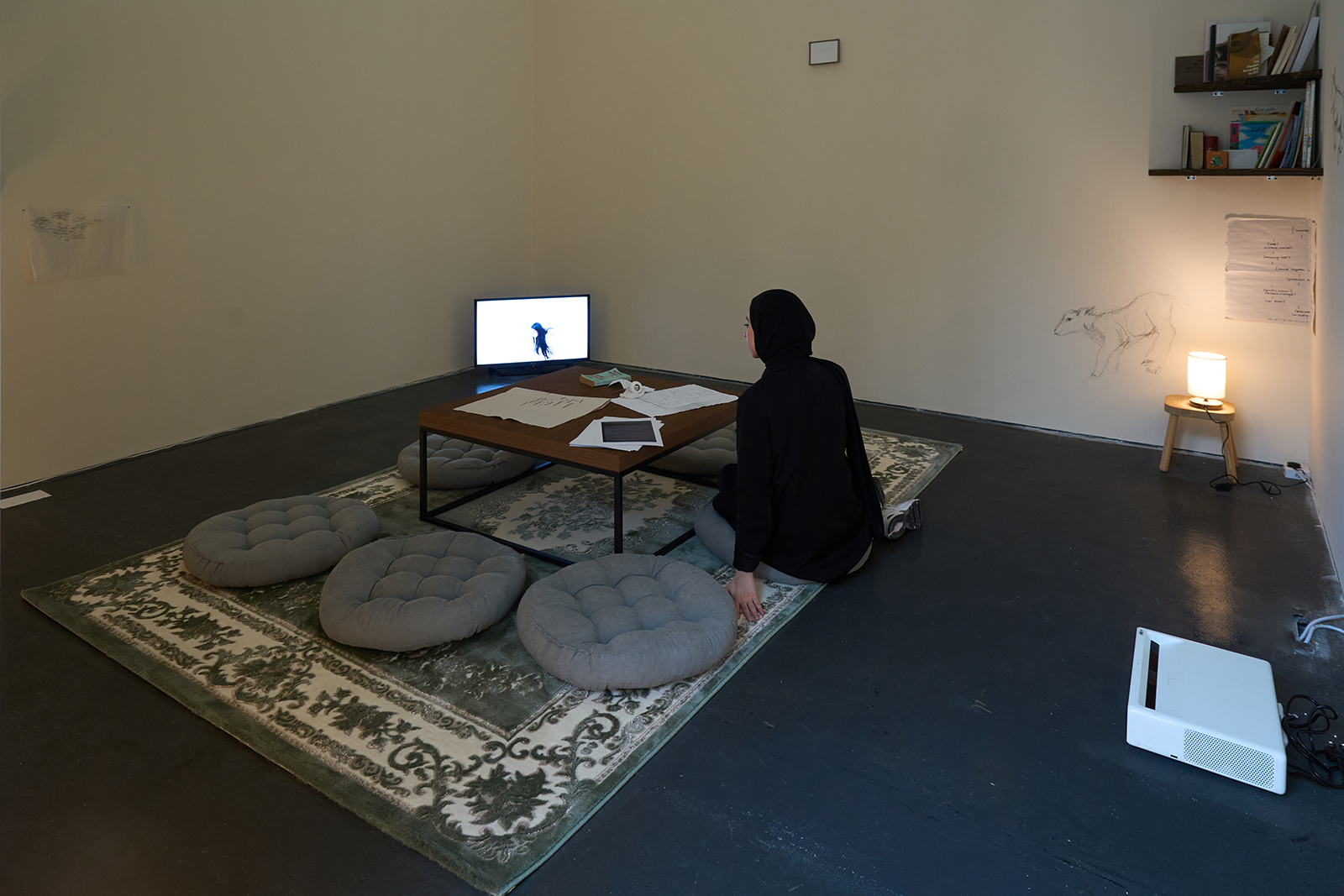
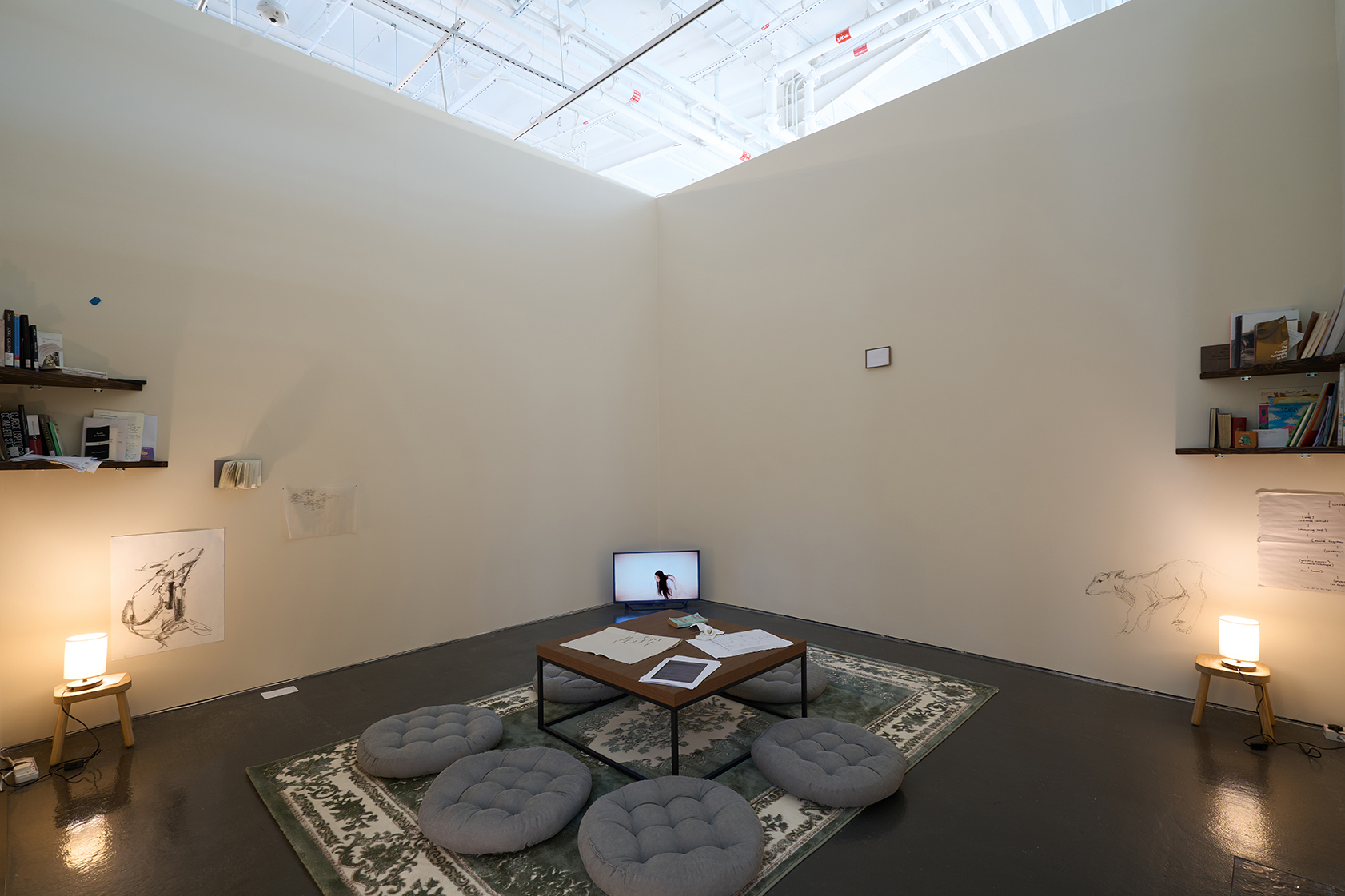
There is a kind of muteness that forms under pressure–not from absence, but from exhaustion. So tell me, do the dead long for mourning? unfolds within the architecture of grief: a structure held together by breath, silence, and the labor of repetition. It is not mourning as closure, but mourning as something curated, institutionalized, and sustained. The performance offers the body to the ritual; as labor, as devotion, as resistance. To survive is to repeat. To mourn is to endure without resolution. Here, muteness is not absence but intensity. Ritual is not reenactment but survival. Breath becomes the final vocabulary. In silence, mourning becomes structural, and the body is the only remaining instrument.
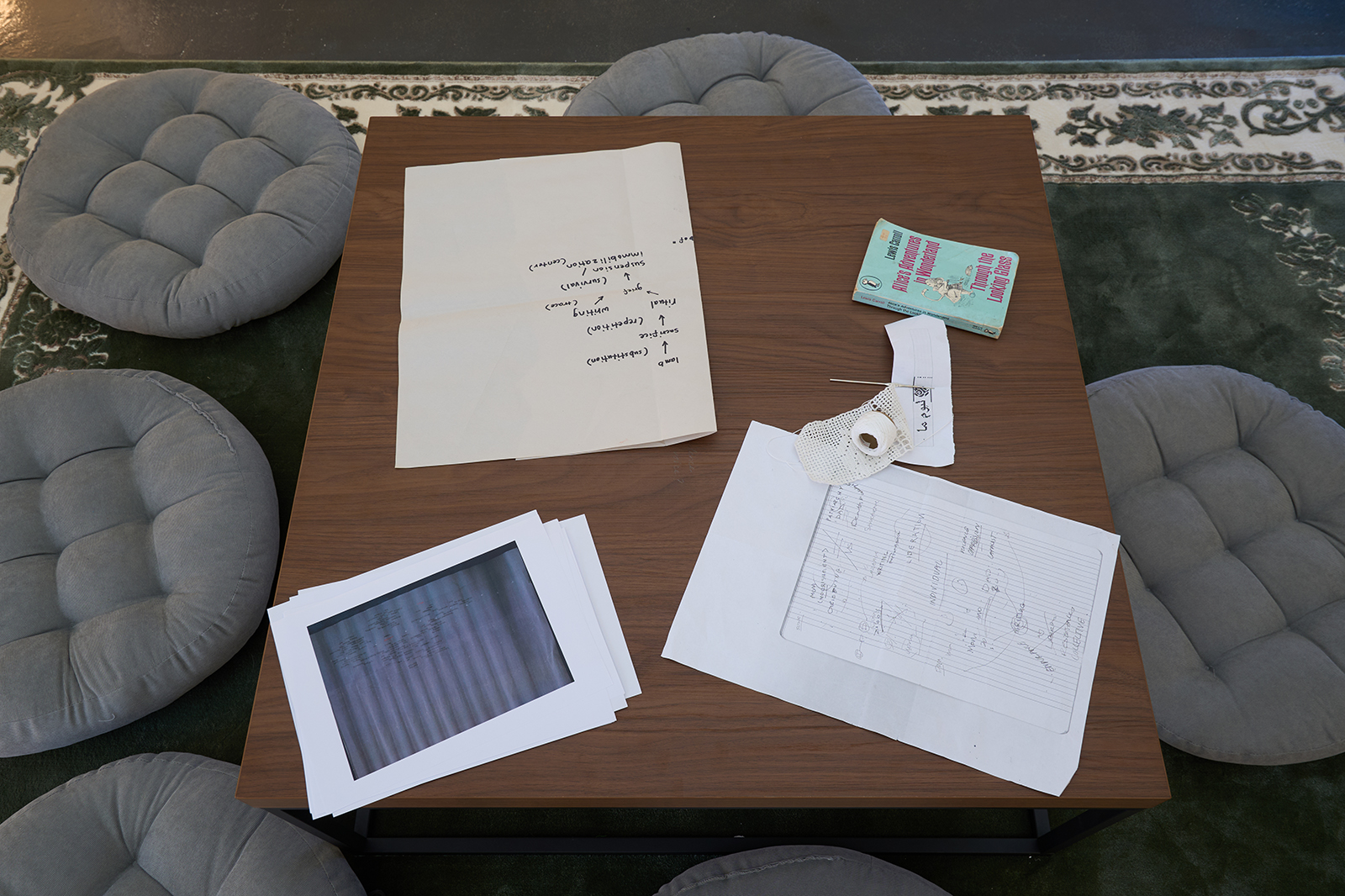
Pages are marked, left open, interrupted. Language appears handwritten, annotated, indexed, but meaning is not offered. It lingers. It resists. The installation treats language as structure, but also as injury: something built, carried, and collapsed. Speech is exhausted. What remains is murmured, strained.

This is not grief as event. It is accumulation. It is what power demands: to prove, to testify, to repeat. Repetition becomes forced labor. Resistance becomes the burden of survival.

The question is not whether language can hold grief, but whether it can break the cycle of imposed endurance. What can language do, when every archive of pain is met with spectacle or silence?
To mourn here is to labor. To remain.

To ask not only whether the dead long for mourning, but whether we are capable of mourning what power demands we forget.

NEWSLETTER