لا توجد منتجات في سلة المشتريات.

يجر

Clemencia Echeverri

Clemencia Echeverri (b. 1950, Caldas) studied Visual Communication at the Universidad Pontificia Bolivariana and Visual Arts at the Universidad de Antioquia, completed a Master’s degree in Visual Arts and later studied Contemporary Art History and Theory at Chelsea College of Arts in London. She taught undergraduate and graduate art for 27 years at the Universidad de Antioquia and the Universidad Nacional de Colombia.

Since the 1990s, Echeverri has explored problems related to violence, memory, and the force of nature in Colombia. Through drawing, video, photography, video-installation, sound and interactivity, she creates large-scale projects via extensive research and field trips, social commitment to communities, and technological mediation. Her work is part of the collections of museums and cultural institutions such as Musee les Abattoirs, Toulouse, France; Ulrich Museum Collection, Kansas; Museum of Latin American Art of Los Angeles (MOLAA), United States; Daros-Latinamerica Collection, Zurich, Switzerland; Latin American Art Collection, Essex, England; Museo Extremeño e Iberoamericano de Arte Contemporáneo (MEIAC), Badajoz, Spain; Museo Universitario de Arte Contemporáneao (MUAC), Mexico; Museo Nacional de Colombia, Fundación Gilberto Alzate Avendaño, Museo de Arte de la Universidad Nacional de Colombia and Colección del Banco de la República de Colombia, Bogotá.
Treno
2007
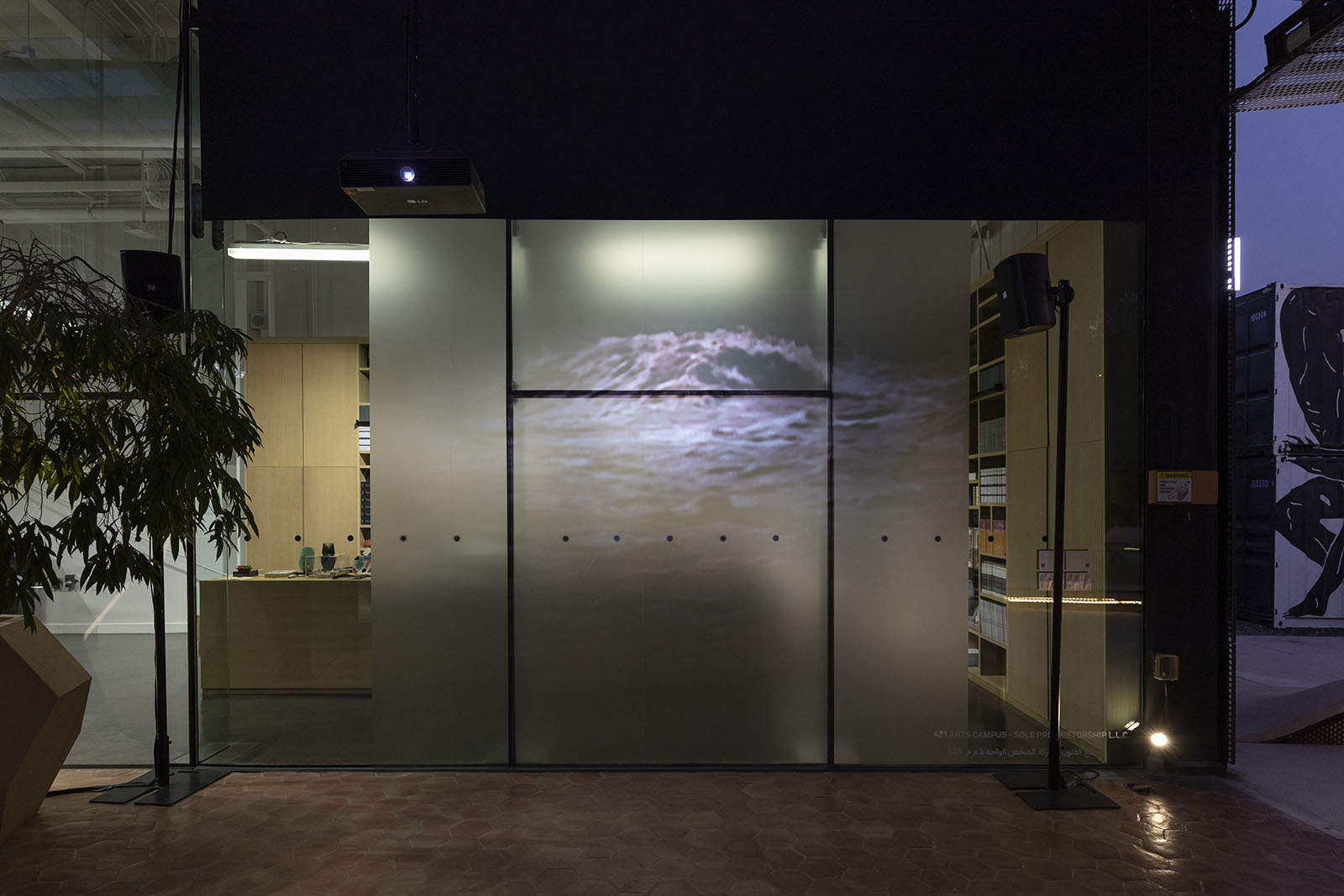
Two-channel video projection and surround sound installation
14 minutes

Courtesy of the artist

The river sings an elegy that rushes into your body as you step into 421.

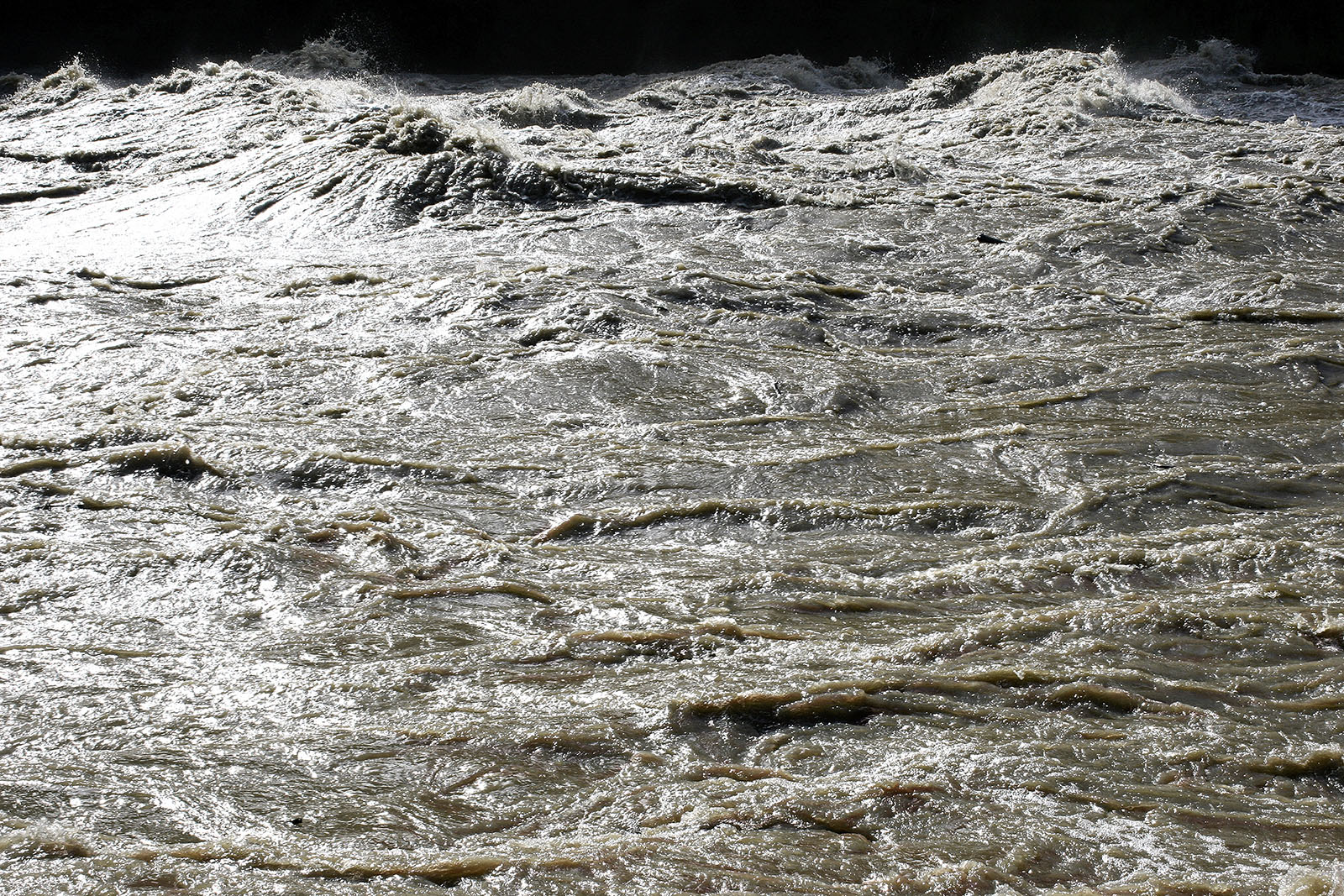
Screened on glass facades facing one another, Treno constructs a dialogue between two banks of the Cauca River in Colombia. We hear unceasing flows of water and human voices screaming the names of those forcibly drowned there, specifically political dissidents and ecological victims. The title references a trenodia, which is a sorrowful song, a poem of lamentation performed as a memorial or ode to the dead.

Submerged into an intimate and powerful poetics of loss, we experience a dirge for those lost in the waters, a mourning of that which is impossible to entirely mourn, a deluge submerging us into non-being.

While water appears in apocalyptic visions across nearly all religions, Echeverri’s work locates this in the context of armed conflict and forced disappearance in Colombia, amid the currents of fascist, neocolonial, economic, and ecological violence.

Through Treno, we observe how the Anthropocene must not be seen as a monolithic concept vilifying all humans as equally culpable for our ongoing crises. While structures compelling the climate apocalypse are deeply human, such human-made structures have and continue to coerce our ongoing extinction by forced disappearances of communities most vulnerable to climate and geopolitical collapse.

Here, we mourn humans who have been disappeared by other humans, and by extension, we might mourn our own extinction.

النشرة الإخبارية