Whispers from the Void
2023
New commission extending from existing work
Sound installation, ‘tongue sculptures’, and text fragments
Dimensions variable
Courtesy of the artist
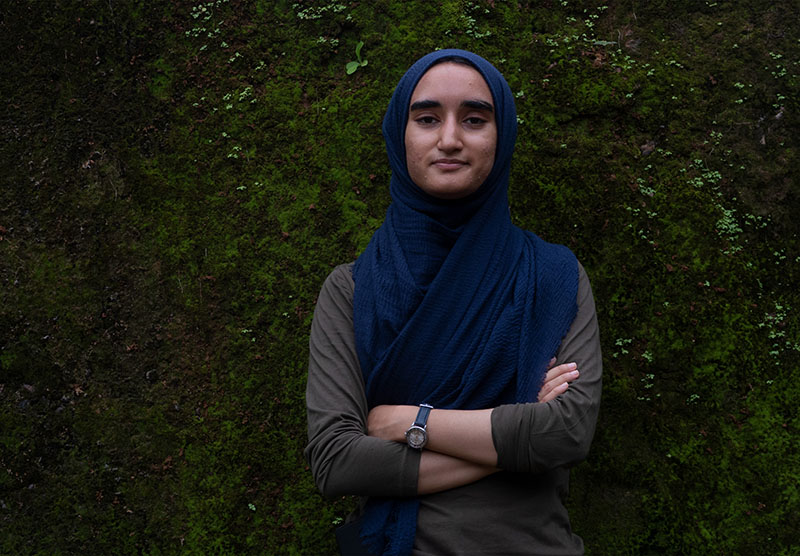
Malik Irtiza’s work locates itself in void(s), as well as disrupted, incoherent, non-sensible, and de-ordered in-articulations through folklore, storytelling, myth-making, and local histories to encourage reflection and discussions about fragmented time and everyday life in contested territories, especially in Kashmir.
This multi-site installation derives from the traces of a presence called Shokpaseen, a shadowy non-being derived from childhood stories Malik’s mother told her as a child. This non-being, which was once a songbird, travels beyond and within different times and its slippages. Malik sees Shokpaseen “as a void, allowing that acknowledgment of the breakdown of language resulting from physical and psycho-social loss, of existing gaps disregarded by the linear historical narratives.” Shokpaseen reminds us that even if we think we do not remember or cannot find what we think we have
collectively forgotten, traces and ruptures remain.
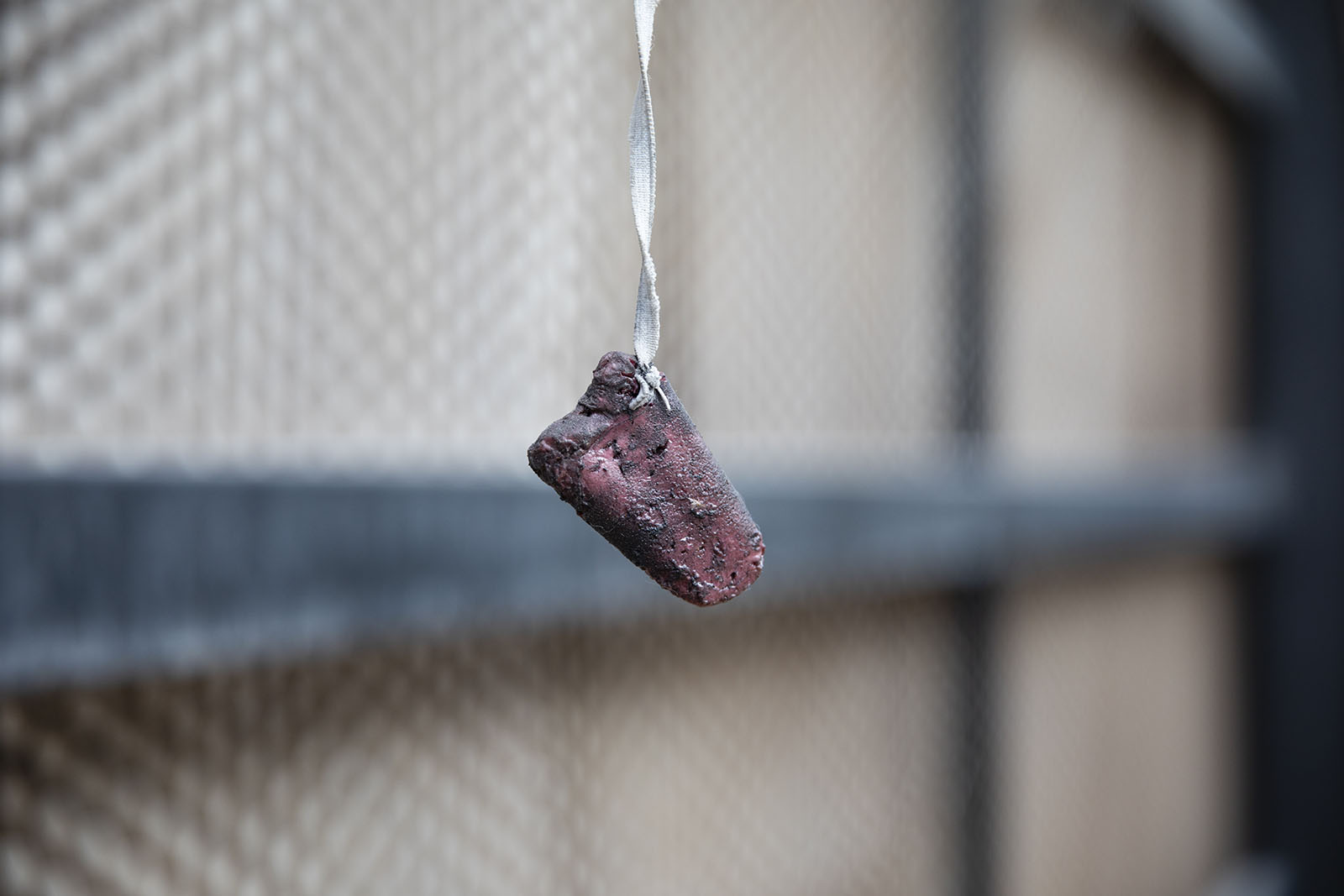
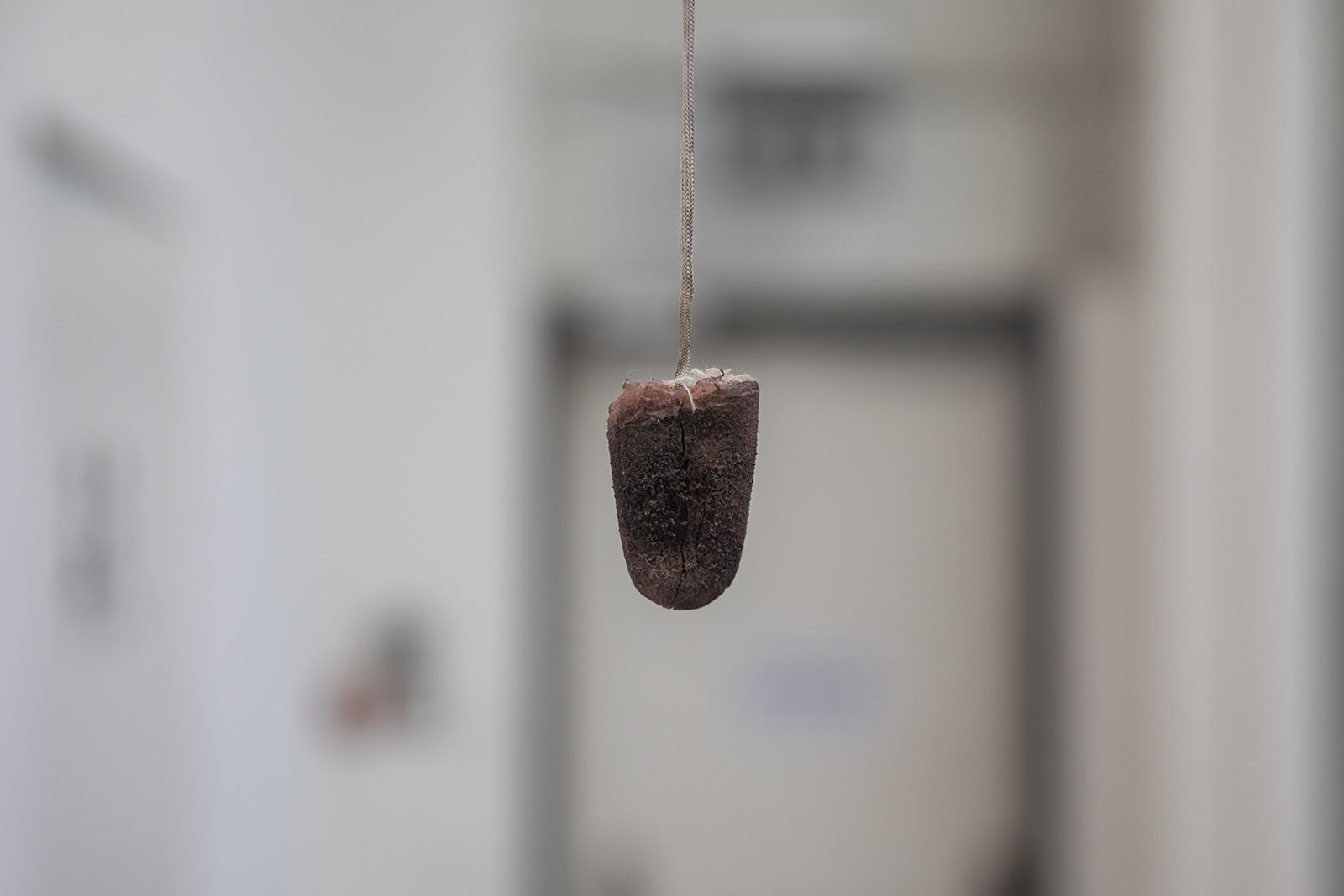
The texts, sound, and the tongue before you are a collection of first-hand reports from Shokpaseen who has reached the deserts in Abu Dhabi by following Khizr, a mystic figure in some Islamic traditions. The sites for this installation are points in Shokpaseen’s journey across 421—trees it has climbed, hallways it has wandered, a skeletal boat in which it has sat, a wall it has scaled, nooks and crannies within which it has dwelled. The texts, written in a nearly incomprehensible mix of Kashmiri, Urdu, English, are palimpsests of concepts and characters from the Quran, Malik’s observation of normalised state violence and the climate apocalypse especially in Kashmir, and Shokpaseen’s ruminations at these sites.
The soundscapes are propelled by an eerie, visceral, lullaby-like hum, overlaid with the artist narrating the respective text-fragments like ritualistic chants, and sounds she hears in Srinagar ranging from military helicopters and gunshots to celebratory firecrackers and whispers in psychiatric hospitals. Shokpaseen’s tongues hang as traces of its movement through these time-memory-spaces where language has been untethered from its meaning-making possibilities in witnessing what we all are in the thick of, even if we do not feel or are unequally affected by it—the unimaginable confusion, anxiety, and madness of the ongoing Qayamat, the Apocalypse. In this enormous absence of meaning, non-being itself materialises through
the figure of Shokpaseen, asking us to remember, feel, and commune within this space of negation and absence.