No products in the cart.

DRAG

Arulraj Ulaganathan

Arulraj Ulaganathan (b. 1992, Sri Lanka) is a visual artist born in Haputale. Specializing in printmaking, painting, and drawing, his art predominantly reflects the lives and struggles of the upcountry and tea estate communities. Growing up in the upcountry, his works and stories are deeply influenced by his parents and the experiences of over 200 years of tea estate life.

Arulraj completed his Bachelor of Visual Arts (BVA) in 2013 from Pondicherry University, India, and his Master of Fine Arts (MFA) in 2019 from the Government College of Fine Arts, Chennai, India. He has also served as a temporary lecturer at the Ramanathan Fine Arts Academy, University of Jaffna.

His artistic practice delves into the haunting echoes of colonial tea plantations—the ecological scars and systemic violence. Through surrealist compositions and installations, he reveals the enduring legacies of forced labor and the constricting architectures of existence in Haputale’s hills. Tea stains his canvas as a metaphor for erased forests and perennial commodities, while he maps the names of plantations, bridging Malaiyaha communities and forest species.
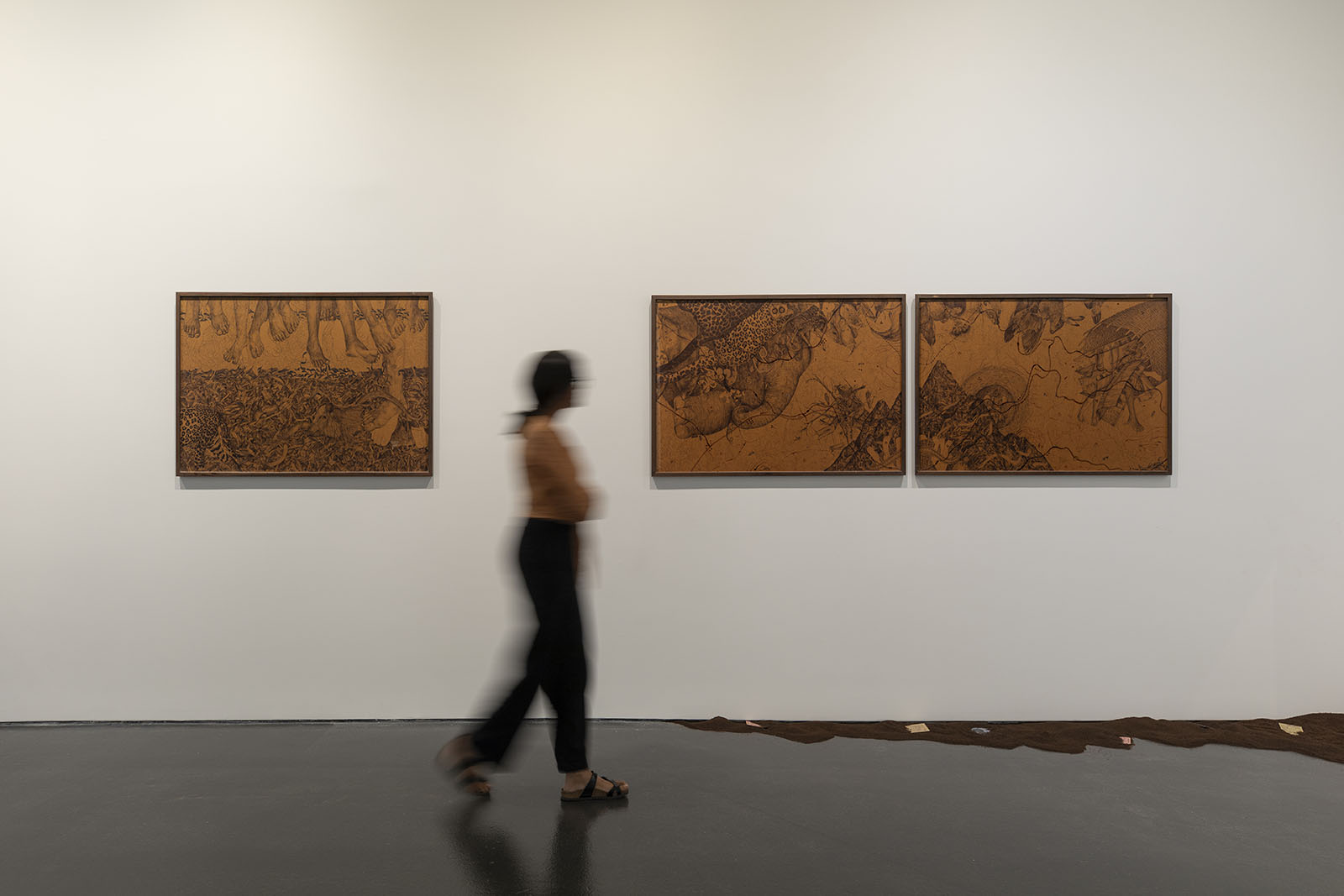
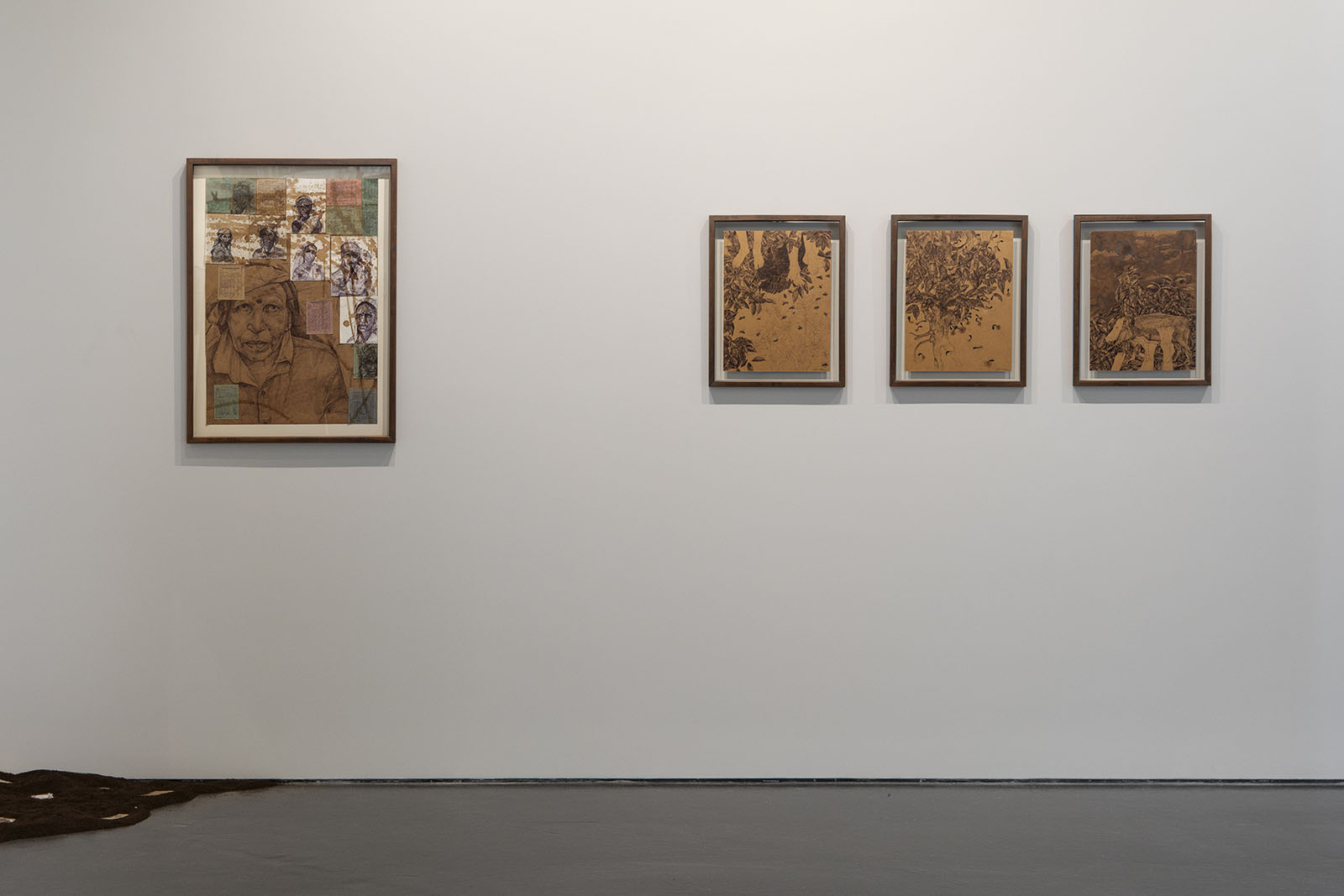
U. Arulraj reflects on historical experiences of ecological devastation and systemic violence in tea plantations through the Dutch and British colonial periods. He connects these experiences to communal stories of migration and dispossession of Tamil tea workers in Sri Lanka’s central highlands today. His often surrealist and sardonic compositions consider enduring legacies of forced labor, hierarchical management, and excruciatingly restrictive architectures of living as part of daily existence in the hills of Haputale.
​
In his recent drawings and installations, tea is an ingredient in the literal and metaphorical sense, staining the paper surface and producing volume to render testimonies of how indigenous forests were erased to make way for governable tea slopes and tea as a favorite export was planted in the island as a perennial commodity. In plotting a multispecies relationality between Malaiyaha communities and forest species, the artist maps the local names given to various plantations: Pazhaya Kādu (Old Forest), Pudukkādu (New Forest), Pachakkādu (Green Forest), Alangkādu (Banyan Forest), Kurangu Malai (Monkey Hill), Mandi Thōttam (Langur Estate), Kuthirai Malai (Horse Hill), Yānai Thōttam (Elephant Estate) and Mayil Vaththai (Peacock Garden).
​
Arulraj revisits stories told by his foremothers and village elders as well as songs that speak of homesickness and the demands of return: “We’re not used to wearing raincoats; We’re not used to plucking tea leaves (…); Send us back home!”—sung by South Indian Malaiyaha Tamil plantation residents brought to coffee and tea estates in Lanka in the nineteenth century.

He writes, “Our people who have enriched the forests and hills have not owned even a single piece of land until today. At times they have been forced to go hunting. That is the extent of dispossession, but their ancestral guardianship remains steadfast. On the other hand, a large number of tea plantations have been abandoned and have since become forests. More than 171 tea factories have been closed in recent years.”

NEWSLETTER