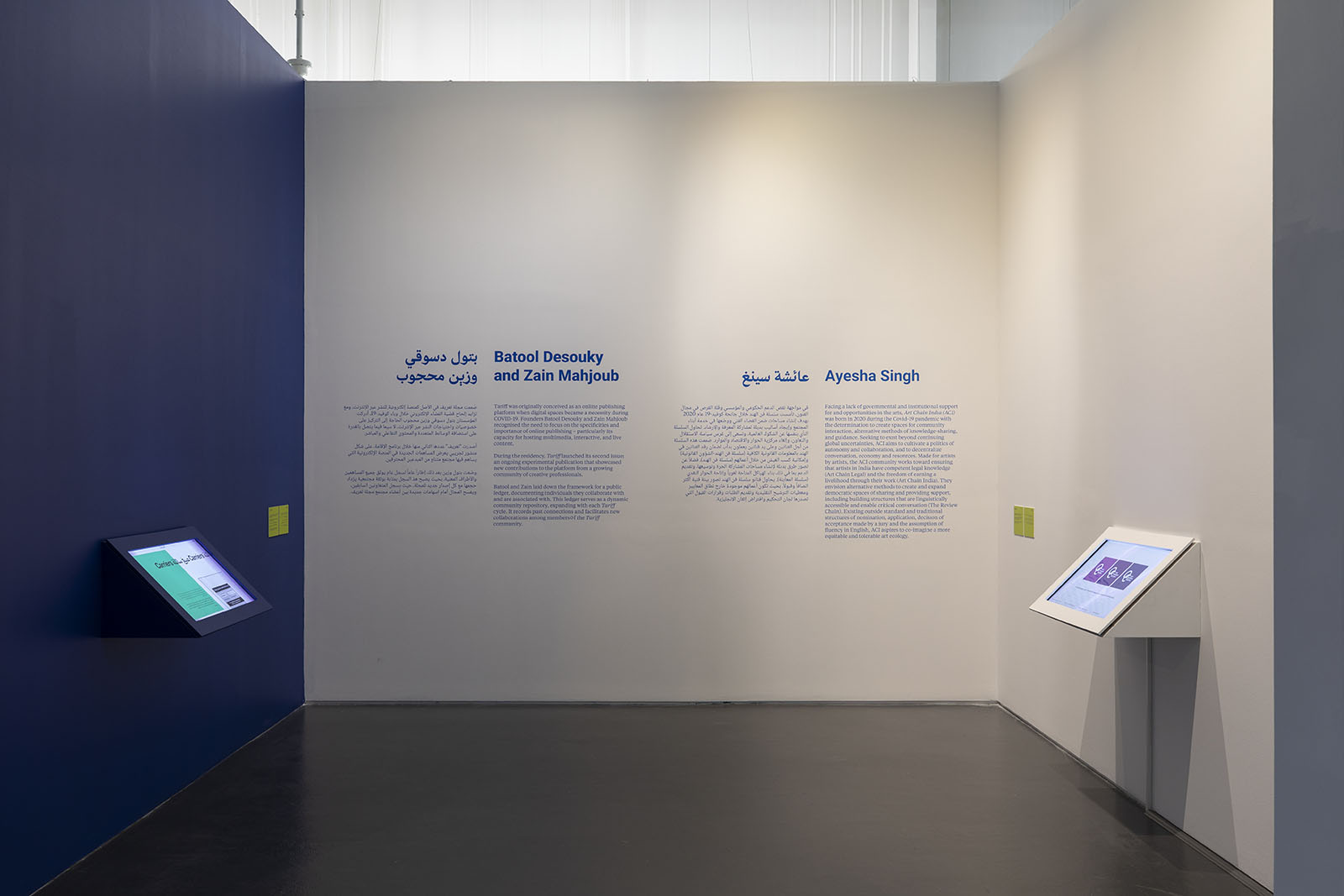
Tariff was originally conceived as an online publishing platform and with the issue of online space becoming more urgent now as a result of COVID-19, founders Batool Desouky and Zan Mahjoub recognised the need to focus on the specificities and needs of online publishing – particularly its capacity for hosting multimedia, interactive and live content. As the website is Tariff’s main platform, the group reconsidered the structure and functionality of the current website.
Through a process that brings practices of aggregation, consolidation and data-analysis to the curatorial practice and role, they revisited content already published and pending content for their second issue, as well as current research for a public repository of regional artists. For the repository, the group started with the research to build the Tariff tariff, which is taking shape as a ledger; followed by the “analysis” of past and pending tariff entries into “information” to re-present them through the more tailored website. During the Homebound Residency with Warehouse421, Batool and Zain put this somewhat experimental working model into practice.
Throughout the residency, the group worked simultaneously across a few different fronts: the website refurb, their second issue, and the Tariff tariff (ledger). They did a big haul of the website, reconsidering the functionalities of the platform and their importance, later working with a web designer (Bullet Creative) to delve into and flesh out these functionalities. They moved away from the templated format of Squarespace to embed more interactive and custom pages, redesigned it and built a custom ledger. During their first group residency intro call, Batool and Zain mentioned that they were looking for developers to relaunch the Tariff website and received the recommendation of Bullet Creative by fellow resident Rand Abdul Jabbar. They then reached out to Bullet Creative and had numerous sessions of brainstorming and working towards the current design and functionality of the website.
During the course of the residency, Batool and Zain launched Tariff’s second issue, an ongoing experimental publication showcasing new contributions to the platform from a growing community of creative professionals. To realize the second issue, the group contacted their target list of contributors and began a series of virtual conversations with each of them. The process was a back and forth, discussing what the issue was about for Tariff, what it meant to the contributors, what work they would like to produce/showcase, and how they would like to do that on the Tariff platform specifically. Conversations extended further than just the creation of one work for one issue – they also looked at a range of factors, influences, and future possibilities/sustainability of the efforts of the contributors.
Batool and Zain then laid down the structure for a public ledger of people they work with and are connected to. The ledger is designed to become a community repository of people that will grow with every Tariff cycle, where past connections are recorded and new connections can be made between collaborators and members of the Tariff community.
The group worked with Hebah Fisher, the founder and MD of Kerning Cultures over weekly sessions to discuss the process of audience development, promotion, communications and financial sides of running a digital platform. Structuring each session around a topic which they wanted insights on from Hebah’s end andasking her questions, they developed social media plans, researched funding models, and devised their strategies of running the digital publication.