Counting Fingers
2023
Installation featuring unglazed clay ceramic pieces, glass
Dimensions variable
Commissioned by 421 Art Campus as part of the Artistic Development Program
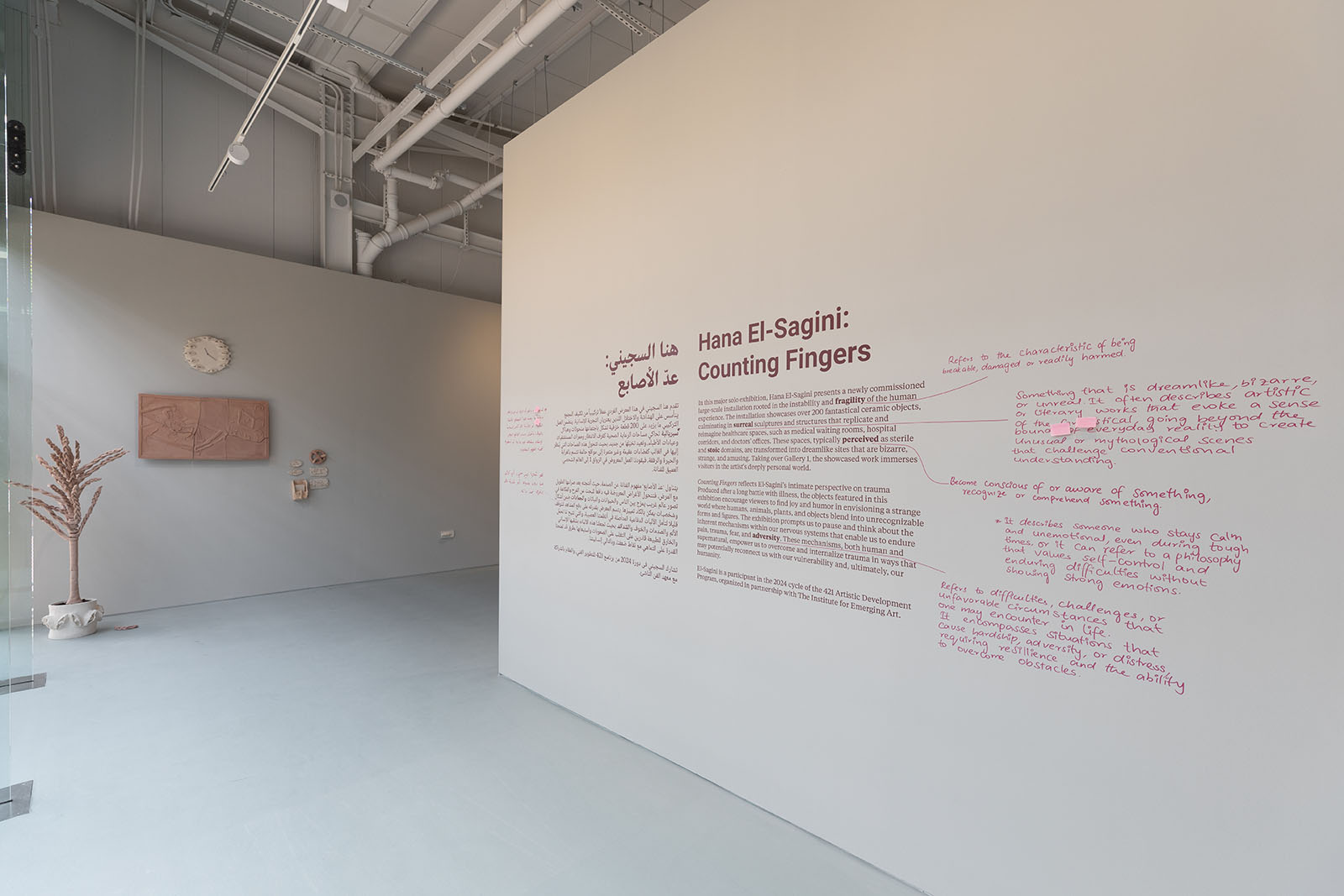
Hana El-Sagini’s Counting Fingers is a poignant exploration of survival in the face of adversity, showcased through an immersive installation set in Gallery 1. As visitors traverse this space, they are met with a sense of in-betweenness, fluctuating between reality and imagination.
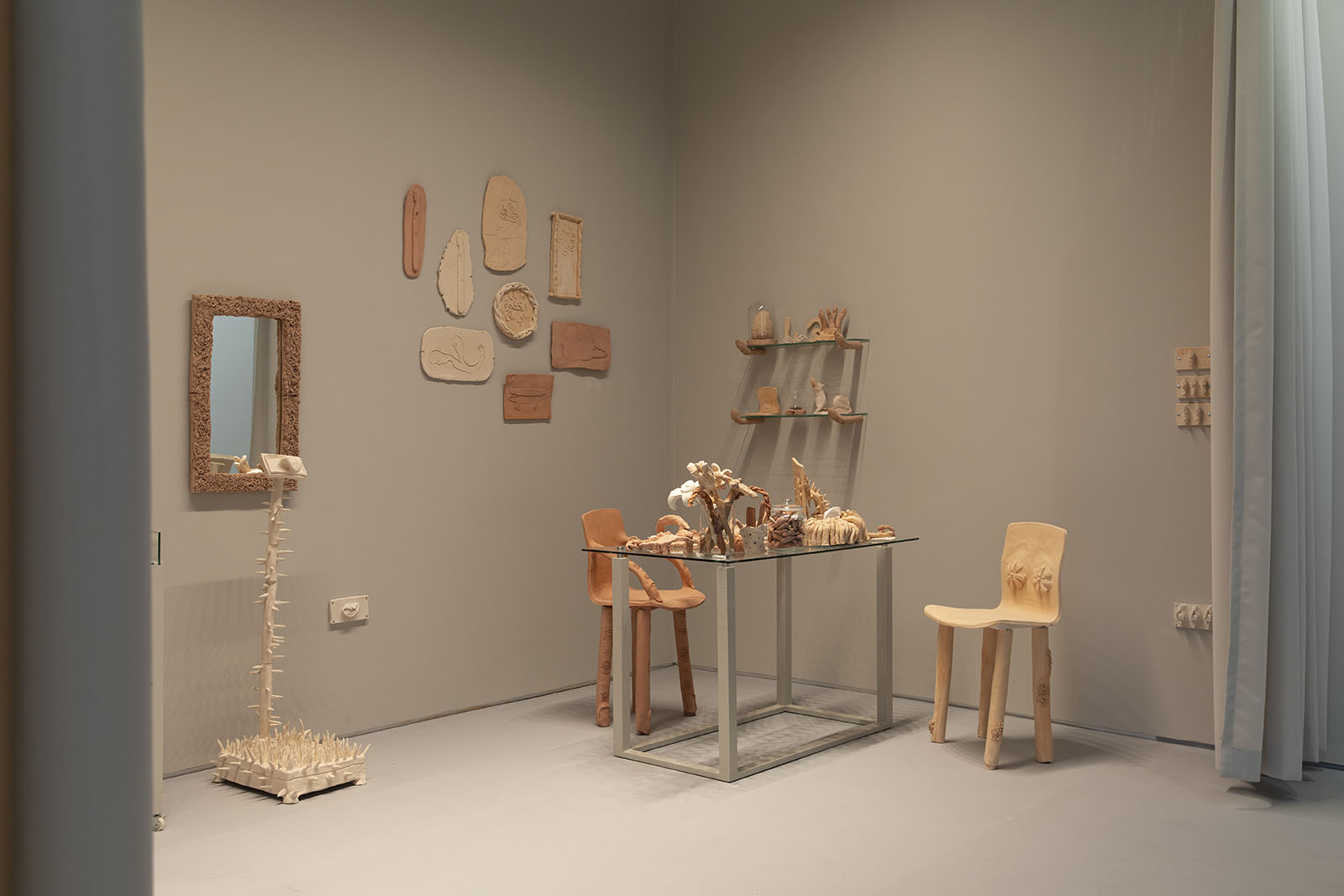
El-Sagini, whose artistic practice began with painting, delves into the world of ceramics for the first time in this new major body of work. Distinctly surreal and dreamlike, the works on view are at once sculptural and functional, featuring still life and figurative forms. Here, the fragility of clay serves as a metaphor for the vulnerability of the human body, while its varied hues of pinks, browns, and beige symbolize different stages of health, introducing nuanced moods and reflections on sickness. Glass is another prominent material found across the installation, contributing to the overarching theme of fragility. The delicate nature of these mediums and materials prompts viewers to move through the space with a heightened sensitivity, consciously or unconsciously tiptoeing through the exhibition. The artist deliberately creates an immersive experience that parallels the emotional journey of patients undergoing treatment or receiving care in medical facilities.
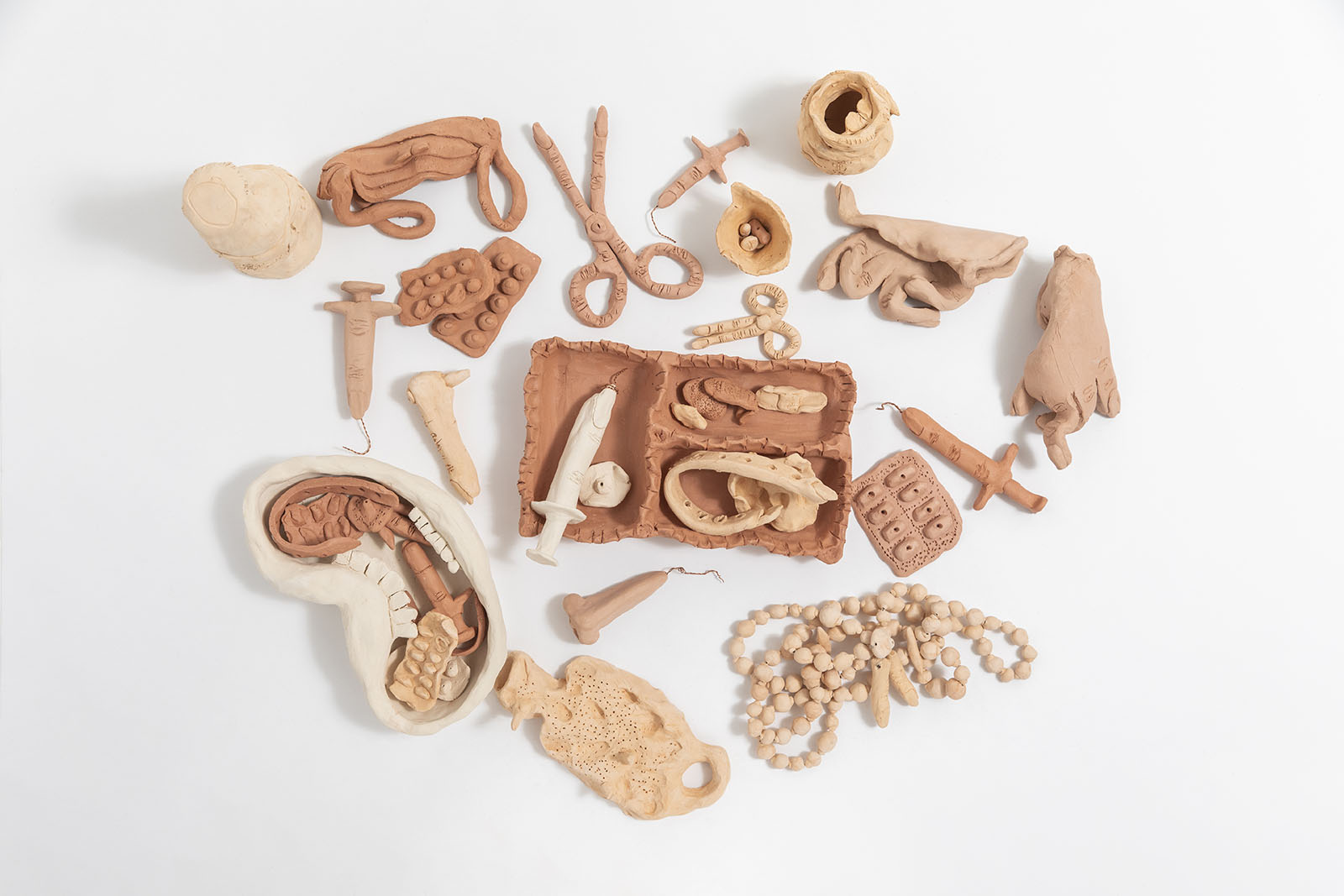
The labor-intensive clay process reflects the resilience of both the artist and the material. To El-Sagini, clay is a material with a mind of its own that necessitates an unpredictable and transformative journey, enduring extremely high temperatures to emerge as ceramic pieces or sculptures. The outcome is a collaborative project between the artist and the material, presented through the unfinished imperfections found across the 200 or more ceramic pieces showcased in the exhibition. These imperfections are created by the material without intervention or interference from the artist and stand in stark contrast to the predictable precision of medical supplies. As such, the use of clay then becomes an act of rebellion that challenges the controlled and compartmentalized qualities of scientific practices, infusing the work with raw, immediate, and very human characteristics. In the Islamic tradition and other religious belief systems, humans are believed to be made from mud and clay, thus carrying a fundamental attachment to the earth. To the artist, the earthy humility of the material is therefore intrinsically connected to the human experience.
Memory plays a significant role in shaping El-Sagini’s artistic vision. Drawing from her childhood, she replicates images from memory without relying on documentation or archival material. The works begin with sketches of corals seen in the Egyptian coast, where she spent summers snorkeling. The artist pays tribute to and grieves the loss of body parts by imagining their reincarnation in different landscapes, whether underwater or in the mountains often depicted on wall paper or large frames inside hospital waiting rooms and in clinical spaces.
Human fingers are another recurring motif found in the exhibition. They become a documentation of the multitude of individuals who played a role in the artist’s journey through illness – doctors, nurses, and countless medical workers. Each finger symbolizes a connection, a touch, an examination, and the collective effort to heal. While human fingers appear across various artworks, others works feature animal parts. The hospital waiting room chair in particular has legs that look like the front and back limbs of a dog. The artist created the chair with her late dog’s legs in mind, blending the inanimate and the living, appreciating the life of the animal that influences and enriches her practice.
Counting Fingers transcends visual representation; it becomes a visceral and evocative exploration of the human experience, embodying the resilience, vulnerability, and interconnectedness that define our complex journeys through difficult times.