No products in the cart.

DRAG

Jayatu Chakma

Jayatu Chakma is a freelance artist who focuses on the crisis in the Chittagong Hill Tracts (CHT) of Bangladesh. He belongs to the marginalized Chakma community living in the southeastern part of Bangladesh. In addition to painting, he also works with sculpture and installation art, aiming to convey his thoughts to audiences through his creations.

Jayatu completed his academic journey in 2018 and has been working as a freelance artist since then. Jayatu was an ICCR scholar in Kolkata, India. He has participated in several group exhibitions in India, Nepal, Sri Lanka, and Bangladesh, including the Birla Annual Art Exhibition in Kolkata, the Asian Art Biennale in Bangladesh, the National Art Exhibition in Bangladesh, Spirit of Friendship in Kathmandu, Nepal, and Way of The Forest at Colomboscope 2024 in Colombo, Sri Lanka.

He has received several accolades, including the Best Award (painting) at the 25th National Art Exhibition in Bangladesh, an Honorable Mention Award at the 19th Asian Art Biennale in Bangladesh, and an Honorable Mention Award at the 5th National Sculpture Exhibition in Bangladesh.
Jayatu Chakma’s relation to landforms and their multispecies inhabitants is shaped by the Chittagong Hill Tracts region in Bangladesh where he lives. His formative bond with the terrain and its social relations has been sustained through resilience in the face of dispossession and discriminatory practices. Through an engagement with indigenous knowledge as an everyday practice of the Jumma people, the artist articulates his multi-part paintings and installations.

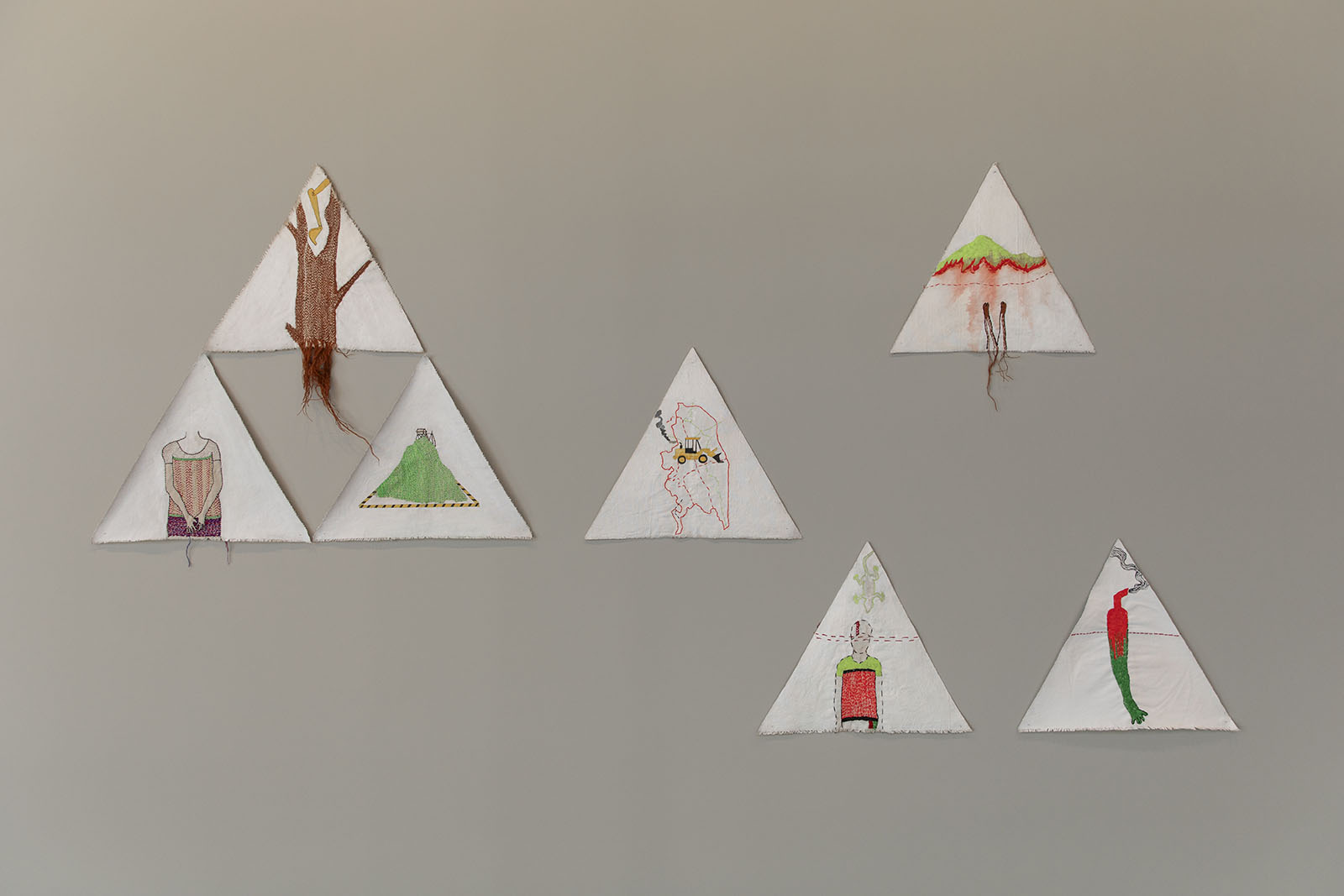
In a set of triangular compositions, the artist deliberates over developmental agendas such as hydroelectric dams and tourism projects, as well as forced migration through the hand-sown iconography: land movers, hornbills and flower-headed and inverted figures.

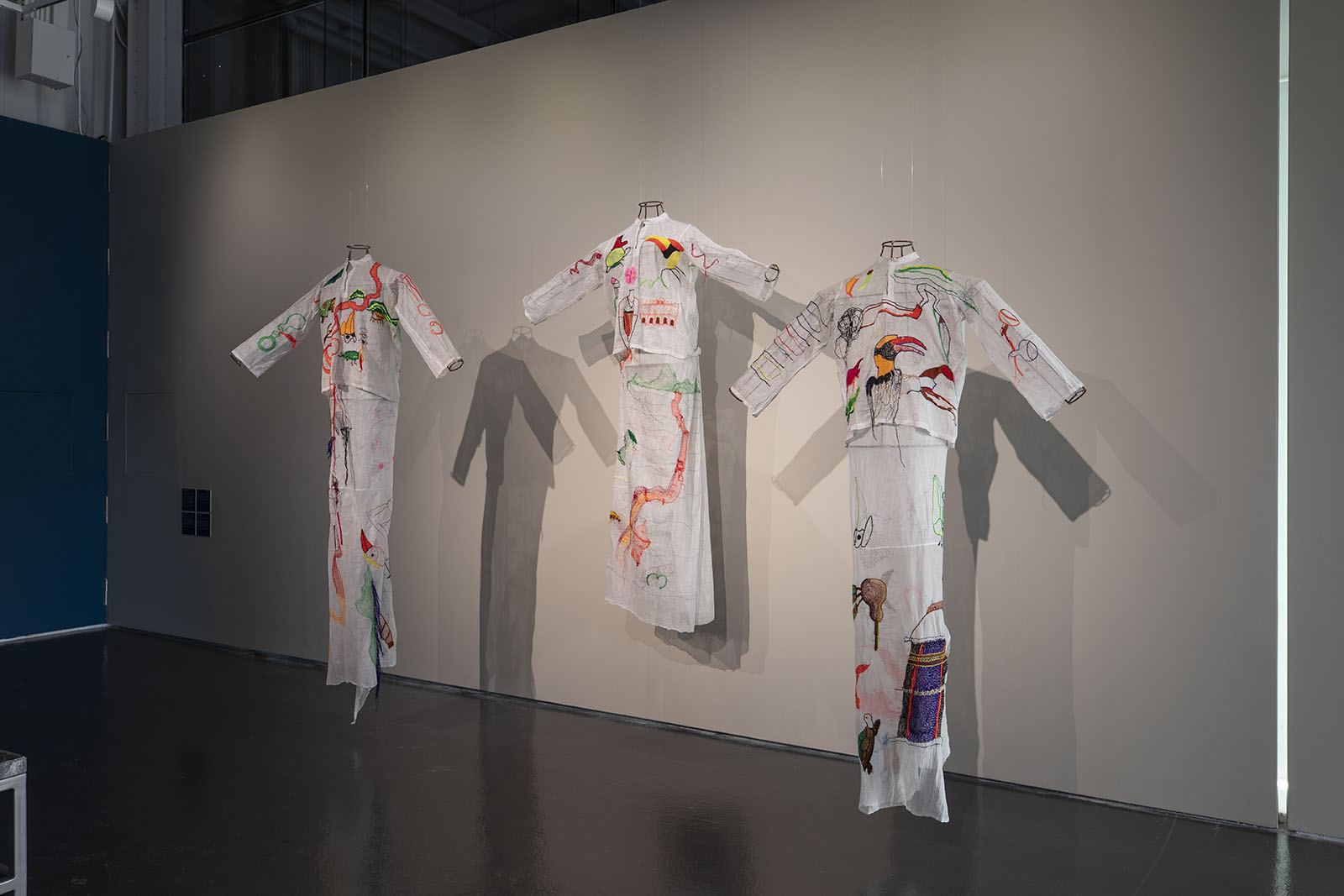
Furthermore, the works on view Story Of The Grey Hills (2022-23) were made through dialogue with individuals who lost their ancestral homeland in the Sajek valley. He turns his attention to the clothing of the Lusai community, who previously resided in this valley, but were displaced due to tourism projects. Uprooted from their homes, they were forced to seek refuge elsewhere, with some even venturing into neighboring India in search of a new life. Ironically, today’s tourists take photos in Lusai clothing as mementos of their hillside trips.

Jayatu conveys how ancestral garments become enshrouded by shadows of precarity and erasure. And come to stand in for the losses in ways of life, historical memory, and possessions of the Lushai community. Using the clothing as canvas and bright-hued needlework, the artist unveils haunting surfaces removed from their place of origin with remembered belonging and creative acts of retrieval.

NEWSLETTER