No products in the cart.

DRAG

Jude Maharmeh

Jude Maharmeh (b. 2000) is an architect and multidisciplinary artist, whose current artistic practice delves into the complexities of abstraction, examining form, light, materiality, and texture, skillfully interwoven with architectural elements. Grounded in the fundamental principles of architecture, Jude’s creations transcend the realm of mere exercises, evolving into dynamic and expressive artworks that explore the nuances of the built environment.

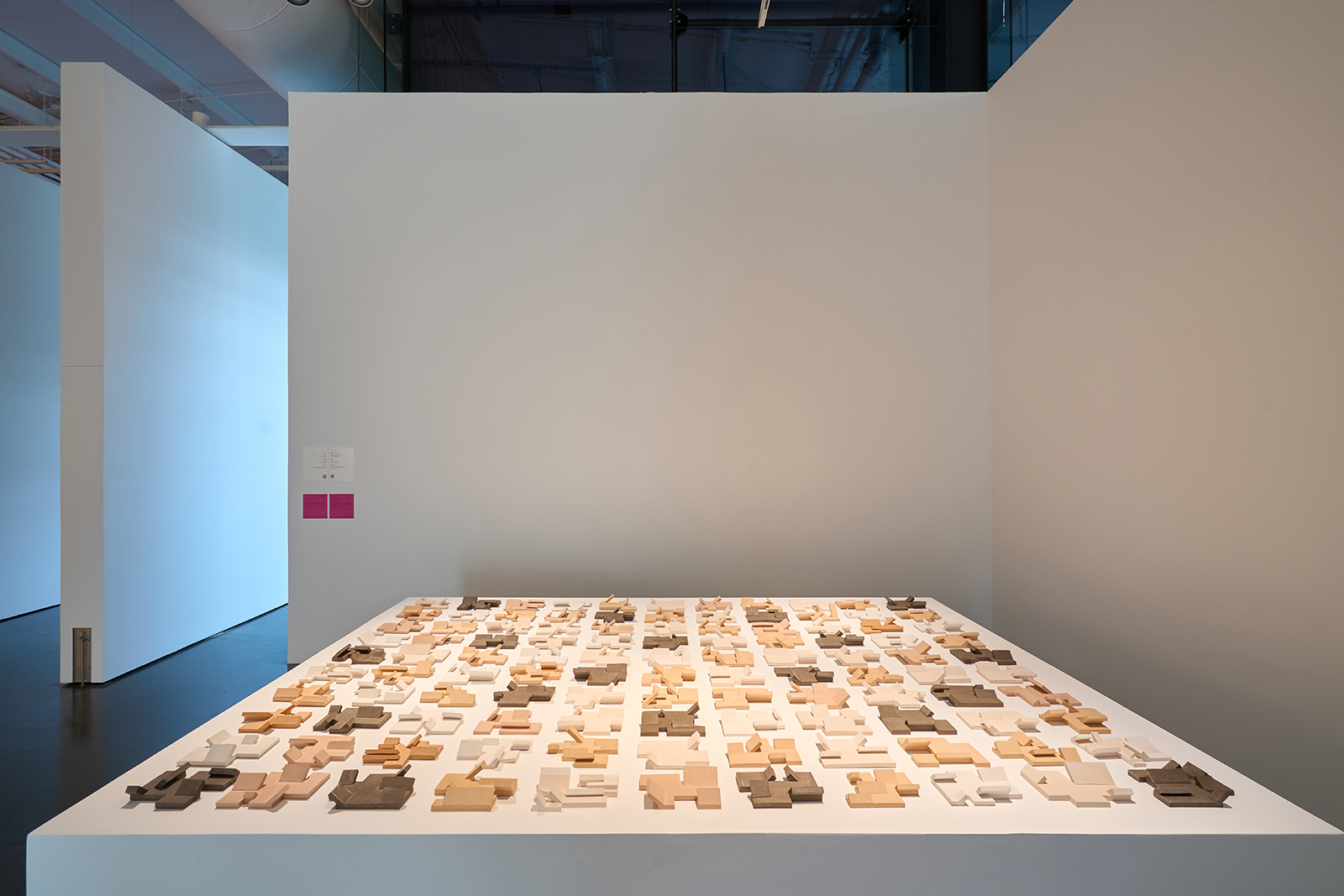
At the core of Jude’s creative process lies the strategic use of repetition, serving as a central and defining element, resulting in meticulous iterative processes that emerge from material explorations. This deliberate approach transforms each piece into an engaging dialogue, inviting viewers to interpret the artwork actively and sculpturally, fostering a dynamic relationship between the creation, its environment, and the observer, whereby questions around the work’s expression of form and materiality are explored. 

Jude received her Bachelor’s degree in Architecture with honors (Cum Laude) from the American University of Sharjah. Among her numerous accomplishments, she has been honored with the AEDAS Architecture Design Award, the American Institute for Architects (AIA) Academic Excellence Award, and the Dean’s Award for Academic Excellence. Her work has also been featured in NYUAD’s Project Space exhibition titled Pressure Points (2024).
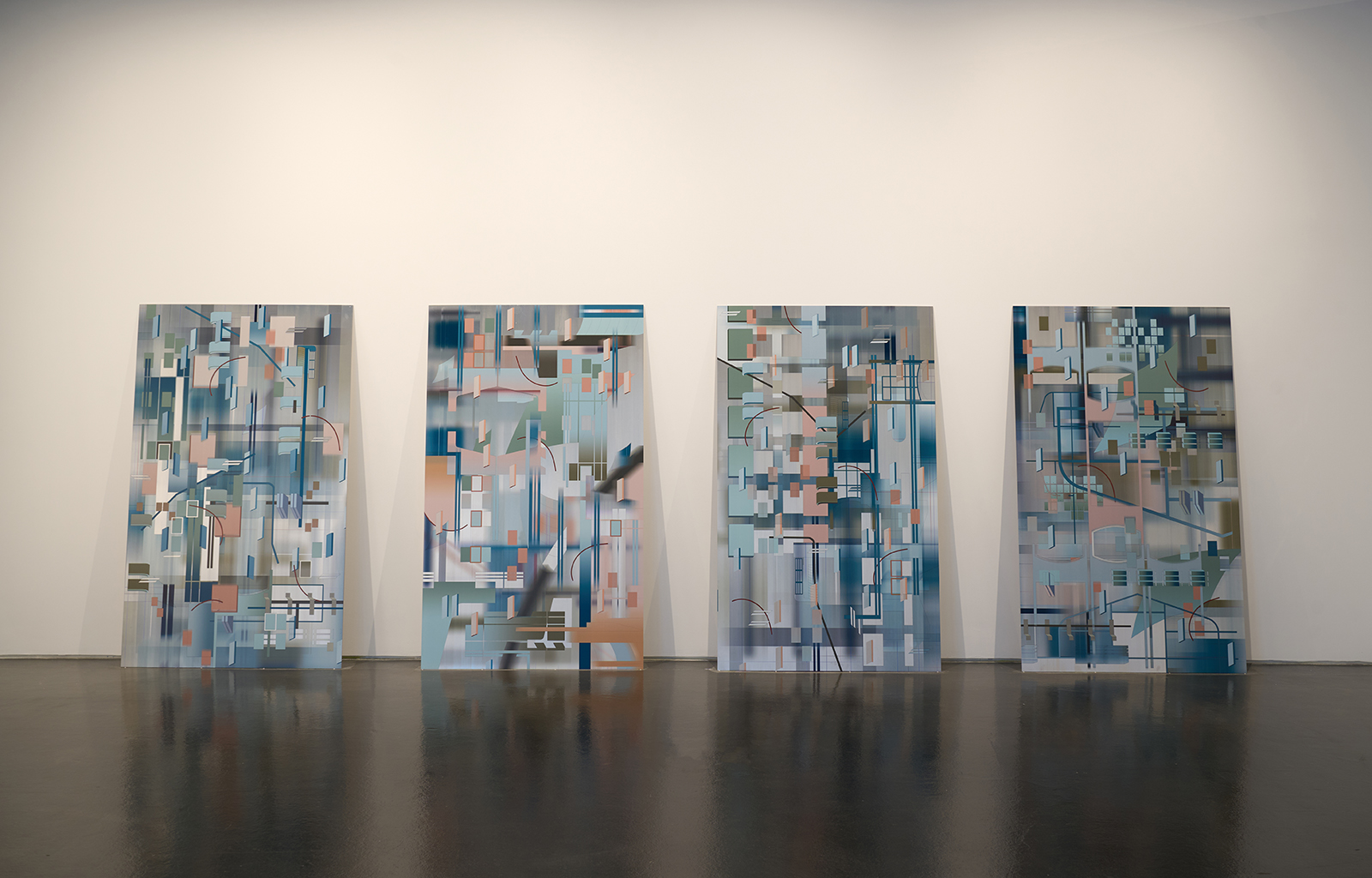
Inhabited Absence
2025

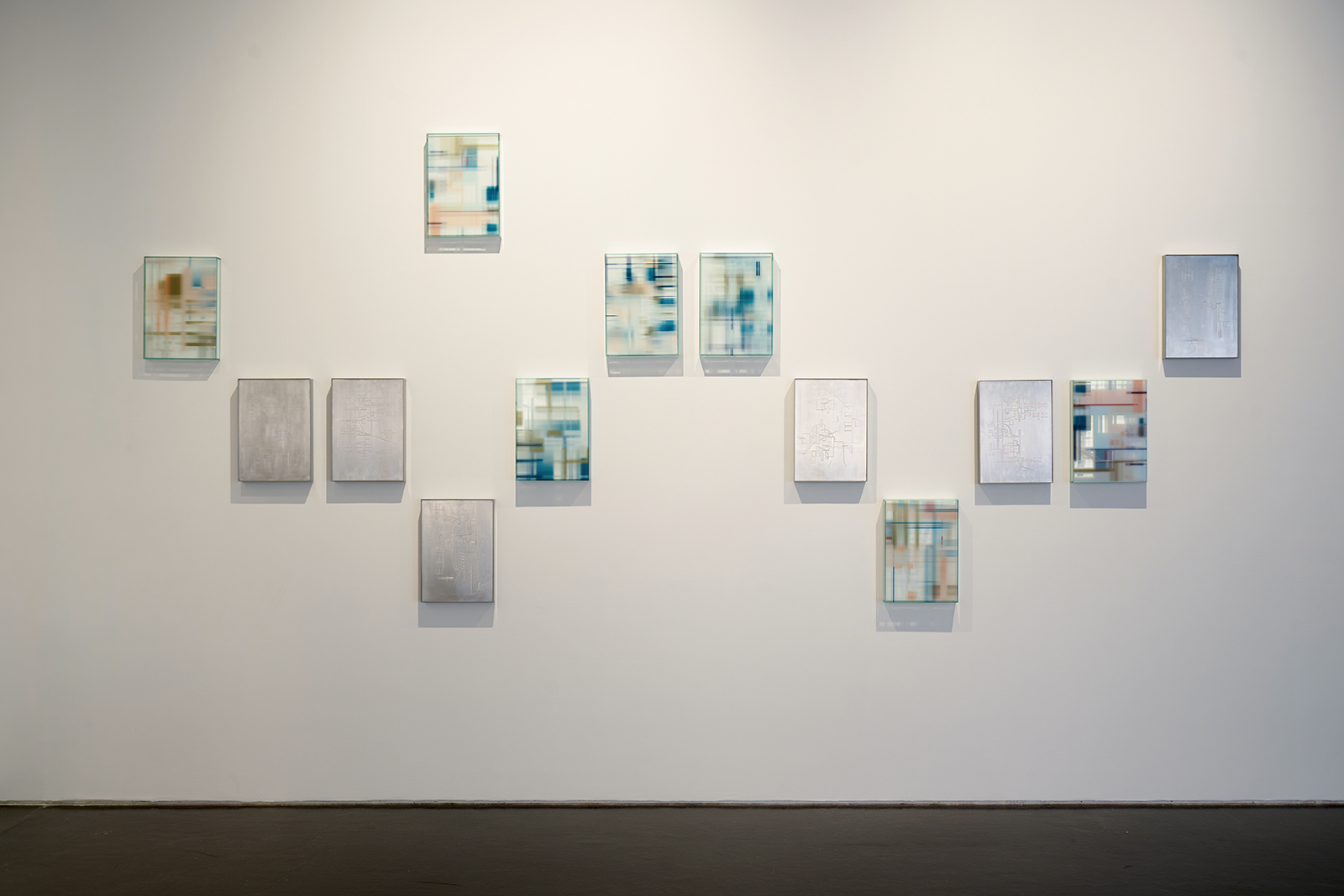
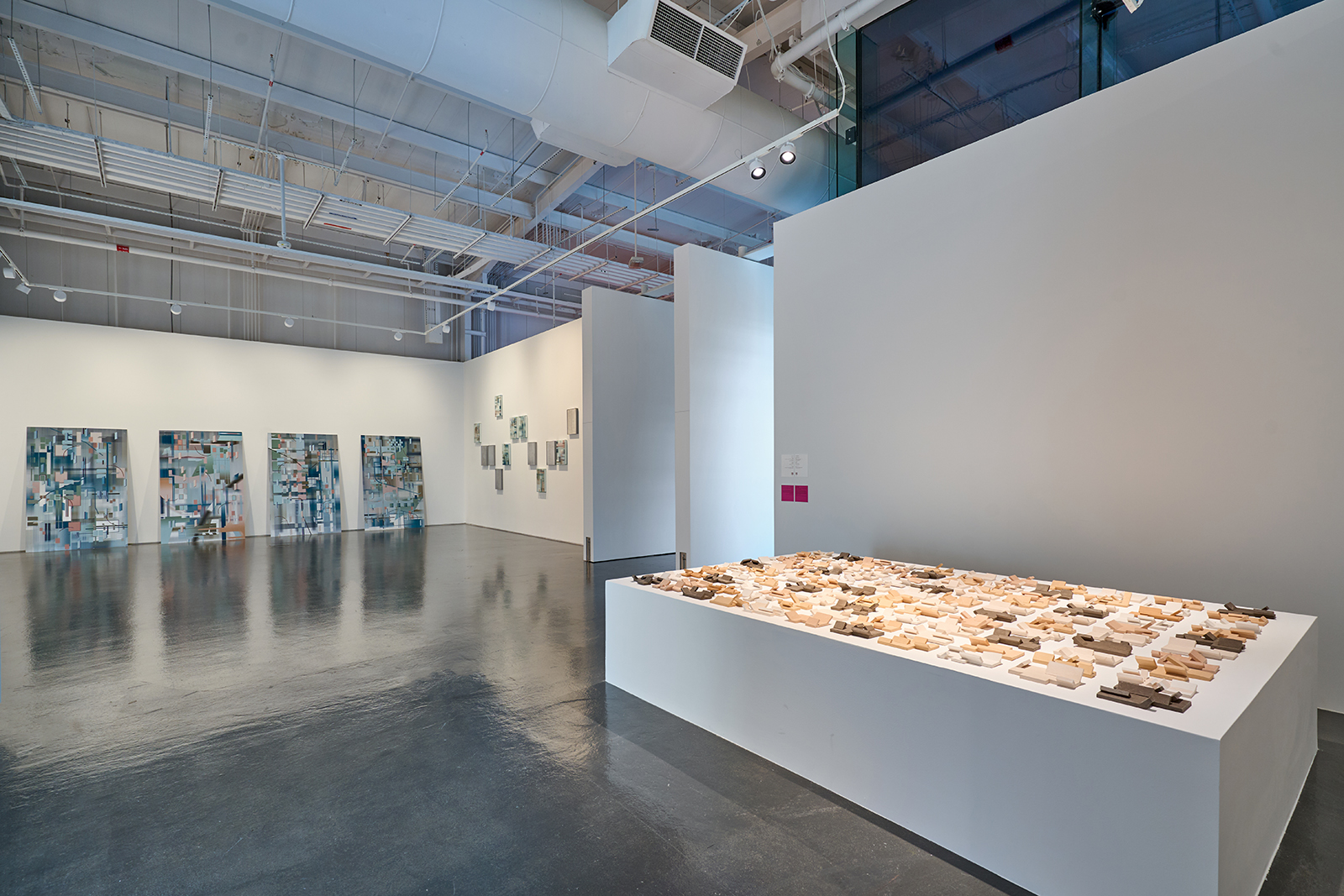
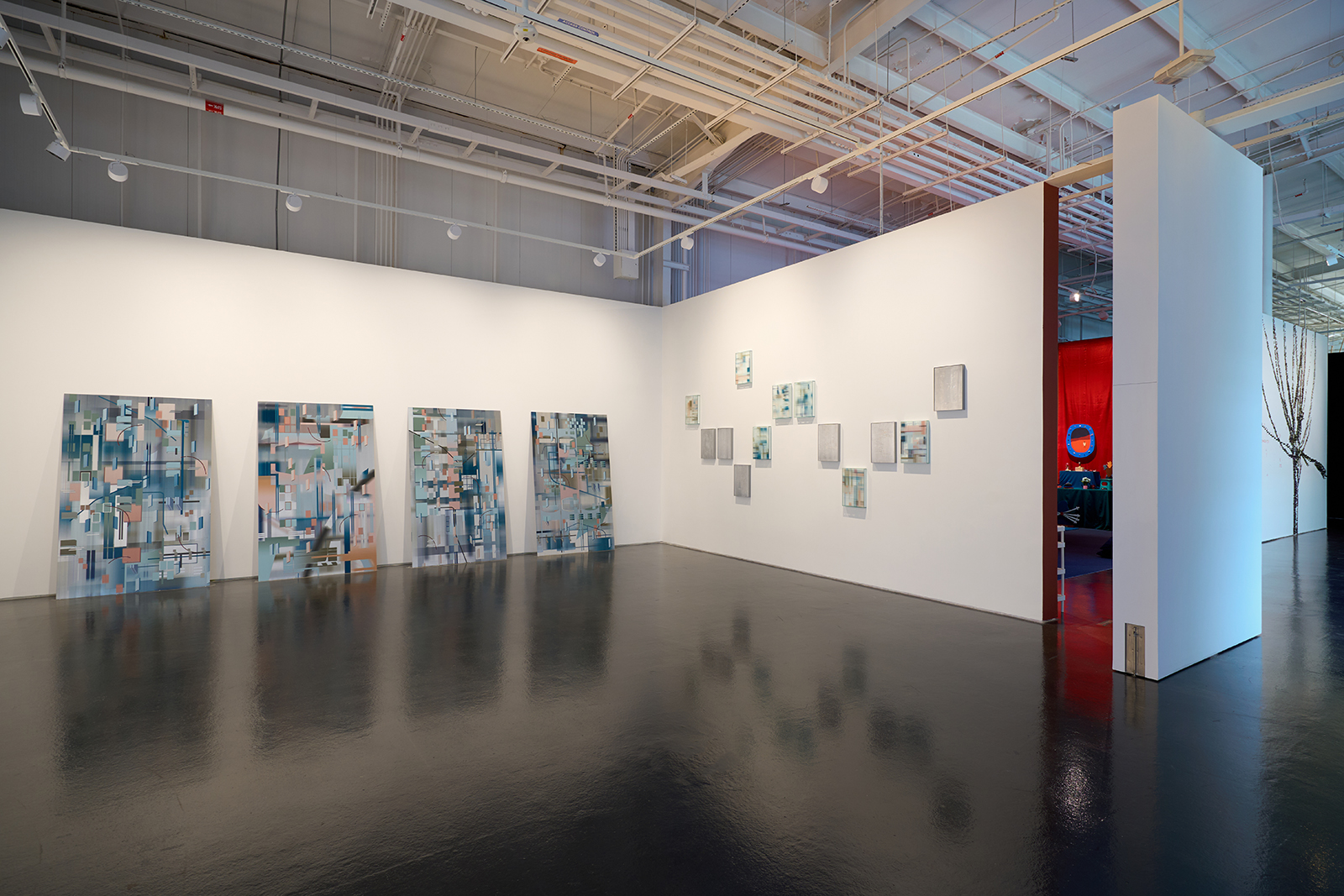
Jude Maharmeh’s Inhabited Absence investigates the transformation and erasure of urban landscapes through the materiality of aluminum—a material intimately tied to the architectural identity of the Gulf region. Widely used in facade cladding, signage, and high-rise construction, aluminum embodies transience and permanence in Abu Dhabi’s built environment, making it an ideal material to explore themes of demolition, and renewal. Inspired by Julie Mehretu’s expansive and multi-layered compositions, Maharmeh seeks to abstractly represent the city’s shifting landscape in two-dimensional form.

The works presented in this exhibition translate the built environment into a series of intricate compositions that utilize pattern and color as archival instruments. Originating from photographs captured in motion, capturing glimpses of the urban landscape in flux, the visuals presented here serve as an initial reference point for developing intricate, layered compositions through digital and analog processes. Techniques such as digital manipulation and UV printing yield compositions that can be interpreted from aerial or elevation perspectives, creating a purposeful sense of disorientation. The large-scale panels further amplify aluminum’s reflective qualities, generating blurred forms and ambiguous boundaries. Employing UV printing, engraving, and hands-on experimentation, the artist transforms the aluminum surfaces into a palimpsest of collective urban memory—a repository where traces, interventions, and layered histories continuously accumulate.

NEWSLETTER