No products in the cart.

DRAG

MTF Rukshana

M.T.F. Rukshana (b. 1989, Kurunegala, Sri Lanka) is a multidisciplinary artist and activist. She obtained her BFA in 2016 from SVIAS, Eastern University, Sri Lanka, where she served as a temporary lecturer in the Visual and Technological Arts Department from 2016 to 2018. She was awarded the opportunity to complete a Master of Art & Design Studies (MA ADS) at Beaconhouse National University, Lahore, Pakistan.

Rukshana’s practice addresses issues related to gender biases in marginalized narratives, offering commentary on women’s place within society, the discrepancies between Sri Lankan citizens and Sri Lankan Muslim societal expectations and conventions, the dehumanization of women, the psychological destruction caused by the loss of individual freedoms, and the lengths women will go to reclaim themselves.

She has exhibited in Colombo and across South Asia, with recent shows including the Young Subcontinent at the Serendipity Arts Festival in Goa, India (2018), A Timeless Heritage at the Tolworth Recreation Centre in Fullers Way North, UK (2019), the Colomboscope Art Festival 2022, and at 421 Arts Campus in Abu Dhabi.

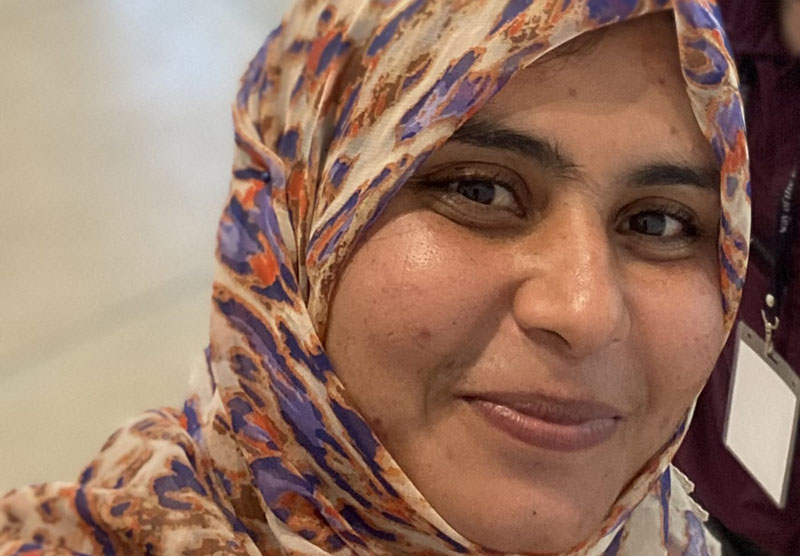
M.T.F Rukshana is a multidisciplinary artist and activist from North-Western Sri Lanka. Her practice has sustained a commitment to building creative testimonies around women’s oppression and patriarchal violence—in particular through laws that have led to structural inequalities in the lives of Muslim women on the island.

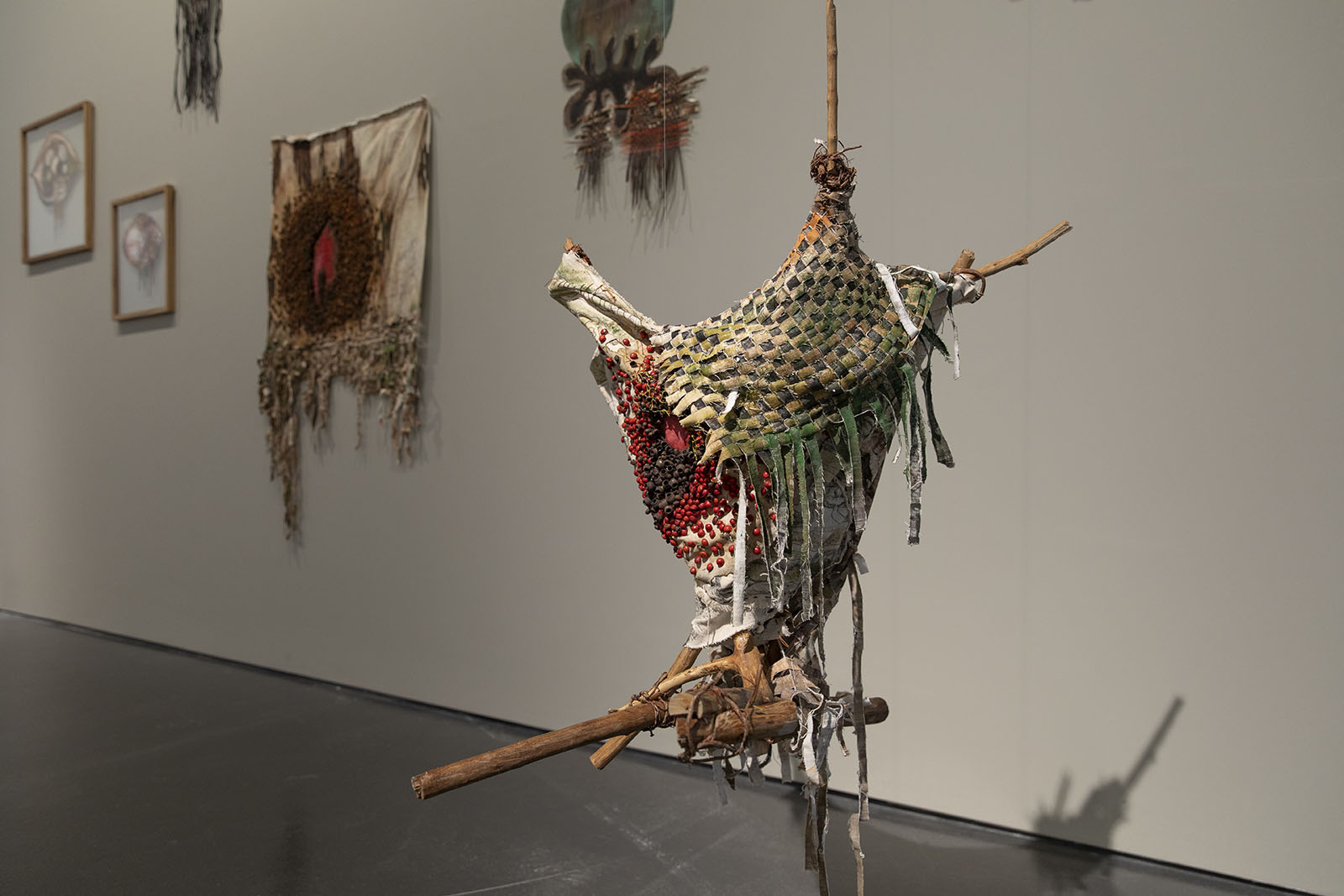
Employing an intergenerationally learned trade practice of weaving, Rukhsana weaves different materials such as paper, reed, cloth, and canvas. While teaching art and design in a vocational training center, Rukhshana explores how women reclaim their agency by subverting the trade-craft of weaving and moving toward collective freedom, social leisure, and endurance. While local weaving techniques involve meticulous counting and grid-based patterning, Rukhshana elaborates that “continual rhythms of the weaving patterns constitute an environmental philosophy, rather than a function, wherein themes of restraint and freedom, death and birth, void and renewal, are intertwined—not as rigid opposites but rather as dynamic concepts.”

Repurposing familial practices, Rukhshana questions societal conventions around women’s roles in normative kinship. Her anamorphic sculpture, Kiduhu I (2023) is embedded with the seeds of the Toona tree and coconut leaves—borrowing its form from the daily object of kiduhu, food baskets woven from leaves, used by Muslim communities in ceremonies to serve delicacies and collectively feast from. These handcrafted wares are living entities bearing the potential to sprout.

Invoking her childhood, Rukhshana recalls the cradle hanging from the tree in which her parents would nestle her. Touch me not (2023) is a sculpted cradle woven with fibrous roots and seeds recalling matrilineal relations and taking primary lessons in replenishment from the earth. Refuting the dualism of nature and culture, the artist’s work engages with ecological feminism as an active principle and turns to women’s histories in land art.

NEWSLETTER