No products in the cart.

DRAG

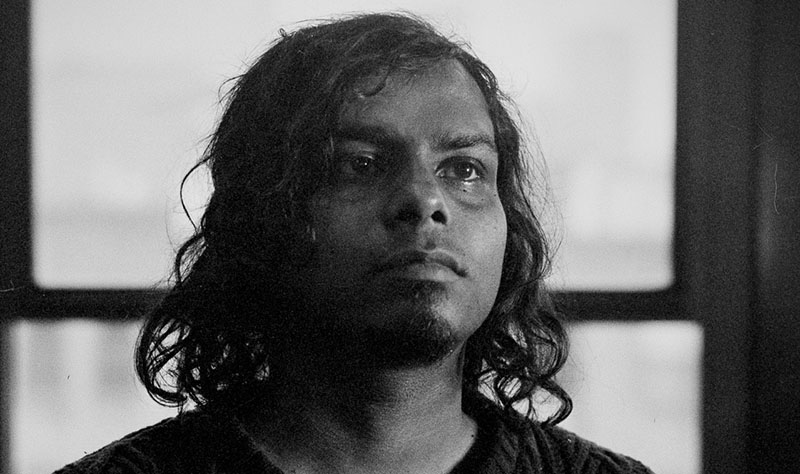
Pushpakanthan Pakkiyarajah

Pushpakanthan Pakkiyarajah was born in Batticaloa, Sri Lanka. He earned his BFA in Art & Design at the University of Jaffna and completed his MFA in Studio Art as a Fulbright scholar at the University of Illinois at Chicago (UIC). A multidisciplinary artist, Pushpakanthan received the South Asia Studies Fellowship at Cornell University (NY) in 2018.

Pushpakanthan was featured in “Thinking Historically in the Present” at the 15th Sharjah Biennial in 2023, a project conceived by the late Okwui Enwezor and curated by Hoor Al Qasimi. He has held a solo exhibition at the Brief Histories gallery in New York and recently participated in Biennale Jogja-17 (2023) and “The Way of The Forest” at Colomboscope 2024.

As an ‘artivist’ for the past ten years, Pushpakanthan seeks to bear witness to the Sri Lankan civil war and amplify marginalized voices through his art. His interdisciplinary practice reflects the painful and often silenced legacies of the thirty-year civil war while also addressing the dark sides of globalization. His intentionally unsettling work draws from histories of violence and the legacy of trauma. By attending to these silenced pasts, he aims to engage in a process of healing, creating space for the memories shared from this period.

Pushpakanthan has exhibited internationally, and his work is held in public collections, including the Herbert F. Johnson Museum of Art at Cornell University, NY, and the Sharjah Art Foundation, UAE.

The land is a porous and resolute witness to historical legacies of exodus, ethnic cleansing, and a toxic present under the reign of human greed. As a shared horizon of joy and suffering, life and death, Batticaloa-based artist and educator Pushpakanthan Pakkiyarajah turns to terra firma as materiality and inspiration, summoning granular notions of belonging, collective memory keeping, resuscitation, and micro observation as commoning.
​
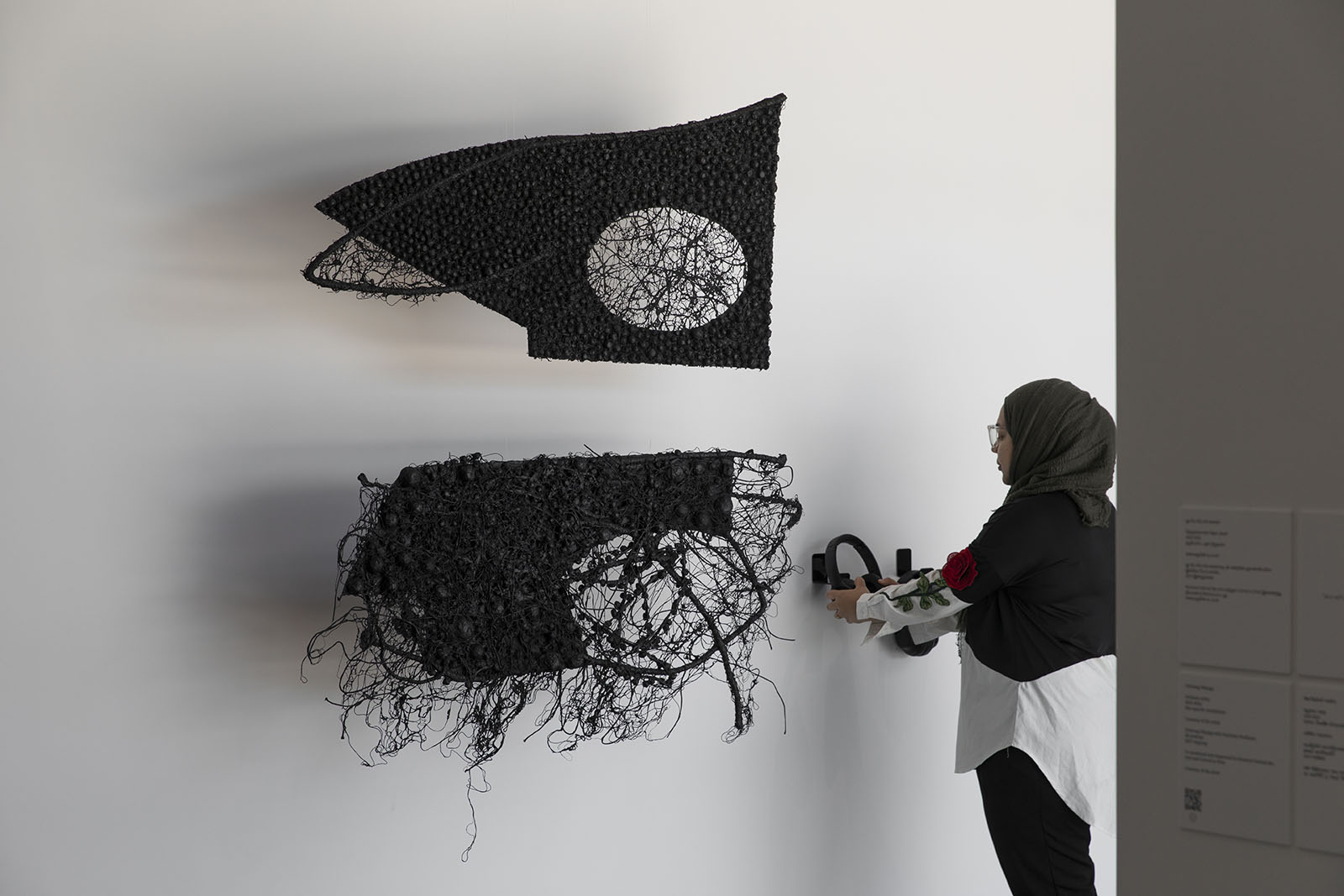
Pakkiyarajah considers how civil war has disrupted the environmental rights of living species, how landmines have devastated the soil, and how the impact of the ongoing economic crisis has accelerated deforestation. His large-scale installations and sound work Hidden Mycelium in a Wounded Land I and Hidden Mycelium in a Wounded Land II (2023) bring together drawing, an acoustic environment, and sculpture. He states, “The material investigations I take up are in contrast to the populist imagination of the island, knowing well that it can also be a terrifying place, because of what is often hidden, disappeared, and camouflaged. So, rather than focusing on pristine scenes, easily perceived on the surface, it is the unseen landscape that interests me more.”
​
Through a mycelium-based process and organic residues convening as dark matter, Pakkiyarajah’s recent sculptures reflect on charred landscapes, decomposing bodies, cycles of intergenerational trauma as well as the restorative potential of mycorrhizal networks that keep forest systems alive. The soundscape includes acoustic recordings made in Batticaloa of sung dedications and the beats of Udukku (small drum) invoking goddess Pattini, a deification of Kannagi worshipped by Tamil communities in Sri Lanka and Southern India as well as Sinhalese believers. Pakkiyarajah also records Sufi recitals and water bodies, producing a sonic river connecting multi-faith traditions of the lagoon landscape of his home terrain.

NEWSLETTER