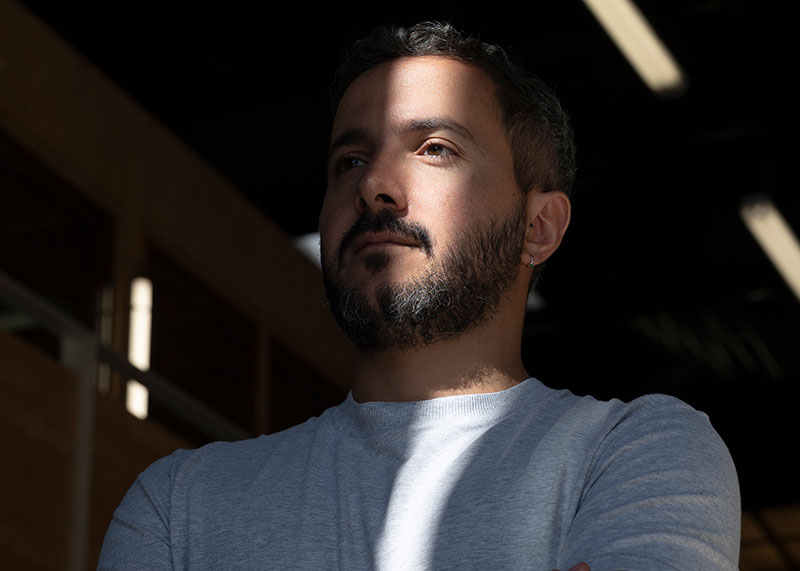
Roger Mokbel is a former biotechnology engineer turned photographer, using his visual works to advocate for social justice. He explores the intersection between personal and collective perspectives and often addresses societal and environmental concerns through the lens of human psychology. His projects have received recognition and awards, including the Photography Prize by the Boghossian Foundation for his first project, Describe the sky to me and an exhibition at the Festival International des Arts de Bordeaux for his second project And then, they just left. Mokbel is also a member of Collectif 1200, a collective of Lebanese photographers and visual artists.
Roger Mokbel
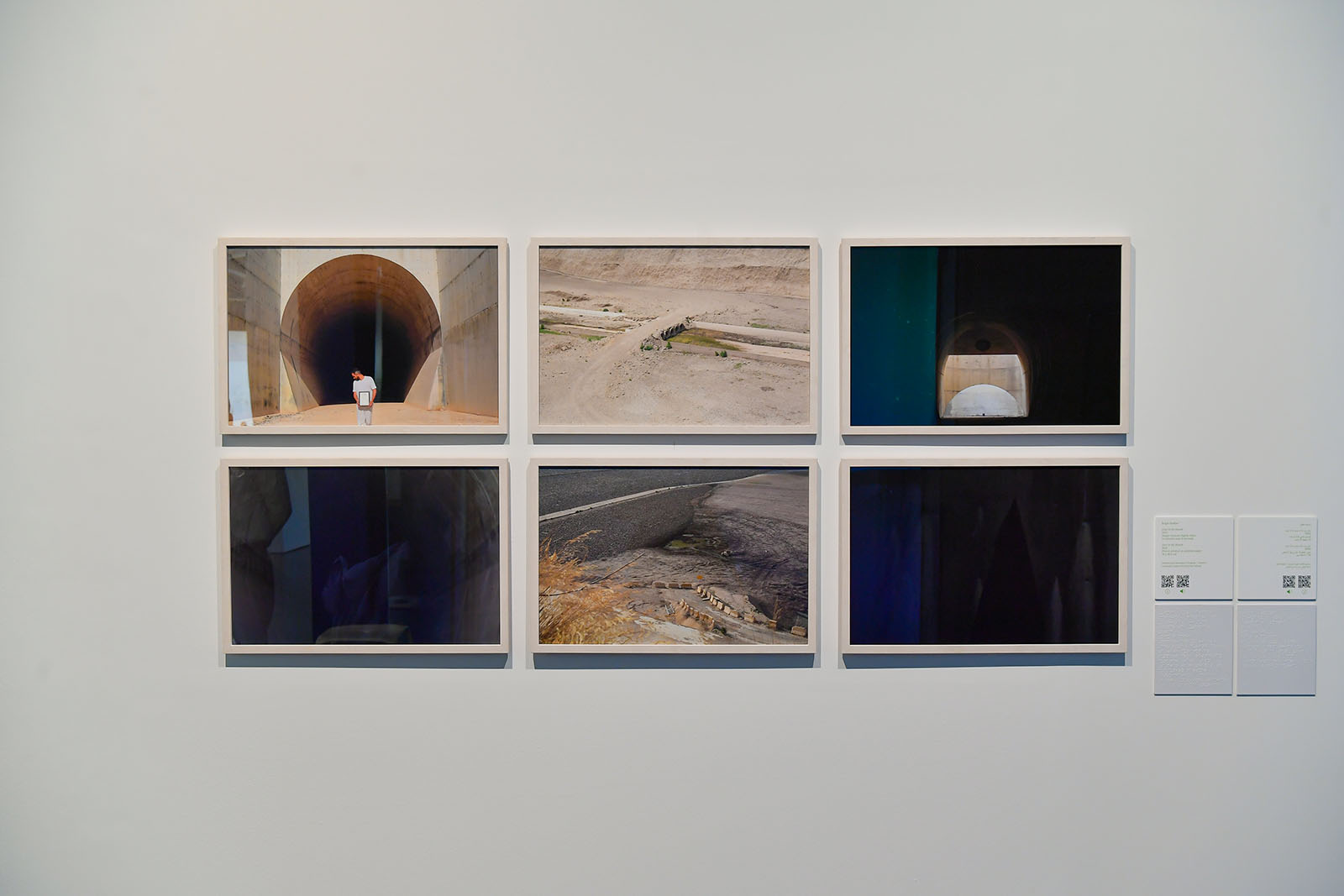
Project Title: Dust In My Mouth
Premise:
Through the work Dust In My Mouth, the artist seeks to explore the intersection between personal and ecological grief; to establish a reverent relationship between the viewer and the natural environment by reviving the lost subjective link between both. Ecological grief sensitizes the community about the deep intricacy between human society and nature, while personal grief brings us together in the social act of mourning; everything is interconnected. The artist subsequently aims to capture the ways a personal narrative and emotions of loss and grief resonate with the environmental destruction caused by a number of failed dams in Lebanon. In the long run, the project is planned to expand beyond its current local focus, and cover other examples of dams from the Middle East and North Africa (MENA) region where an increasing number of dry dams have been signalled recently.
Process:
The exploration of how and where personal grief and ecological grief intersect started with Roger’s own story following the passing of his father. In this first phase of the project, he worked on drawing a parallel between his own feelings of loss and those experienced in and by destroyed lands around the failed dams in Lebanon.
The second phase of the project aimed at going beyond the artist’s personal experience of grief, and looking to engage with the wider community by capturing the nuances of loss experienced by communities directly affected by the failing of the dams. At the start of the residency, the artist was transitioning towards this second phase. However, the artistic explorations undertaken during the residency have led the artist to achieve an unplanned and transformative milestone: creating a live performance, a ritual of grief imagined as a closure of the project’s first phase.
Fuelled by the readings, the movies and the discussions with people who have experienced grief in its versatile forms and expressed it just as diversely, the artist started writing a performance script that would narrate his own journey – a journey beginning with the passing of his father and would span the last two years. The script was written in Lebanese dialect as the artist intended to remove any formatting of his own thoughts and emotions while trying to translate them into formal Arabic or English.
Along with the script came a sequence of photographs taken at multiple site visits during the first phase of the project. In an attempt to make sense of what had happened to him but also of the numerous different self-portraiture and other photographic explorations that he had completed, the artist started a dialogue between his words and his images.
When choosing the location and the target audience for the performance, there was only one obvious option: bringing this work back to the artist’s hometown, specifically inside the church hall, where the choice of location transformed the act from a performance to a grief ritual. The ritual occurred on the second annual commemoration of the passing of the artist’s father in the presence of around 100 persons from family, relatives and village acquaintances but also curious attendees. The ritual was recorded, leaving a trace of this exceptional occurrence. However, the recording did not benefit from the needed care for lighting and sound. This has led the artist to consider repeating the act under controlled conditions for an optimal recording output. The new recording was also completed during the time of the residency.
Further development of the project included the artist relocating to Qartaba, a community that was directly affected by one of the failed dams. Several interviews were conducted with people who have or had connections with the damaged valley. Along with the interviews, the artist conducted literature screenings about grieving rituals and ecological grief with a local focus on Lebanon.
Outcome:
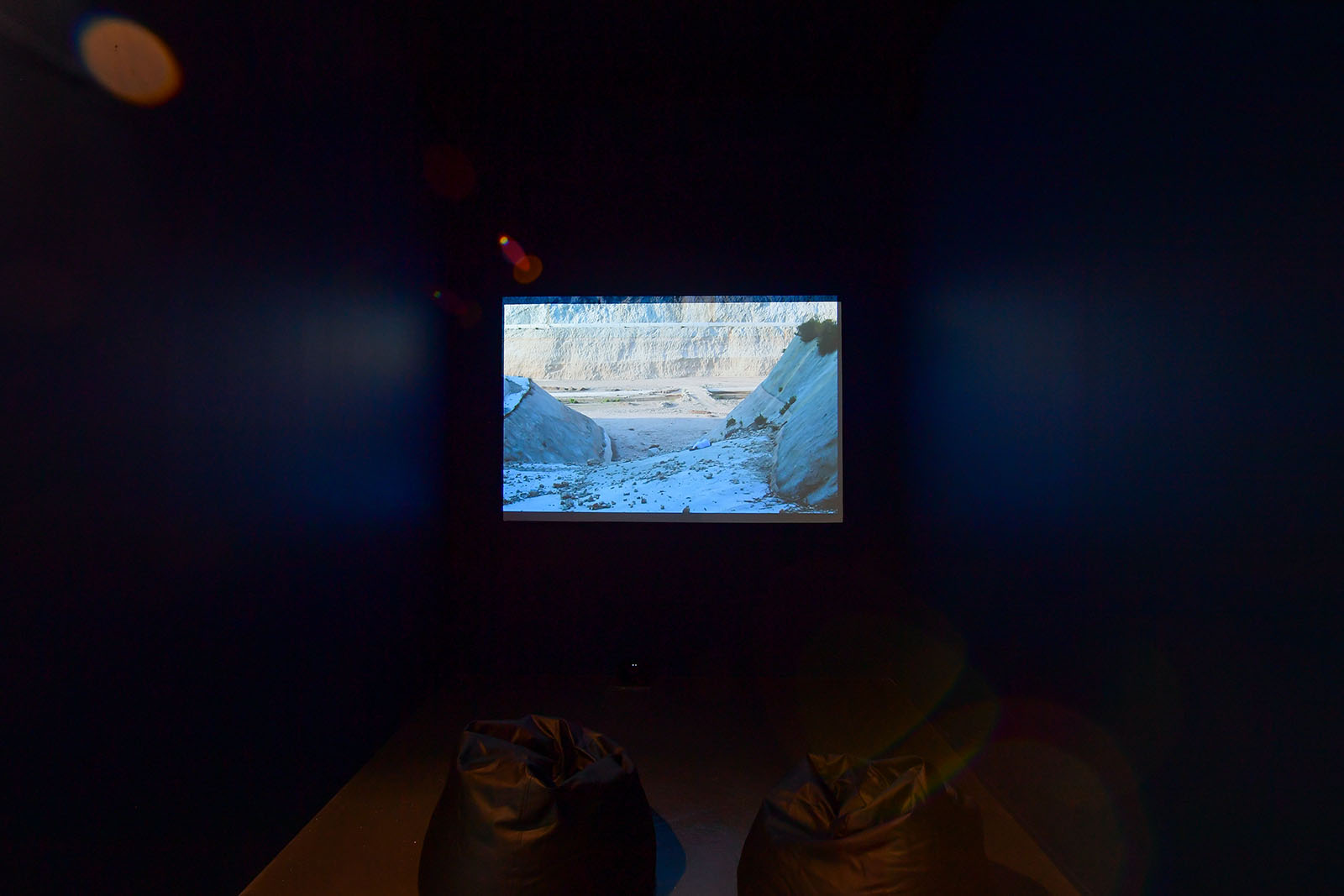
The exploration of personal and ecological grief takes a parallel narrative at the culmination of the project, taking the form of a performative grief ritual accompanied by a series of selected photographs from the project’s first and second phase. The photographs emphasize and magnify the crippling feeling of being stuck inside a frame since the event of the tragedy. The artist shifts in and out of the frame in a constant struggle to wrestle with its boundaries, reminding us of the ups and downs, the successes and failures, feelings of powerlessness and bursts of ambition to resolve it; all that we may experience in grief.
The recording of the grief ritual consists of an oral performance of the artist’s personal journey, visualized by a sequence of his own images of failed dams and their surroundings. The photographs become building blocks for the video, while words build up the narrative of a personal as well as a collective journey experienced by the artist and affected communities in Lebanon.
The artist intends to pursue this long-term project over the next two years.