No products in the cart.

DRAG

Safeya Sharif

Safeya M.R. Sharif (b. 1999, Dubai) is an Emirati artist whose practice explores abstraction, spatial representation. Her work bridges the gap between distorted reality and mark making, inviting audiences into a space where familiarity and abstraction collide.

She disrupts traditional painting through the use of unconventional materials, such as linoleum-cutouts, canvas stretchers, expanding her practice into metal forms. Her visual language frequently incorporates doors and hallways, symbolizing safety and territory, yet rendered powerless when removed from their functional contexts. Working across mediums like printmaking, painting, and drawing, her work reflects themes of depth, void spaces, and subjective interpretation. Safeya’s pieces often take on a self-referential quality, delving into memory and internal signifiers.

Safeya will graduate with an MFA in Art and Media from New York University in 2025 and holds a BFA in Visual Art from Zayed University, Dubai. Her work has been exhibited in the UAE, including Art Abu Dhabi, Abu Dhabi (2024); Pressure Points at Project Space, NYUAD (2024); Sikka Arts and Design Al Shindagha Editions, Dubai (2024); Time and Identity at Al Safa Arts and Design Library, Dubai (2023); Press Print! at Aisha Alabbar Gallery, Dubai (2023); Chill: Summer in the City at Aisha Alabbar Gallery (2022); Psychedelic Surrealism at Quoz Art Festival (2022); and Looking Elsewhere, Foundry, Dubai (2021).
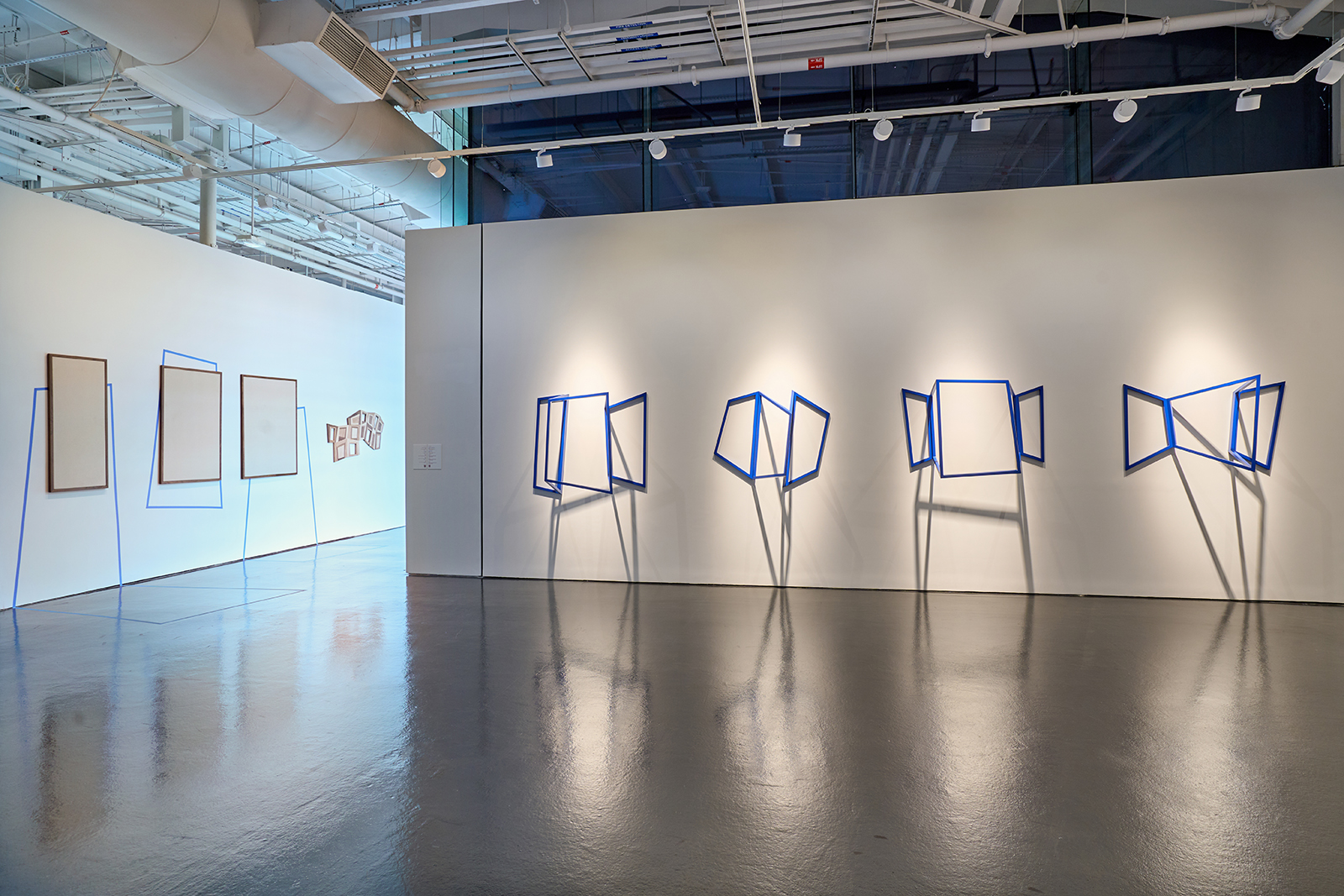
Unfolding and Nonfunctional
2025

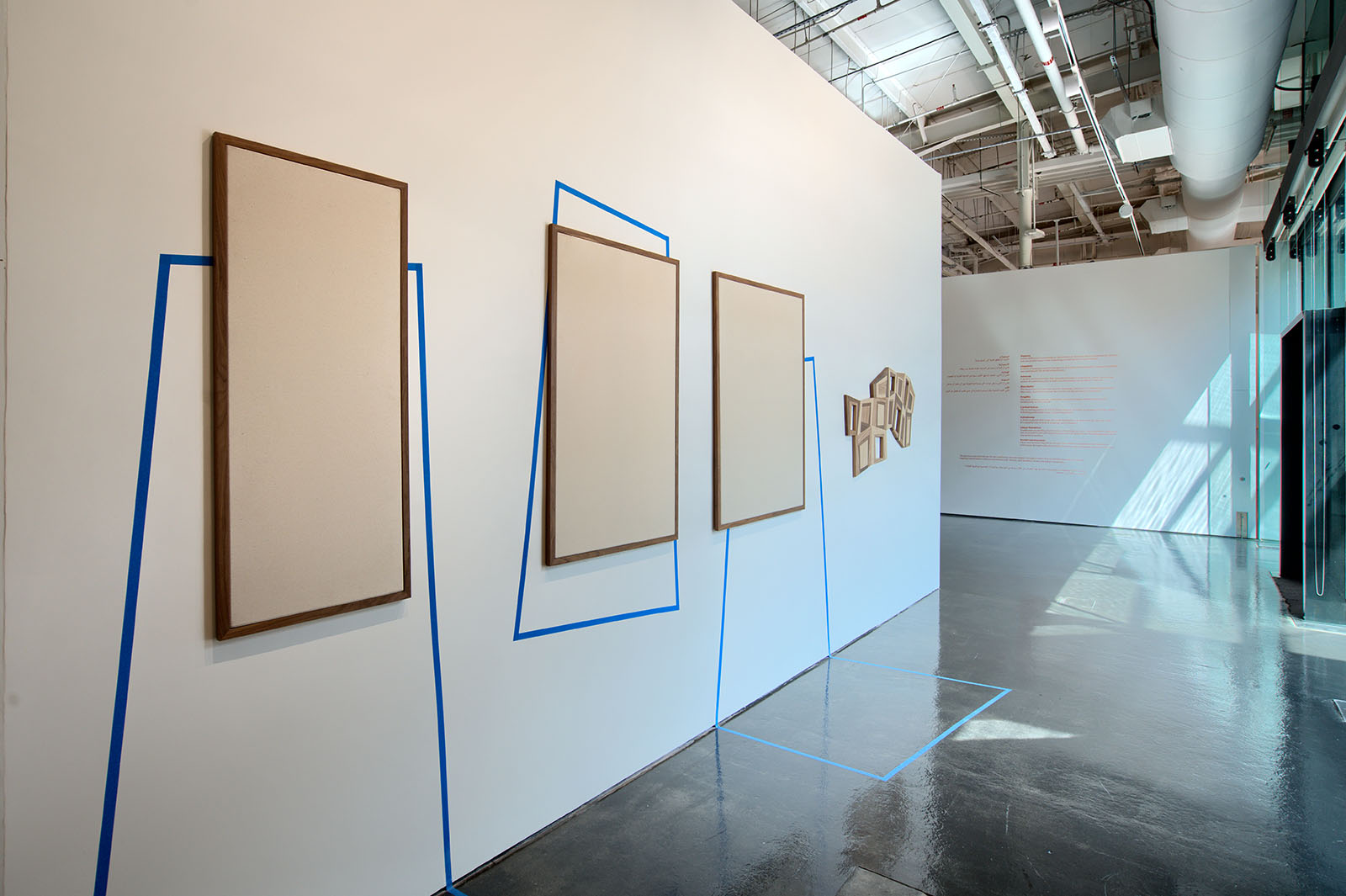
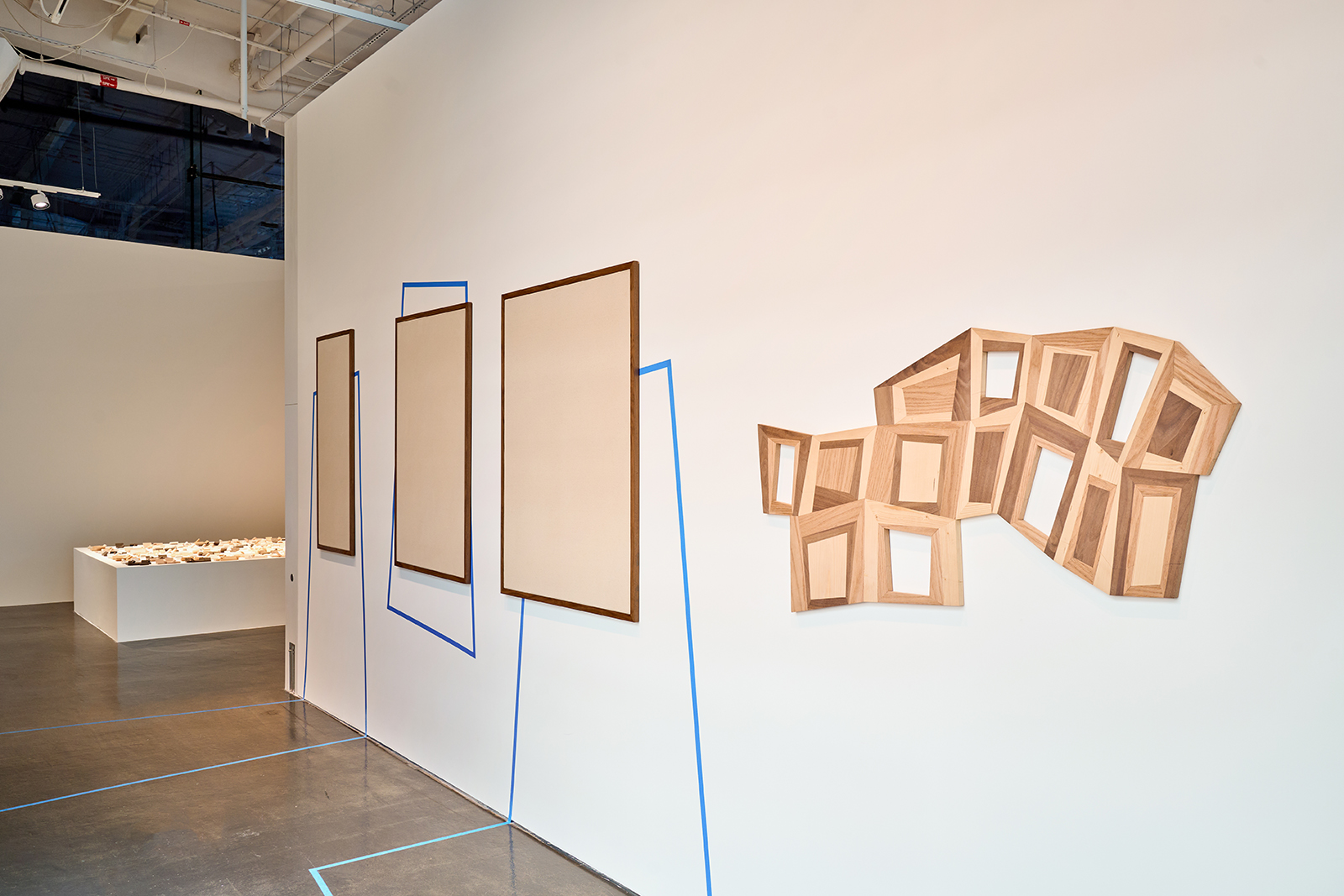
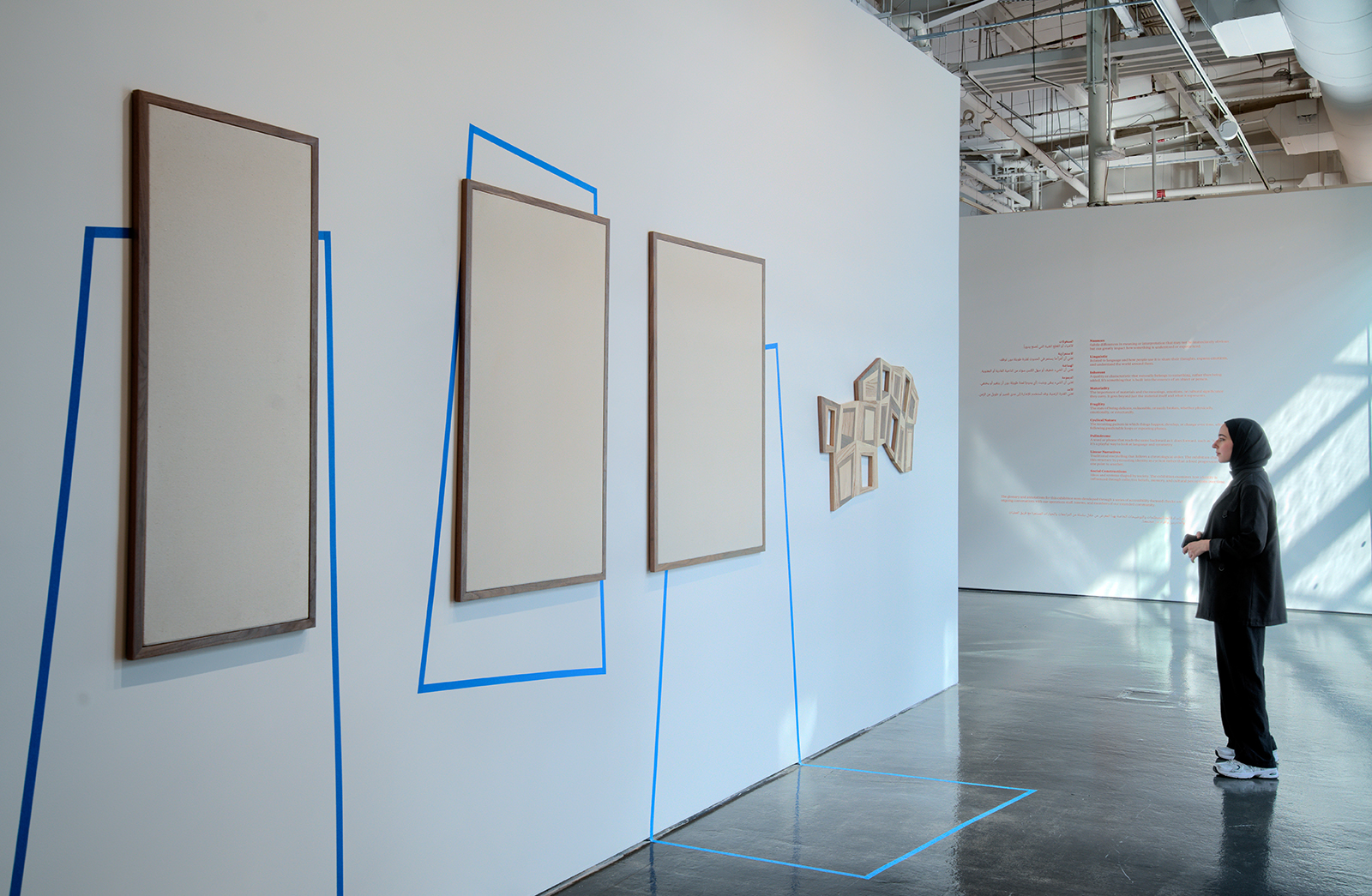
In Unfolding and Nonfunctional, Safeya Sharif reconfigures architectural forms, doors, hallways, and thresholds into autonomous sculptural objects, stripping them of their intended function. By decontextualizing these structures, she challenges the ways we engage with space, emphasizing the liminal state between presence and absence, access and obstruction.

Drawing from phenomenology, the work foregrounds perception as an embodied experience. Maurice Merleau-Ponty’s assertion that perception is shaped by bodily movement is central to this exploration; as viewers navigate the work, their understanding of space shifts. The cutouts and voids within the wooden forms disrupt expectations of solidity, reinforcing the idea that absence can be as materially present as structure itself. Layered and fragmented wood types, walnut, oak, and white wood, echo ornamental door frames while resisting conventional spatial logic.

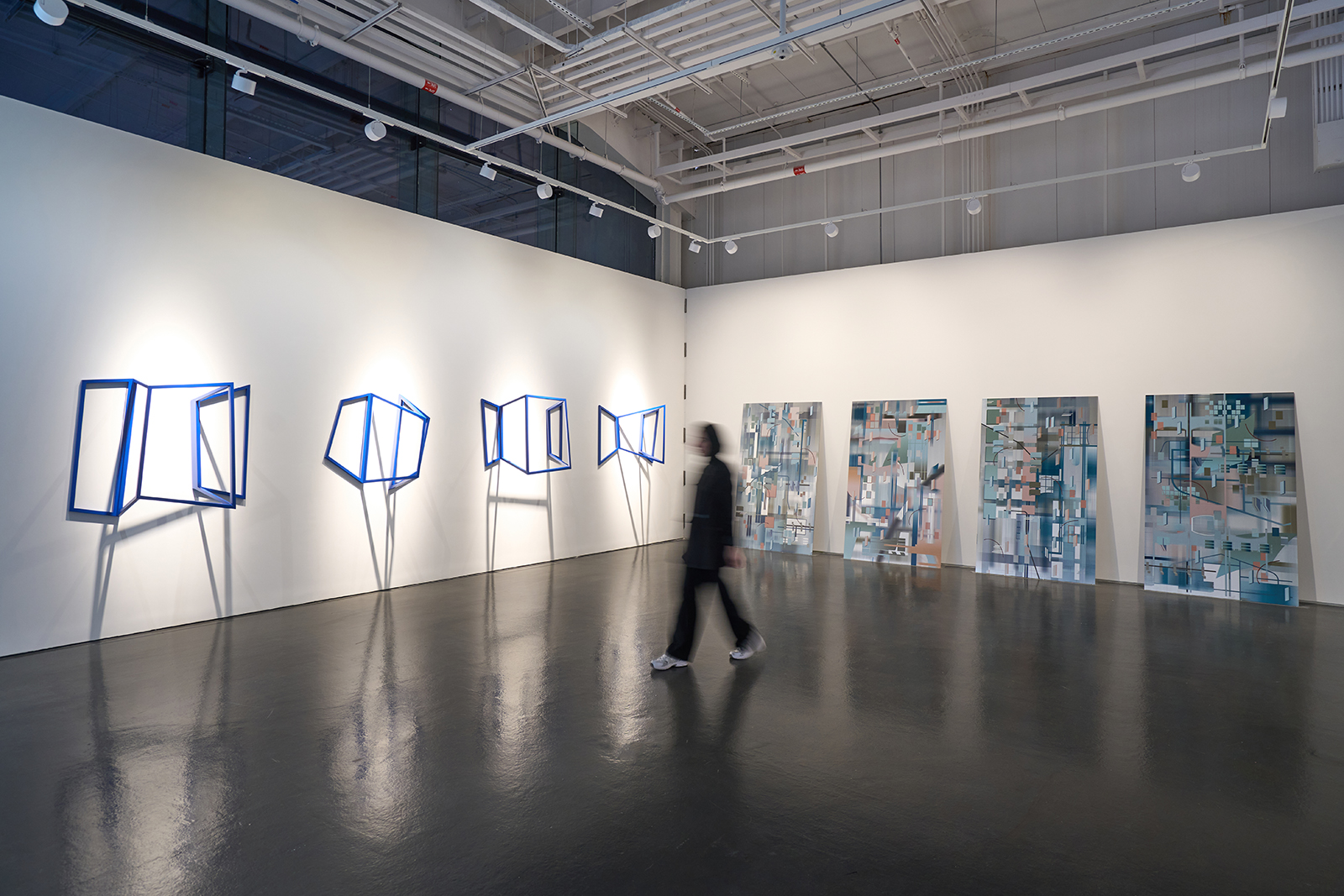
Sharif’s engagement with materiality is also informed by the Supports/Surfaces movement, which redefined the stretcher as an active compositional element rather than a passive support. In this spirit, the metal “folded paintings” subvert expectations of stability and form, appearing simultaneously rigid and in flux. Similarly, the hollowed-out wooden structures reference doors, windows, and passageways, yet they deny entry, existing as both barriers and openings. The embossed prints and paintings function as extensions of visual language developed in Unfolding and Nonfunctional, offering material and form continuity across mediums. While distinct in format, these works mirror the same tension, drawing connections that thread between presence and absence, surface and structure, manifesting the core themes of the installation through paint and print based process.

Through abstraction, fragmentation, and material manipulation, Unfolding and Nonfunctional interrogates the fluid boundary between architecture and sculpture. It does not depict space but constructs it, inviting viewers to reconsider their own movement and perception within shifting spatial frameworks.

NEWSLETTER