Ecology for Non-Futures
2022- 2023
Single-channel video and wallpaper
20 minutes
Courtesy of the artists
UNMAKE LAB is an artist duo based in Seoul, South Korea, comprising Binna Choi and Sooyon Song.
They juxtapose the historical progression of human development with the peculiarities of machine learning to examine our socio-cultural and ecological circumstances.
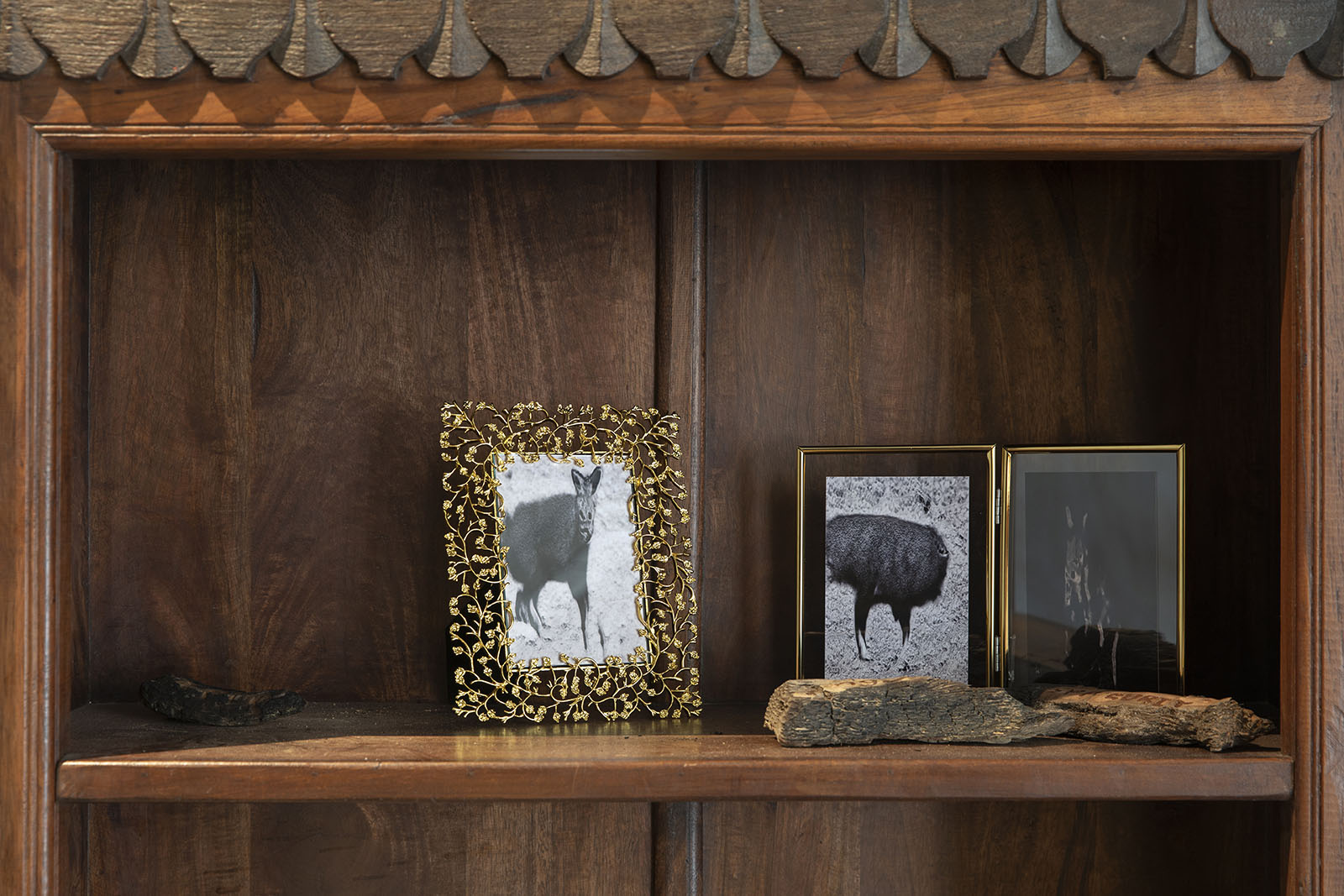
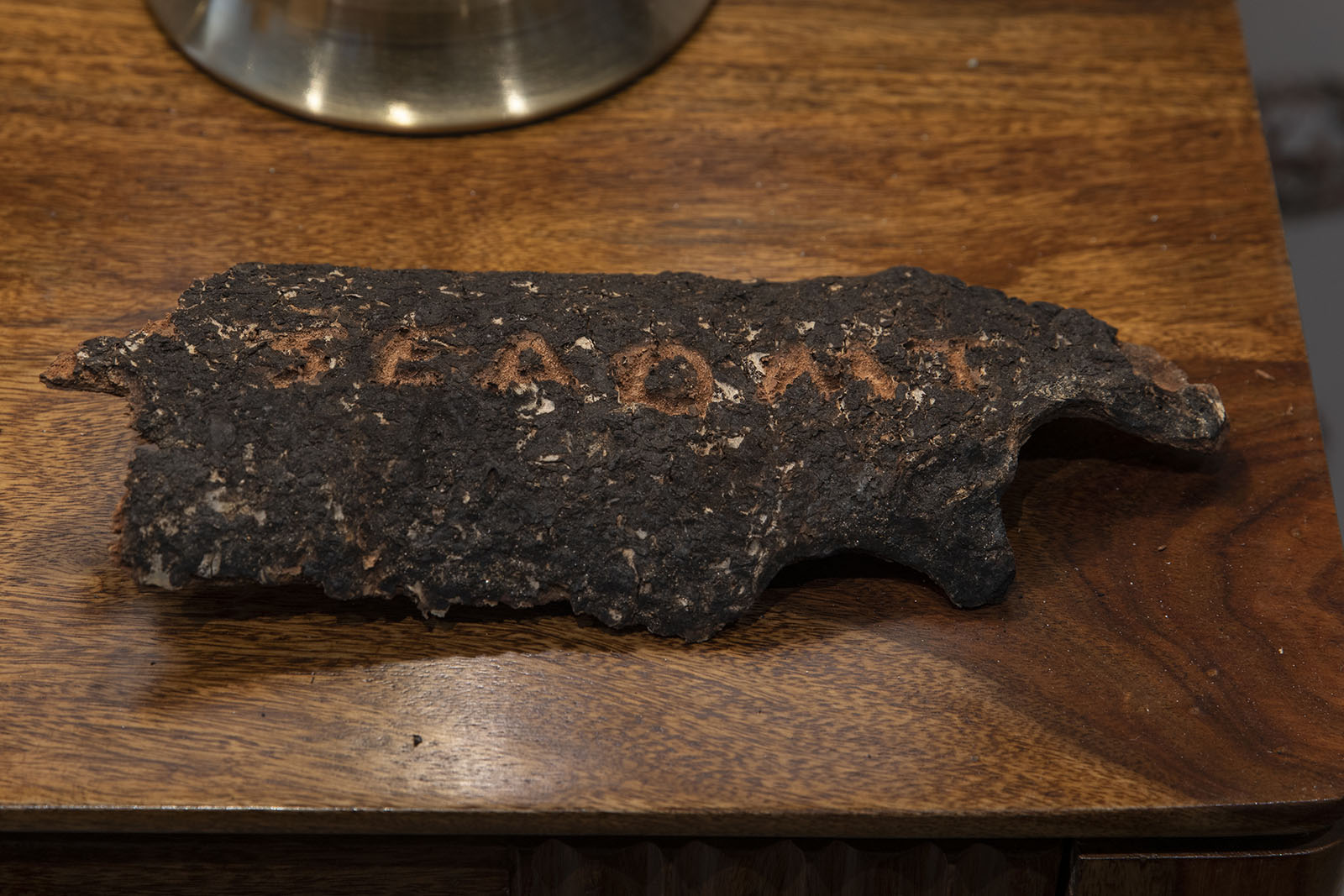
As we examine a somewhat familiar, cosy living room before us, something strange begins to unfold. The non-human beings that populate this space are not what they seem.
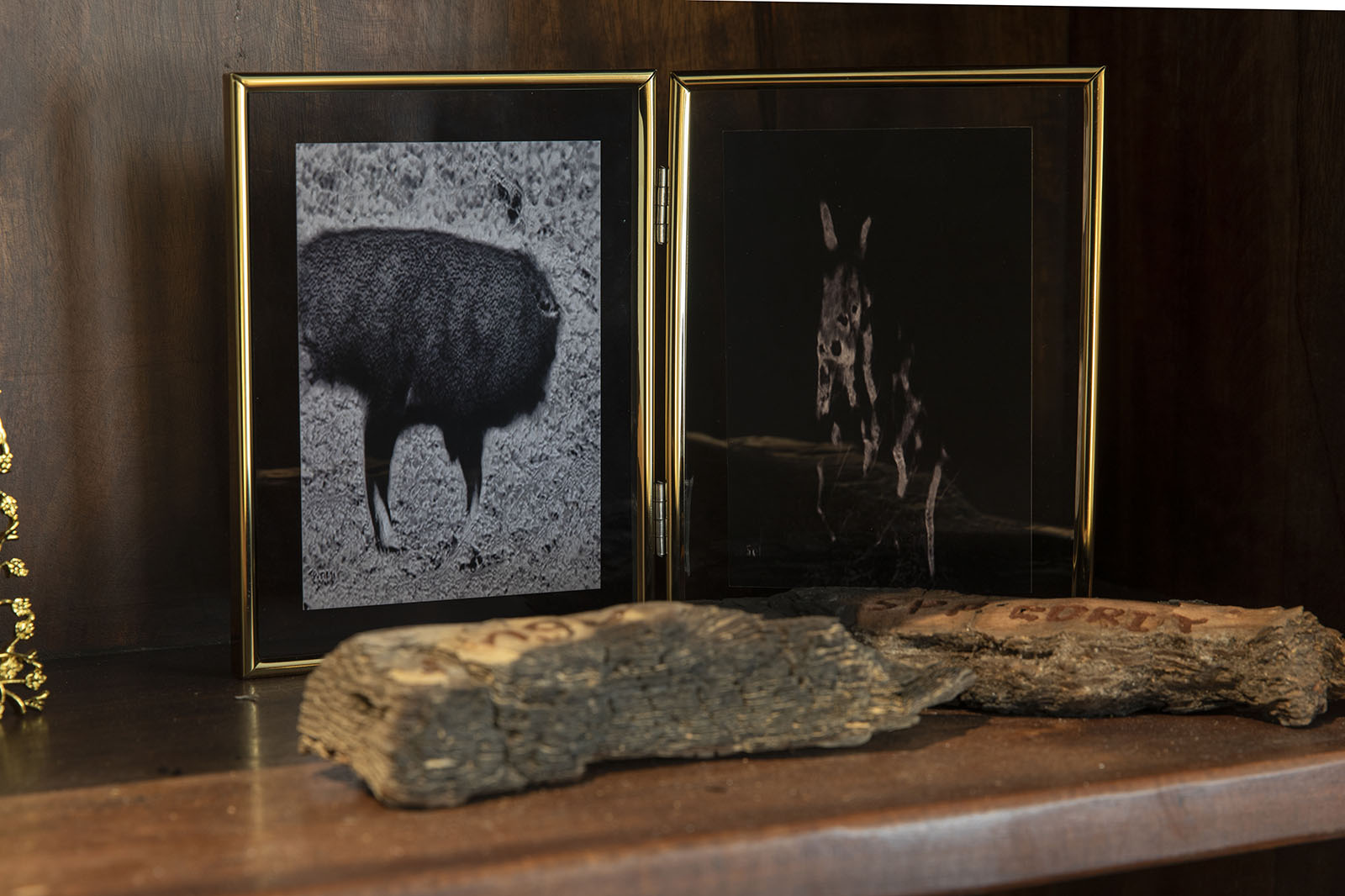
These animal images are generated via visual data captured from trail camera footage in South Korean wildfire-affected mountainous regions, photographs of colonial, taxidermied specimens and non-human beings forcibly displaced by eco-crises.
Created via a generative adversarial network (GAN) and Dall-E, each a type of artificial intelligence (AI), these animals are composed of fragments of animals that do and used to exist, and some that are extinct. A GAN is a machine learning framework that takes a collection of data, or dataset, to generate AI, resulting in data statistically the same as the original dataset, yet altered.
These non-existent creatures flirt with the uncanny valley in pockets of time and images that are purely artificial, purely Anthropocenic. It is the time of an already-catastrophe, an already-Apocalypse.
Through artifice and kitsch, Ecology for Non-Futures interrogates what constitutes a real representation of the non-human through a human perspective, while simultaneously embodying the anxiety of our own imminent negation. They prompt us to consider what kind of futures we are creating – and losing – in the midst of ongoing, pervasive disaster.
Domestic Animal Syndrome
2023
Prints
Approximately 60 x 80 cm each
Courtesy of the artists
As the boundary between ‘virtual’ visuality and reality become increasingly blurred, UNMAKE LAB transforms machine perception and its algorithmic fixations into elements of irony, allegory, and humour.
Utilising generative adversarial networks (GAN), collections of data (datasets), and computer visions as ‘critical observation techniques’ in times of ecological crisis, Domestic Animal Syndrome uses the ghostly traces of various creatures caught in mountainous camera-trap footage to produce fictional composite images of animals that seem real.
The creatures generated by machine learning have visual elements that do not exist in the original dataset, becoming a moment of encounter with the anthropocentrism of artificial intelligence (AI), a new coloniality. The images reveal the way we, humans, falsely project onto non-human nature to make them familiar and domestic objects in our collective visual consciousness. They reveal our anxiety about the unknown territories and the inadequate languages of our extinctions.
For UNMAKE LAB, the allegorical tradition of satirising humans through animals is extended here to non-human machines, making these more-than-human technologies a part of the generic ‘Nature’ that surrounds us.
Framed as family-style ancestral portraits, these images are humorous, eerie homages to these non-beings and our collective non-futures.