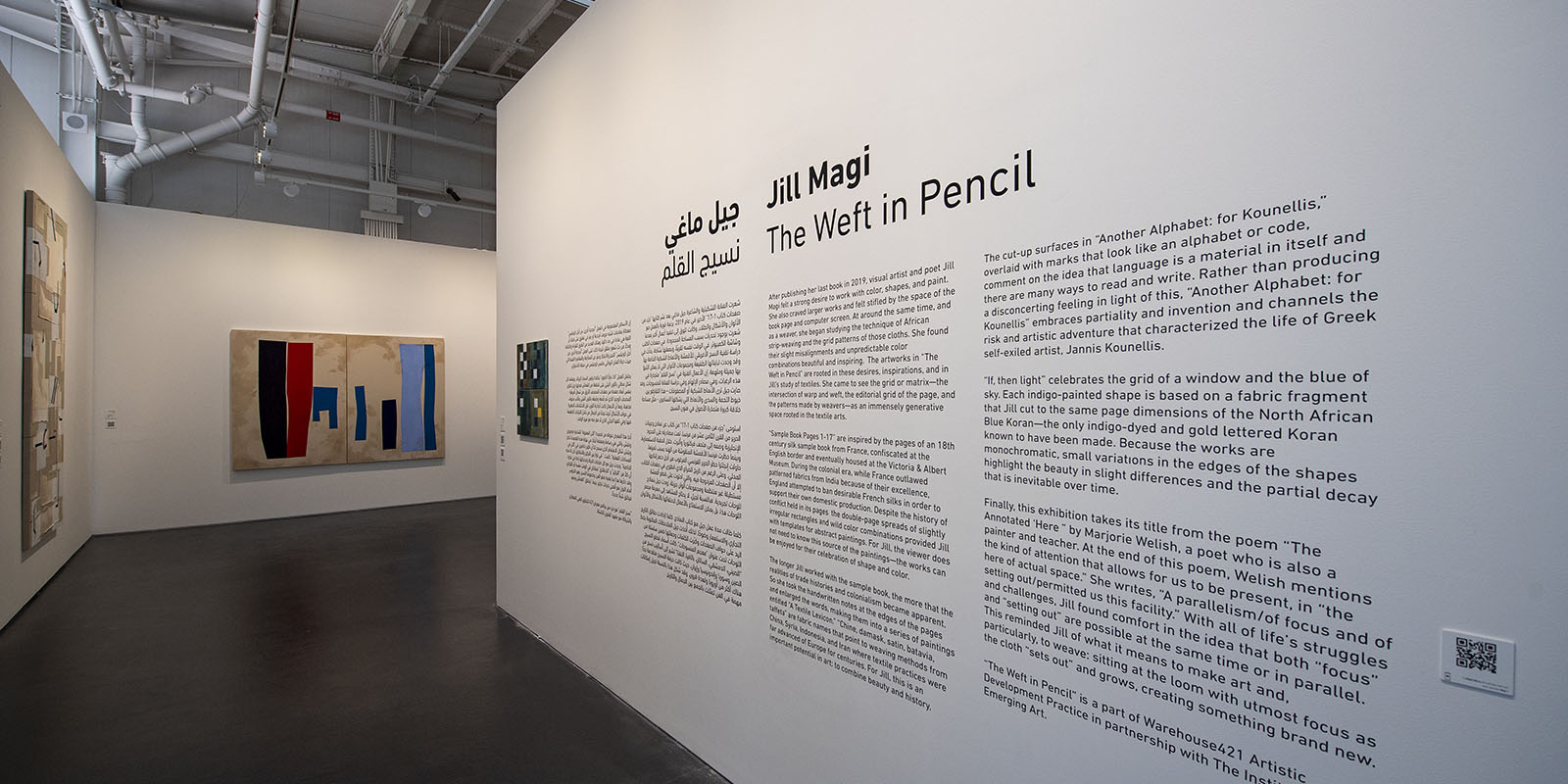
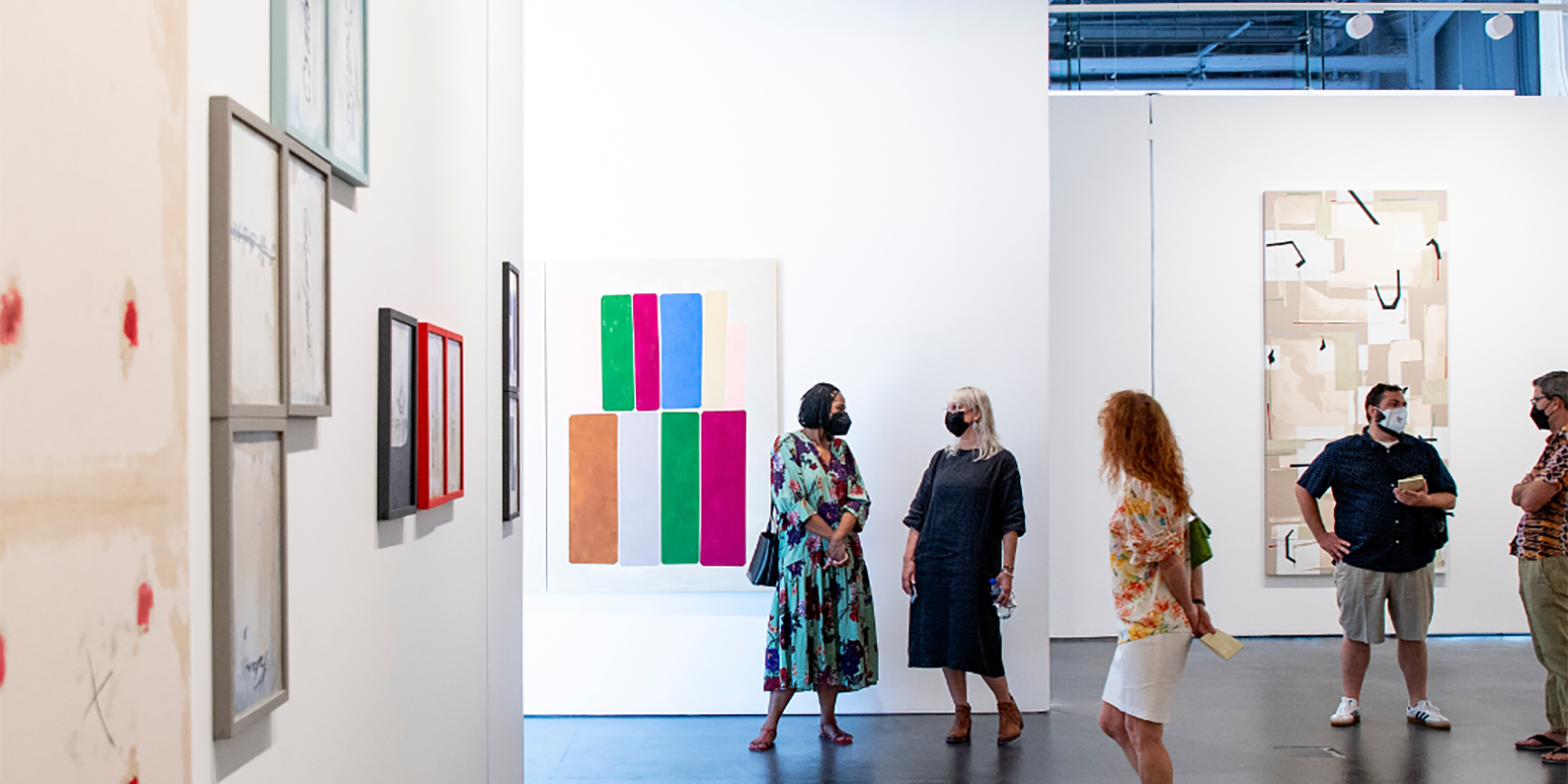
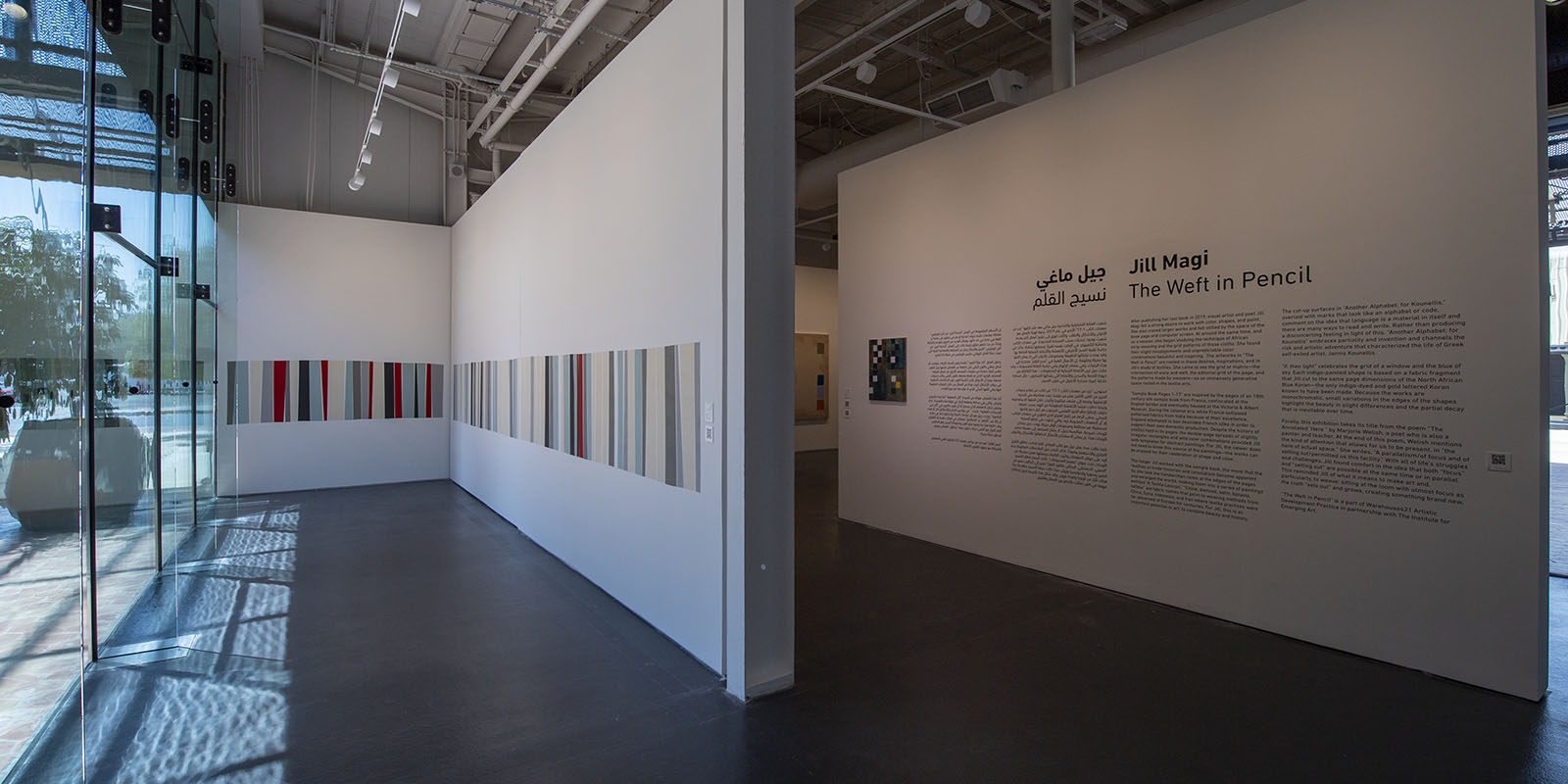
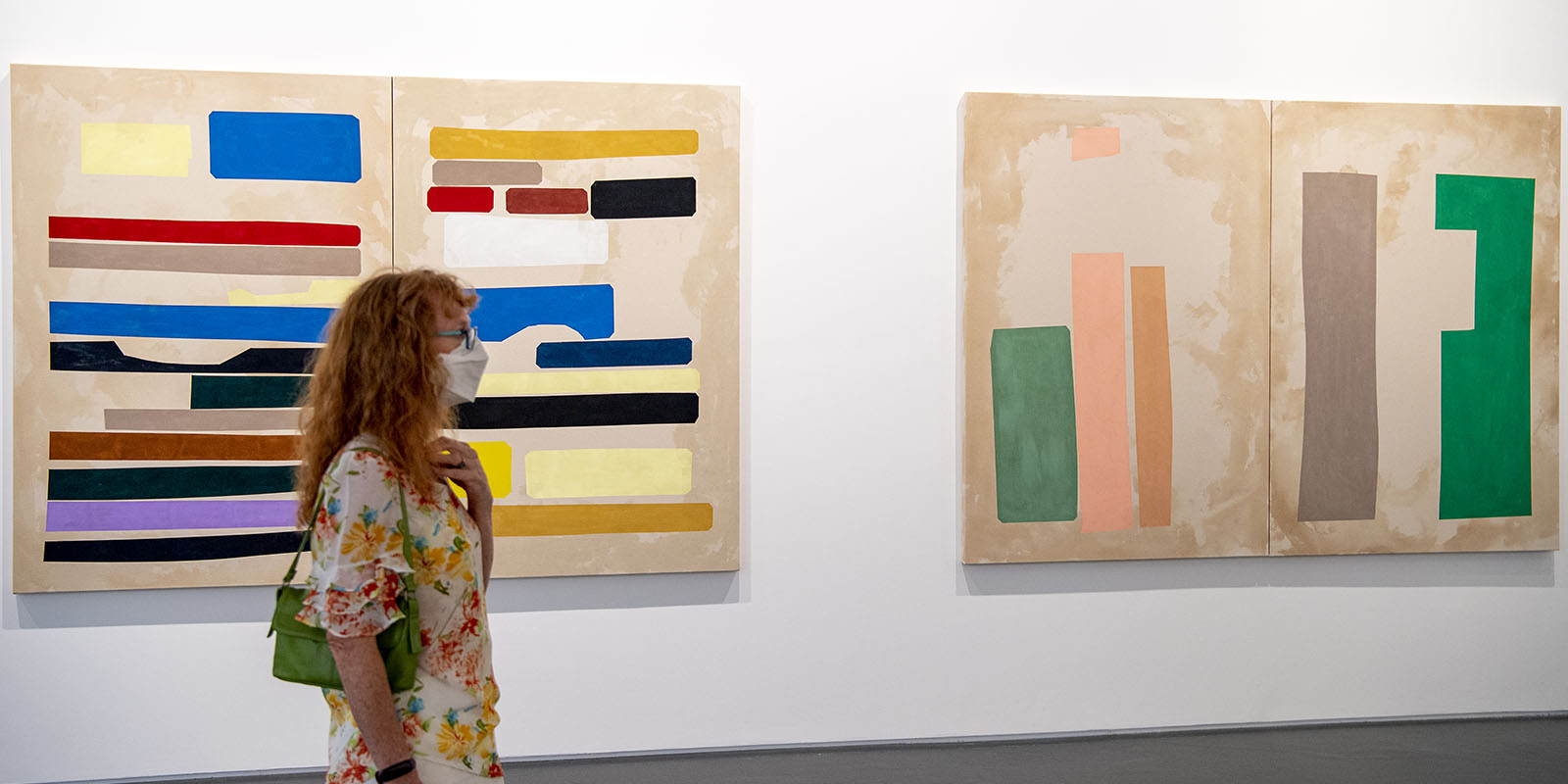
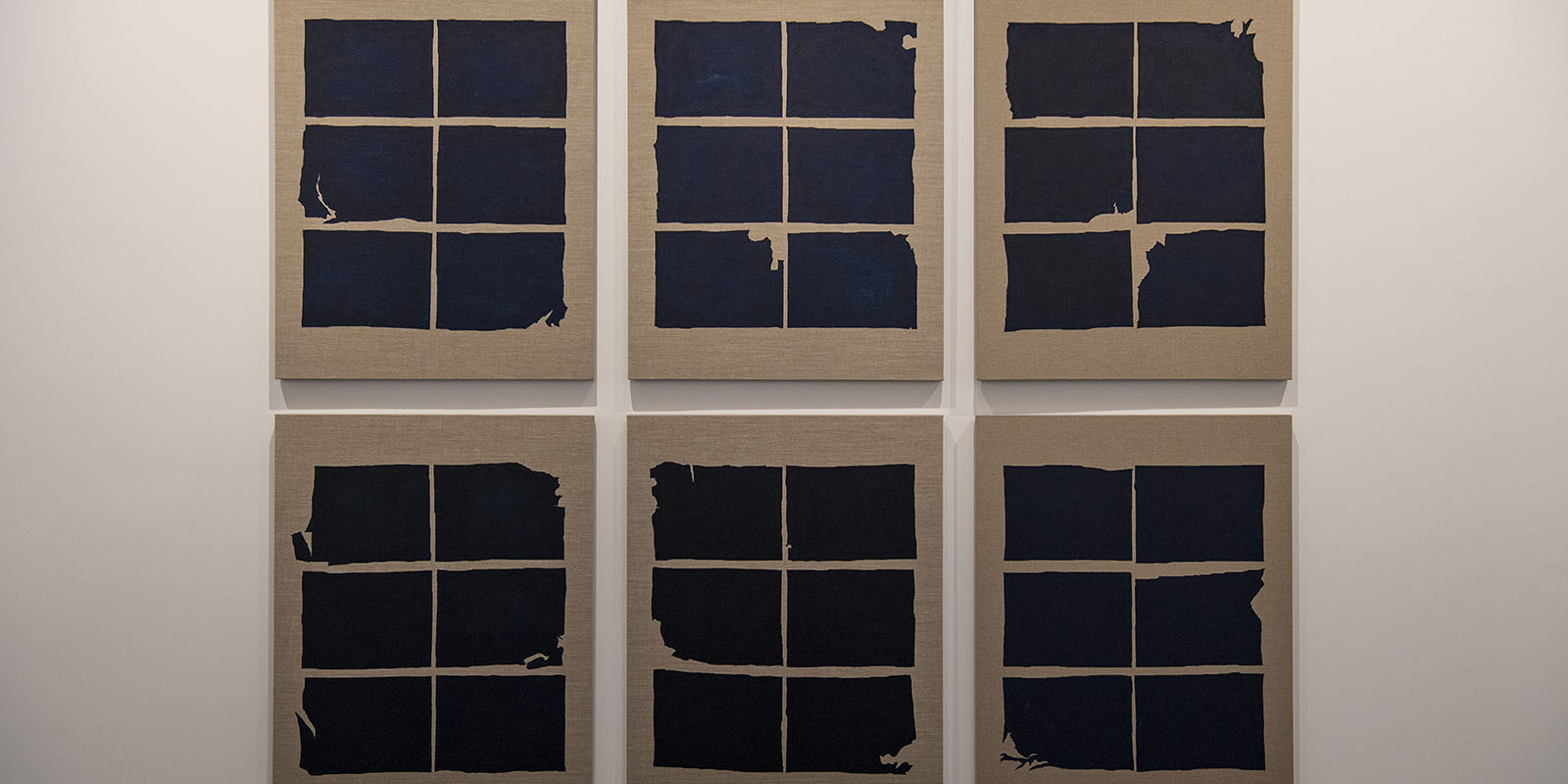
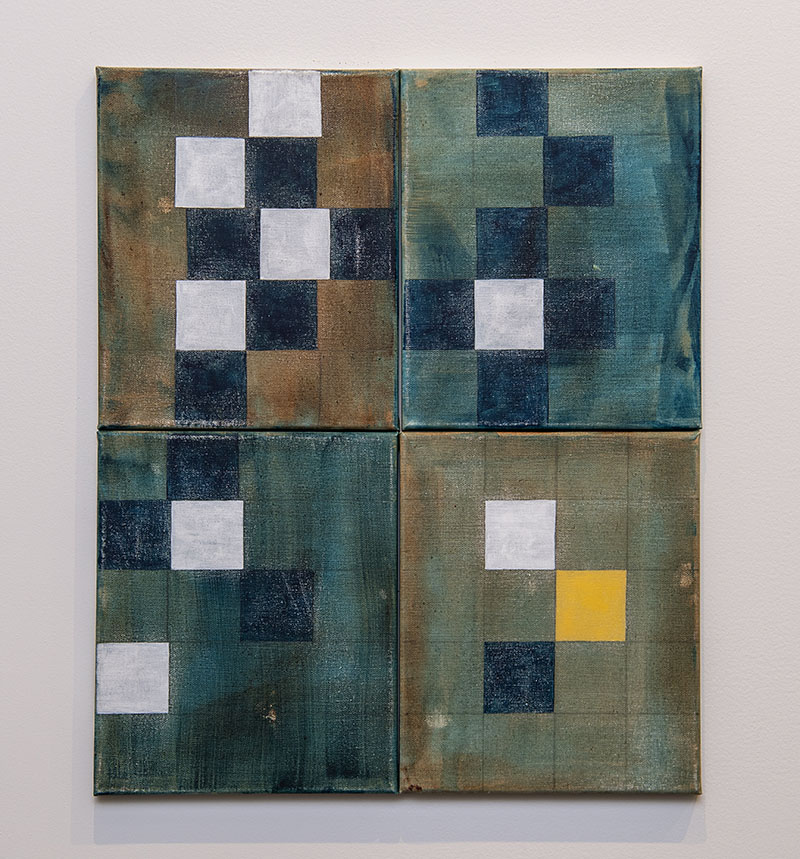
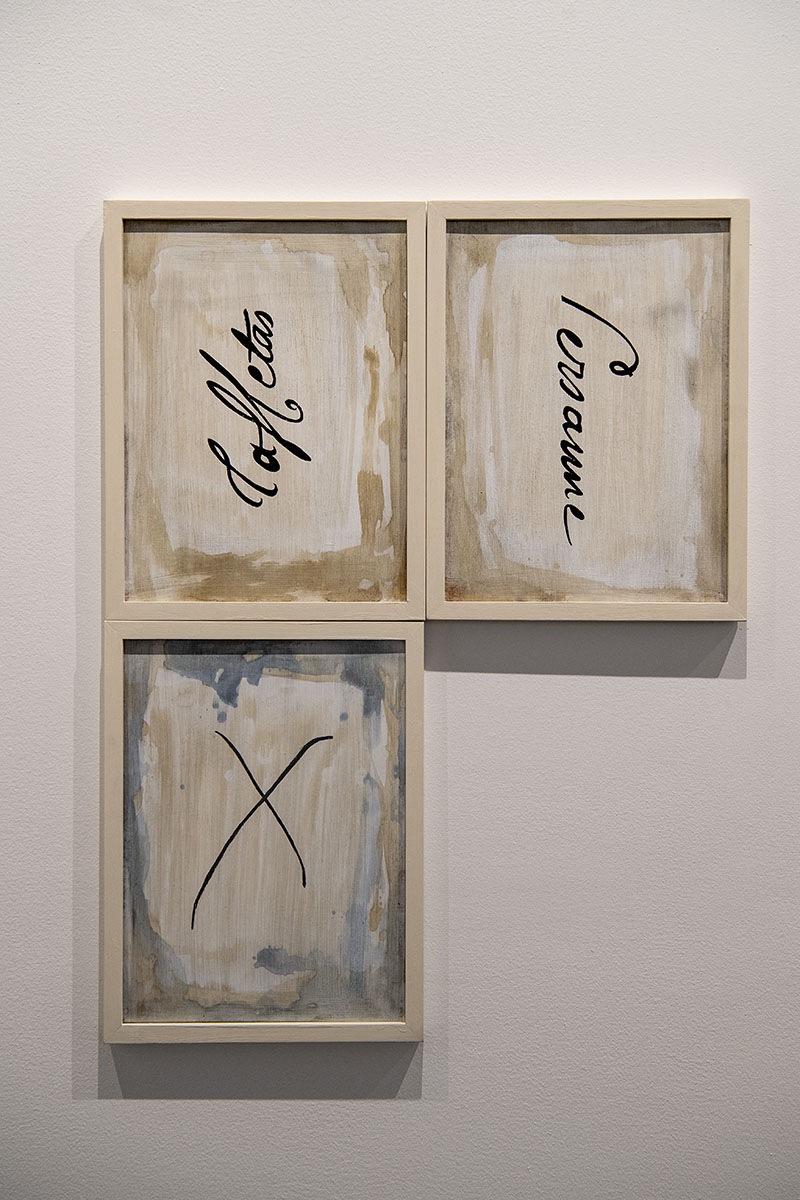
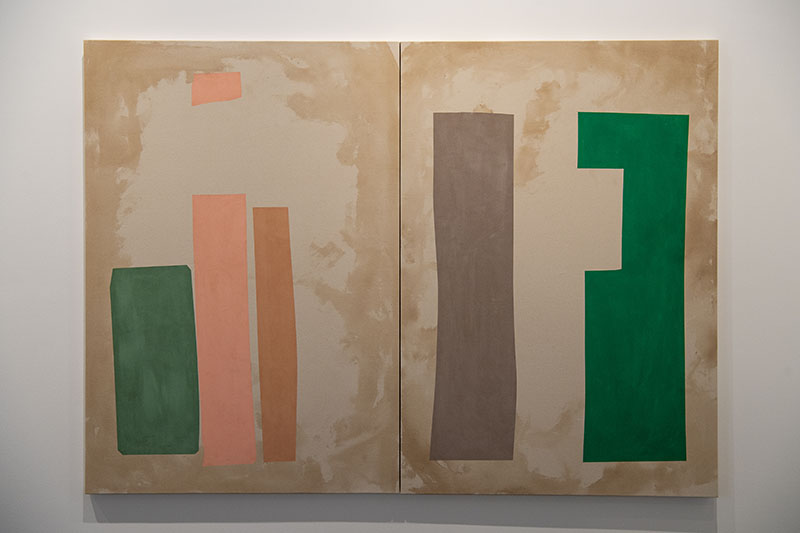
“Sample Book Pages 1-16” are inspired by the pages of an 18th century silk sample book from France, confiscated at the English border and eventually housed at the Victoria & Albert Museum. During the colonial era, while France outlawed patterned fabrics from India because of their excellence, England attempted to ban desirable French silks in order to support their own domestic production. Despite the history of conflict held in its pages, the double-page spreads of slightly irregular rectangles and wild color combinations provided Jill with templates for abstract paintings. For Jill, the viewer does not need to know this source of the paintings—the works can be enjoyed for their celebration of shape and color. The longer Jill worked with the sample book, the more that the realities of trade histories and colonialism became apparent. So she took the handwritten notes at the edges of the pages and enlarged the words, making them into a series of paintings entitled “A Textile Lexicon.” “Chine, damask, satin, batavia, taffeta” are fabric names that point to weaving methods from China, Syria, Indonesia, and Iran where textile practices were far advanced of Europe for centuries. For Jill, this is an important potential in art: to combine beauty and history.
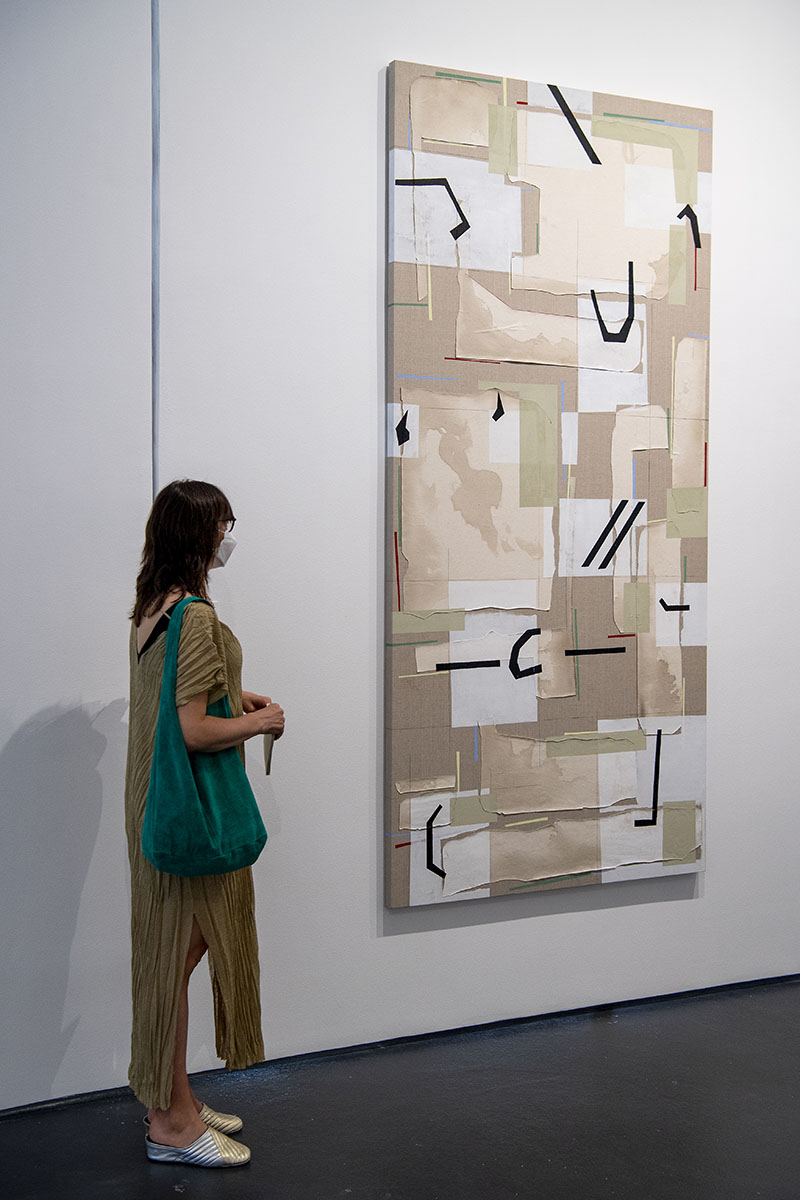
The cut-up surfaces in “Another Alphabet: for Kounellis,” overlaid with marks that look like an alphabet or code, comment on the idea that language is a material in itself and there are many ways to read and write. Rather than producing a disconcerting feeling in light of this, “Another Alphabet: for Kounellis” embraces partiality and invention and channels the risk and artistic adventure that characterized the life of Greek self- exiled artist, Jannis Kounellis.