No products in the cart.

DRAG

Mohamed Khalid: Let me tell you something

TIMINGS

9 October – 25 December
10:00 AM – 8:00 PM

A letter always arrives at its destination, wrote the French psychoanalyst Jacques Lacan. The reason is more straightforward than you might imagine: it always arrives at its destination, because its destination is whoever opens it.

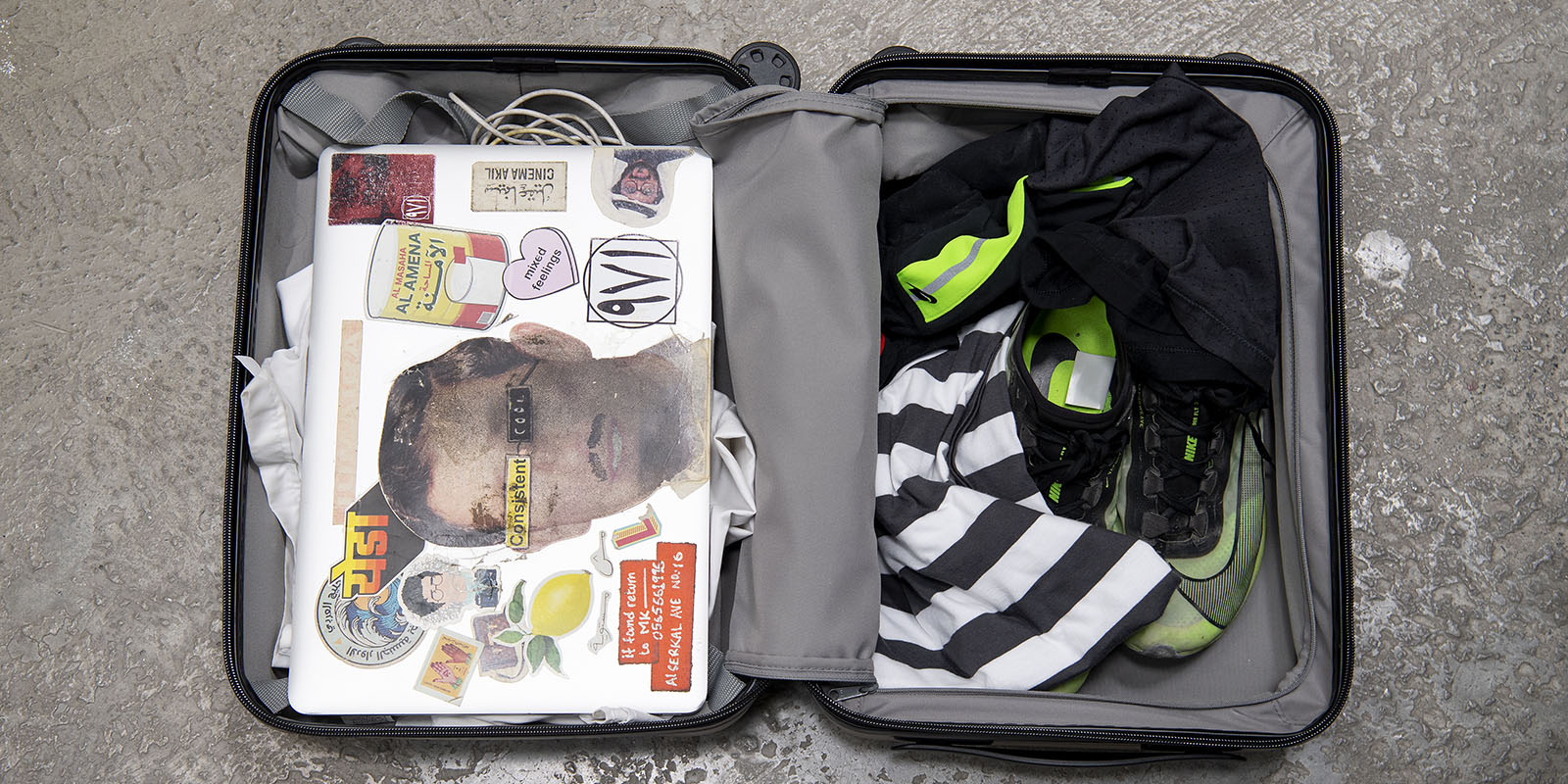
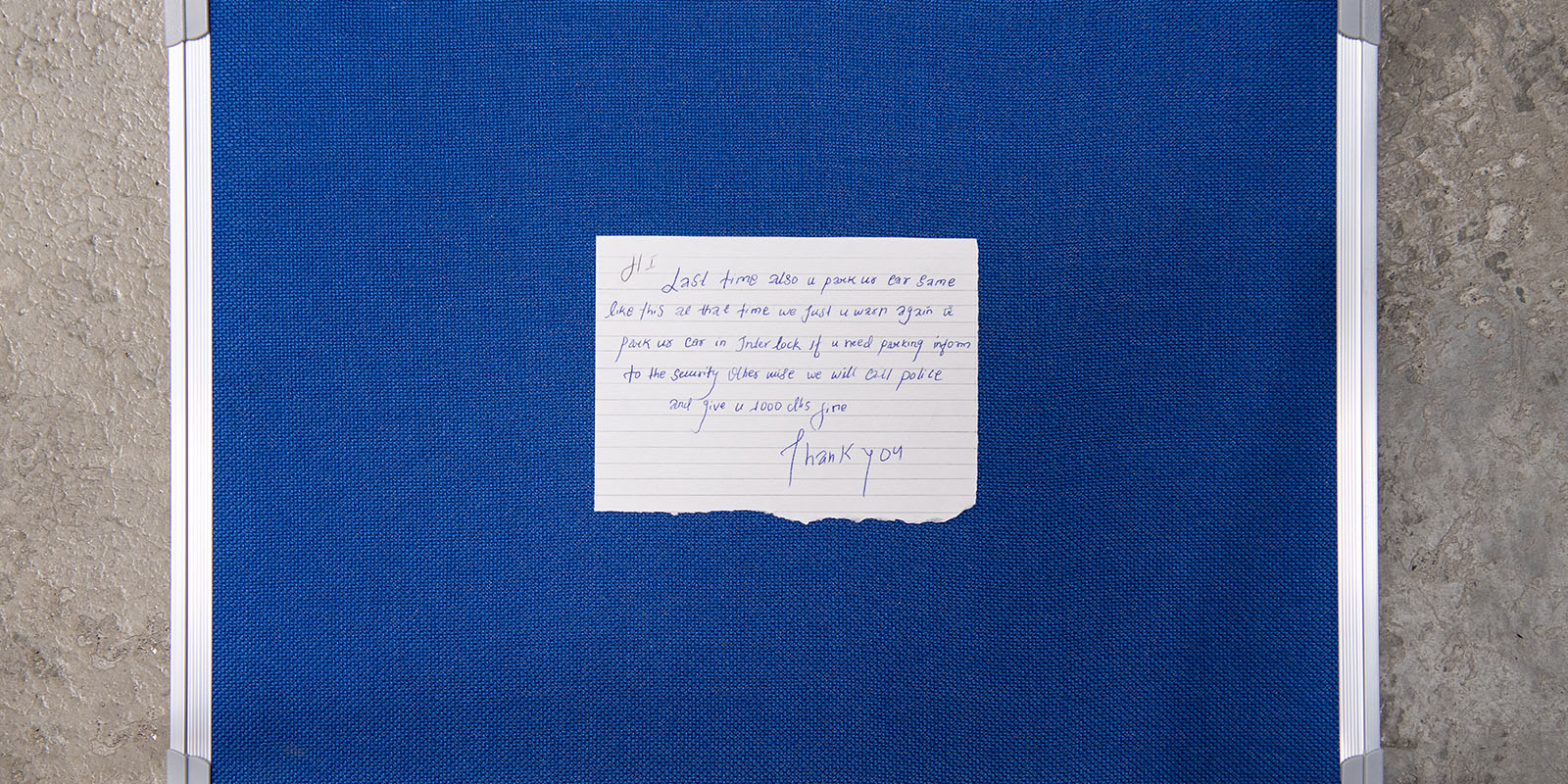
In his first institutional solo show, Mohamed Khalid looks at real-life examples where a message fails to reach its receiver: a surprisingly aggressive note tucked onto his windshield about parking in his gated compound; letters that he never sent to his second-grade teacher, who insisted he switch from left-handed to right-handed writing; an email chain where he tries to recover a suitcase and computer that were lost on a budget European bus.

Khalid’s subject in all of these is the search itself for connection: not simply a message sent from one to another, but the urban landscape conceived along different modes of organisation that govern communication. The show’s suite of small, simple gestures track moments when these systems of organisation fail, in some algorithm that doesn’t work, a bureaucracy that doesn’t function, or a pace of life that renders everyone anonymous. “What goes around just goes around,” quotes Khalid – pace Lacan – from an elementary school primer that he was forced to trace at school, when he was painstakingly learning to be right-handed.
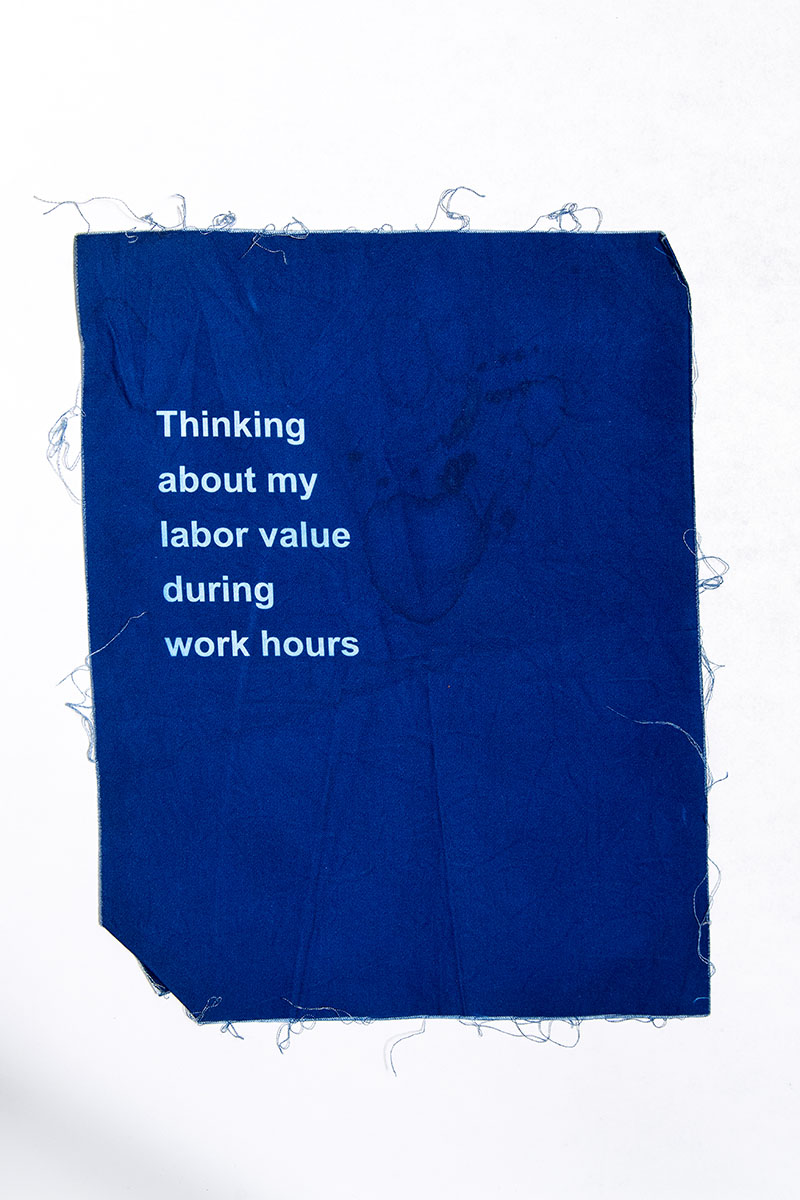
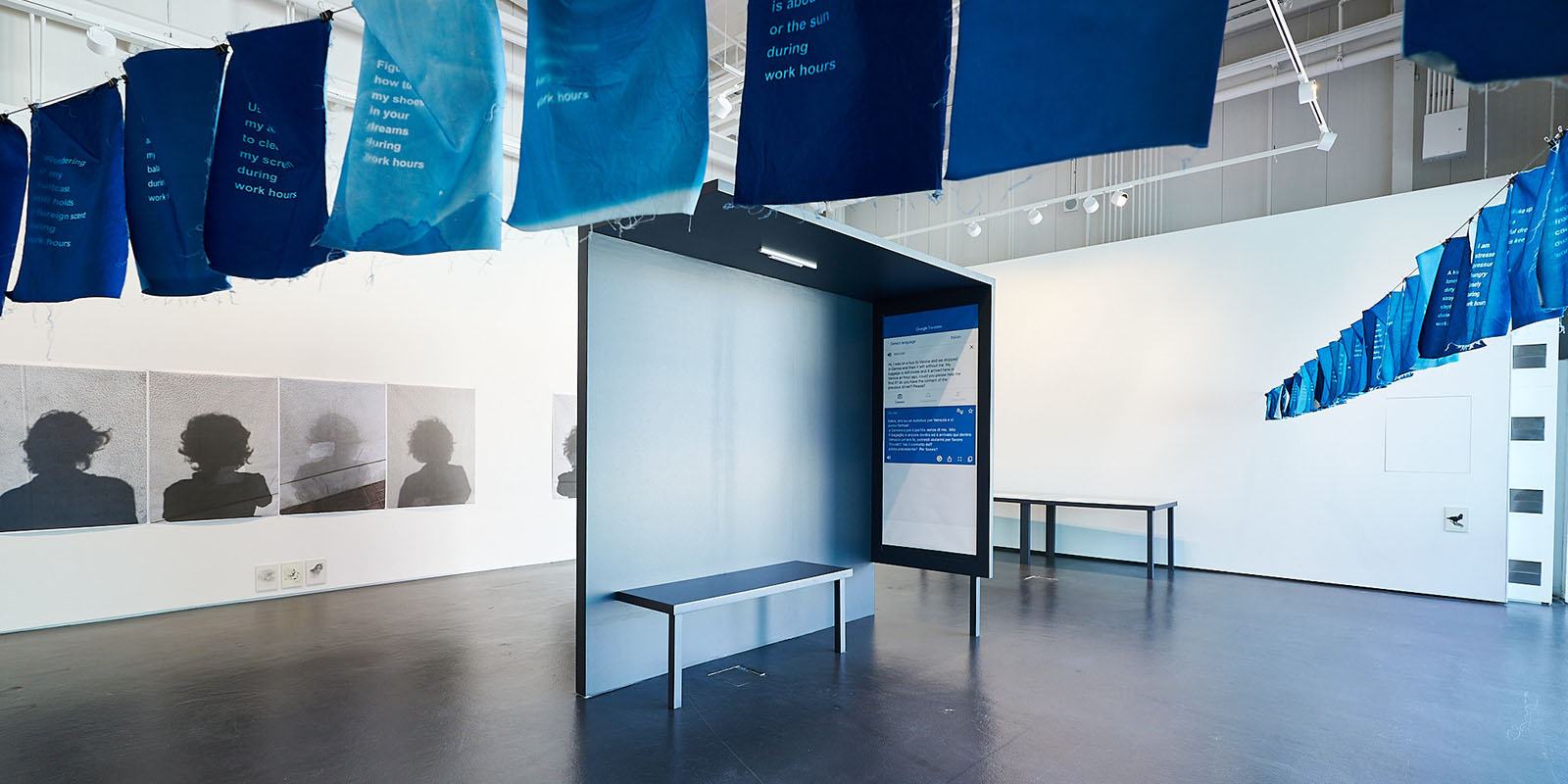
Many of these problems of disconnection have economic roots, enabled by the gig economy and uprooting forms of labour. Khalid made During work hours, a series of cyanotype prints that react to exposure to the sun, on his lunch break at his day job. The status update-like statements chronicle his attempt to work as an artist while still paying the bills: “Feeling / stuck / inside my body / during / work hours,” “Staring / at an artwork / behind a screen/ during work hours”. The long-form piece Flixbus was inspired by an encounter in which an inter- Europe budget bus left without Khalid, who was video-chatting with a friend by a side of a road in Italy. He only saw the bus pulling away in the background of his phone, taking his luggage (and laptop) with it. He tried for months to recover the items, but because the drivers were on temporary contracts, there was no central database that showed who was on which route. Khalid’s luggage remained lost. Then, two years later, he found by chance one of the driver’s uniforms in his local thrift store in Dubai, which he now exhibits alongside a mock-up of a bus shelter. Every letter reaches its destination? One might argue that the “destination” Lacan was speaking of, in Khalid’s case, is the moment of vulnerability that missed connections give rise to – a bit of amateur psychology, perhaps, but hear me out.

Khalid has described his practice as a form of self-portraiture, and though this statement should be taken with a grain of salt – whether this is his real or performed self is left ambiguous – many of his works can be understood as a contest between a necessarily messy self against an unwittingly imperfect system. The most touching work in this show is Khalid’s suite of letters to Mrs Sima, the second-grade teacher who taught him to write with his right hand. The letters start full of anger and hurt and ultimately edge towards sympathy, suggesting a narrative arc of closure that is reached throughout the months that Khalid undertook the project. But the most remarkable part of the work is the handwriting itself, careful and neat, and accomplished by his right hand. Who won here? Khalid, who successfully overcame his natural left-handed dominance – or Mrs Sima, who enforced it? Khalid writes some of the letters on receipts that he has replicated, superfluously copying numbers and Arabic script in multilingual virtuosity: both an A and an aliph (أ(, how about that? It appears both as a feat of persistence and a continuing attempt to align with a system that arbitrarily discriminates against left-handedness – a system which exceeds both Khalid and Mrs Sima herself.

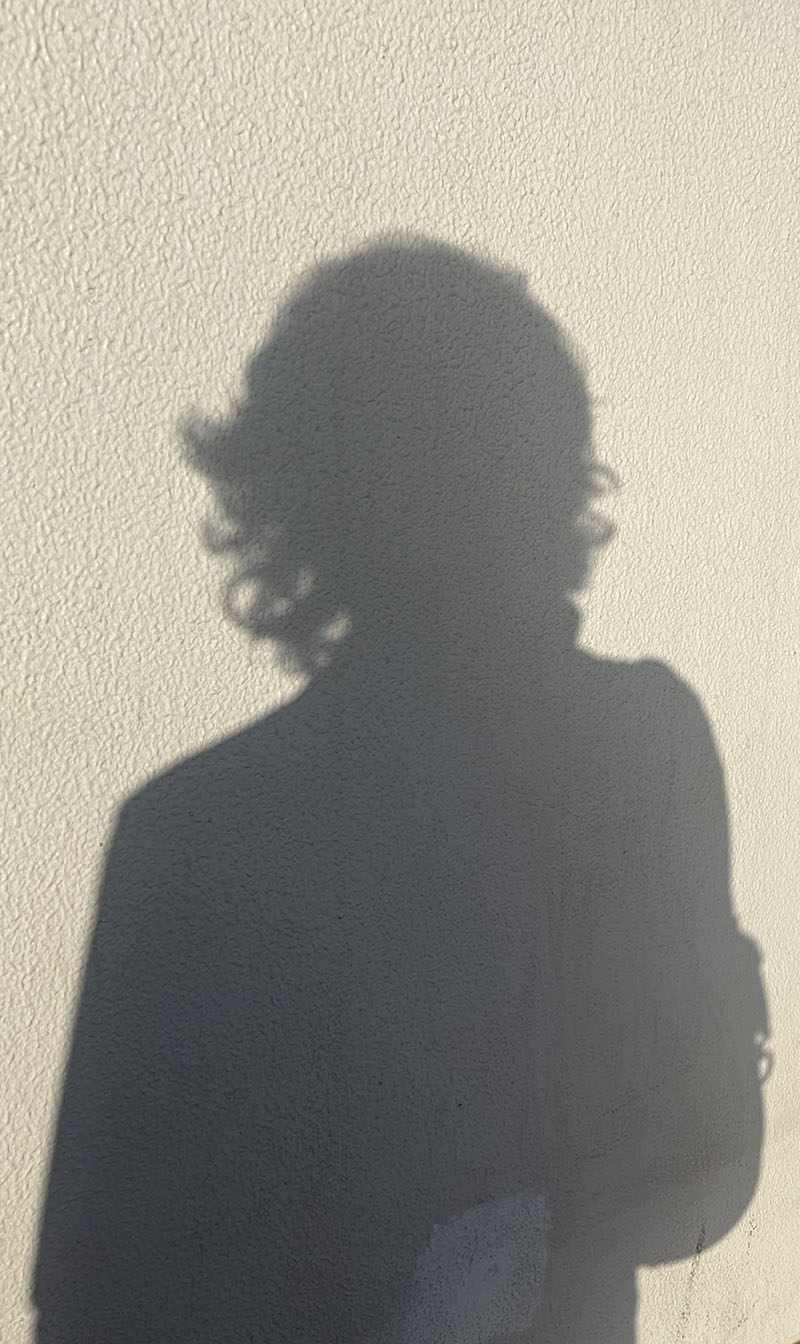
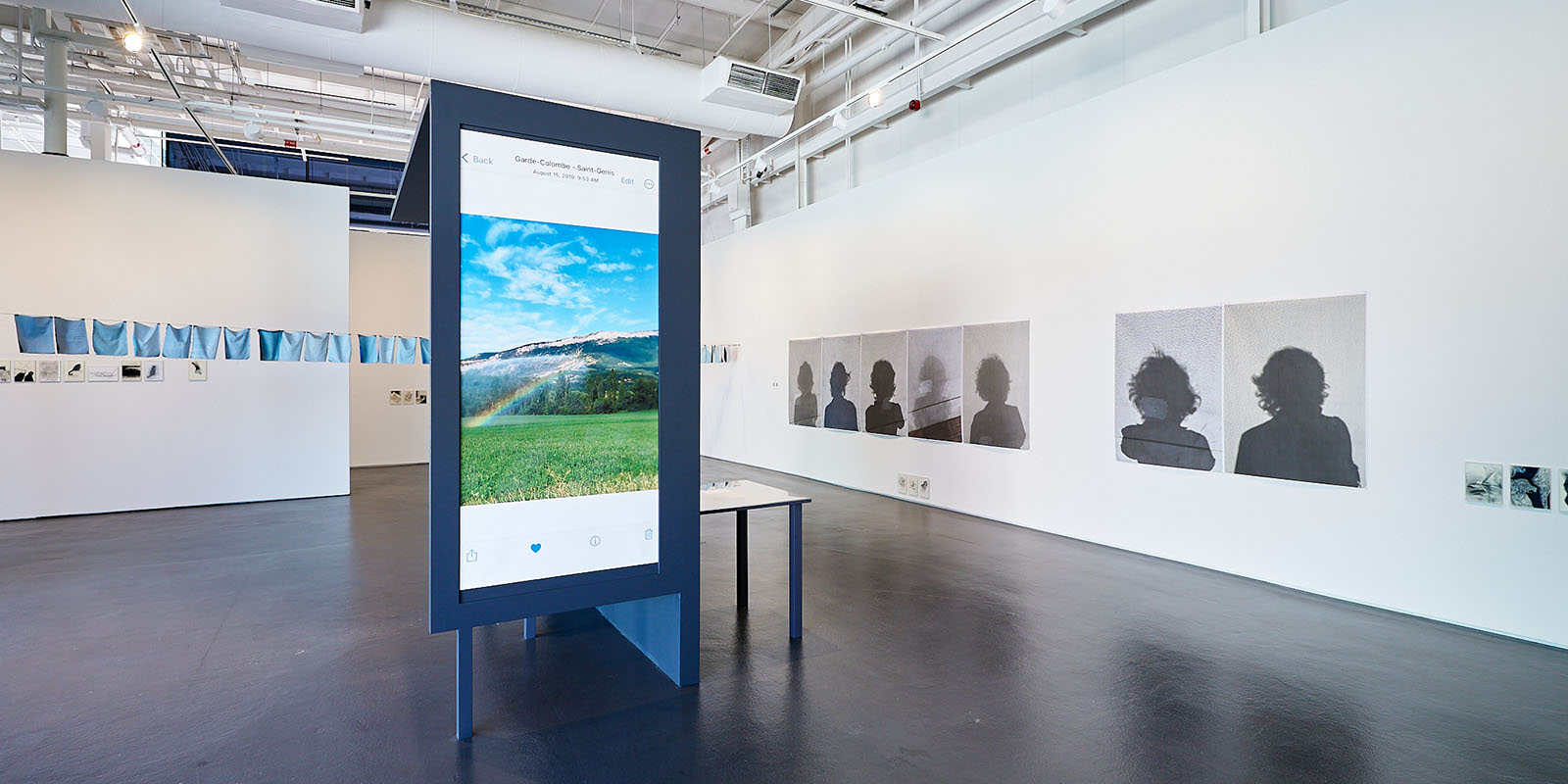
Algorithmic imperfections are also ripe for exposure: moments of ordinary life that trip up the algorithms that have been produced to make sense of it. In iPhone Photos: Category Moon, he dug into his phone’s photo library to find images of creamy white orbs that the iOS operating system classified as lunar: they are, instead, sunrises or images of strung-up fairy lights. In Replica of a Shadow, he restaged images that a friend had seen on Instagram – shadows of someone with a shortish, bushy head of hair that looked like it could have been him. He waited for the time of the day that would enable him to take the photos as if it were in fact him, exhibiting the original and performed versions side by side.

We welcome school groups to tailored, curriculum-linked experiences at 421. Explore guided tours, hands-on workshops, and downloadable resources designed for different age groups. Booking is essential – find session availability, group size limits, and education packs by getting in touch with us at info@421.online

For media coverage, download high-resolution images, official press releases, artist bios, key project information, interviews, filming requests, or further assets, contact press@421.online. All materials are for editorial use only and must be credited appropriately.

Open Tuesday to Sunday, 10am–8pm. Located in Zayed Port, Al Mina, with step-free access and facilities for all visitors. Timed entry may apply for special exhibitions or events. Find transport options, accessibility details, on-site amenities, and visitor guidelines to make the most of your visit on our Visit Us page.

TOURS

SIGN UP FOR A GUIDED EXHIBITION TOUR

BOOK YOUR VISIT to 421

NEWSLETTER