No products in the cart.

DRAG

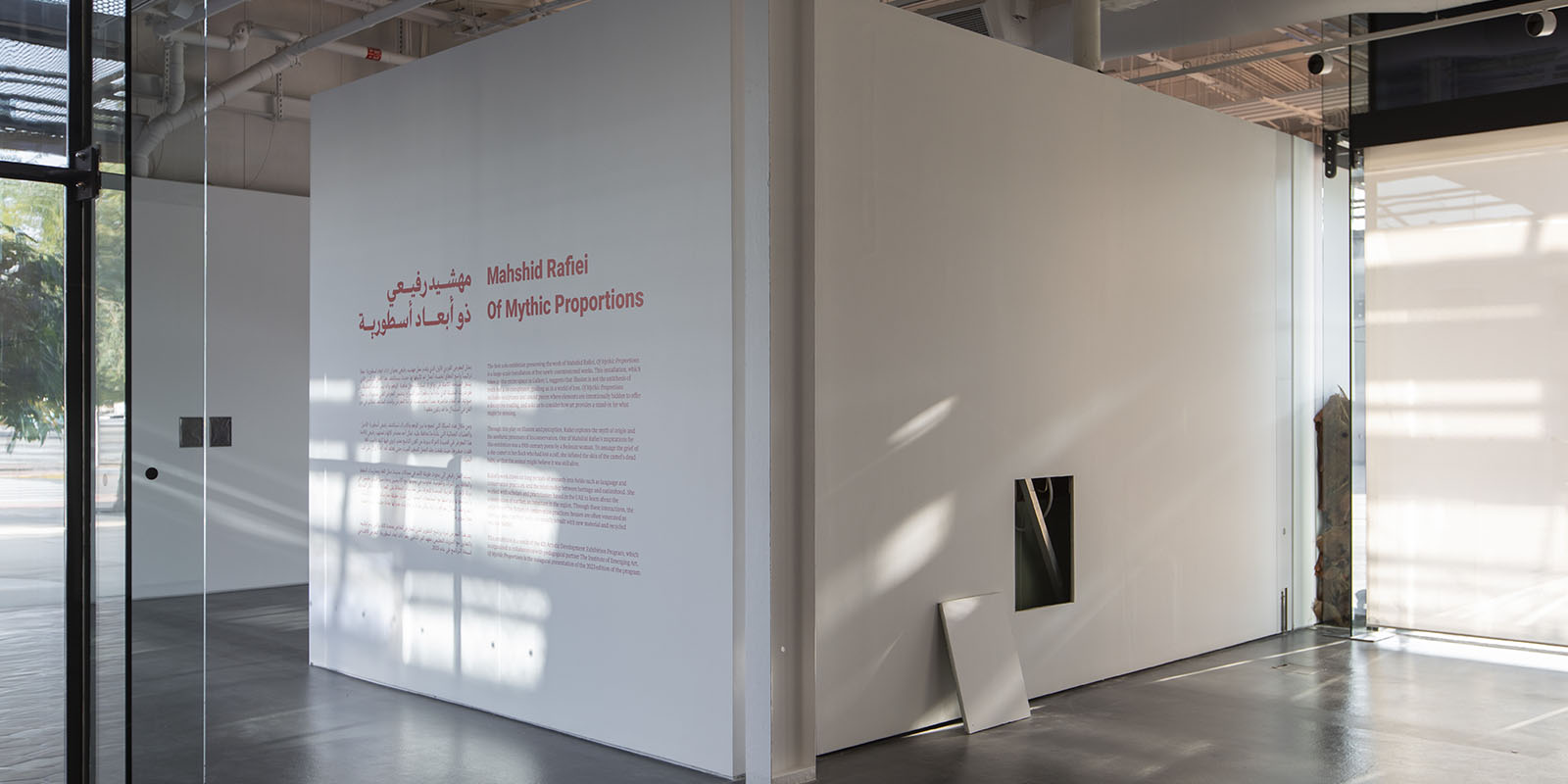
Mahshid Rafiei: Of Mythic Proportions

TIMINGS

5 February – 8 May
10:00 AM – 8:00 PM

Somewhere in the rivulets of a water spill – finding grooves and imperceptible depressions in the sidewalk – is a metaphor for language, in how it spreads via people talking, moving, encountering new people, borrowing words and changing them as they go along. Millennia’s work of casual conversations: how is the weather? How is your son? Come over for dinner, I’m cooking a meal.

And years later one can imagine the linguists, armed with their dating devices and thick book of etymologies, retracing the water’s path, trying to find its source. A kind of holy grail, a Romantic vision of the ur-language that all words are descended from. And if they find it? Proof of the world’s shared humanity?

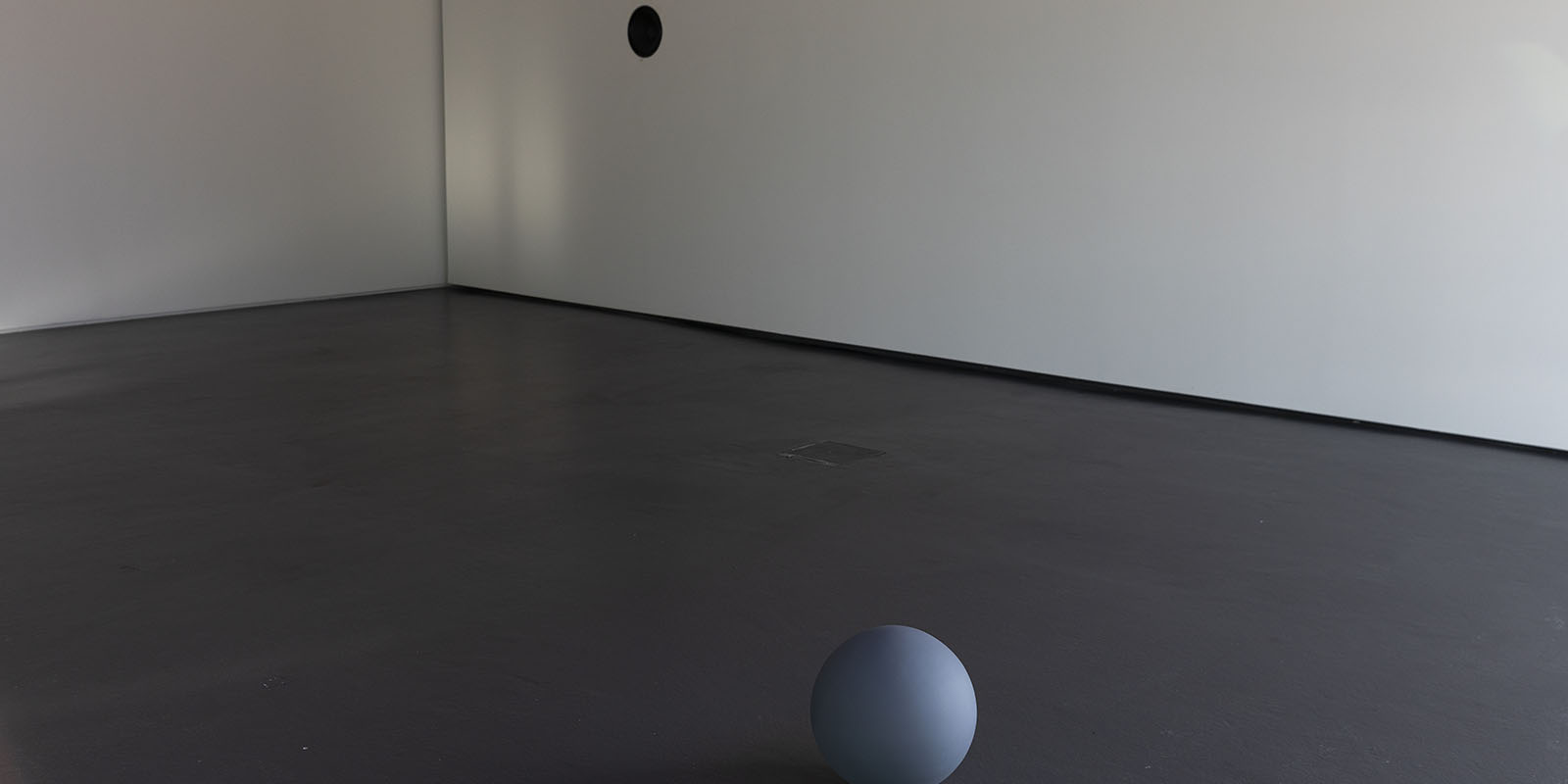
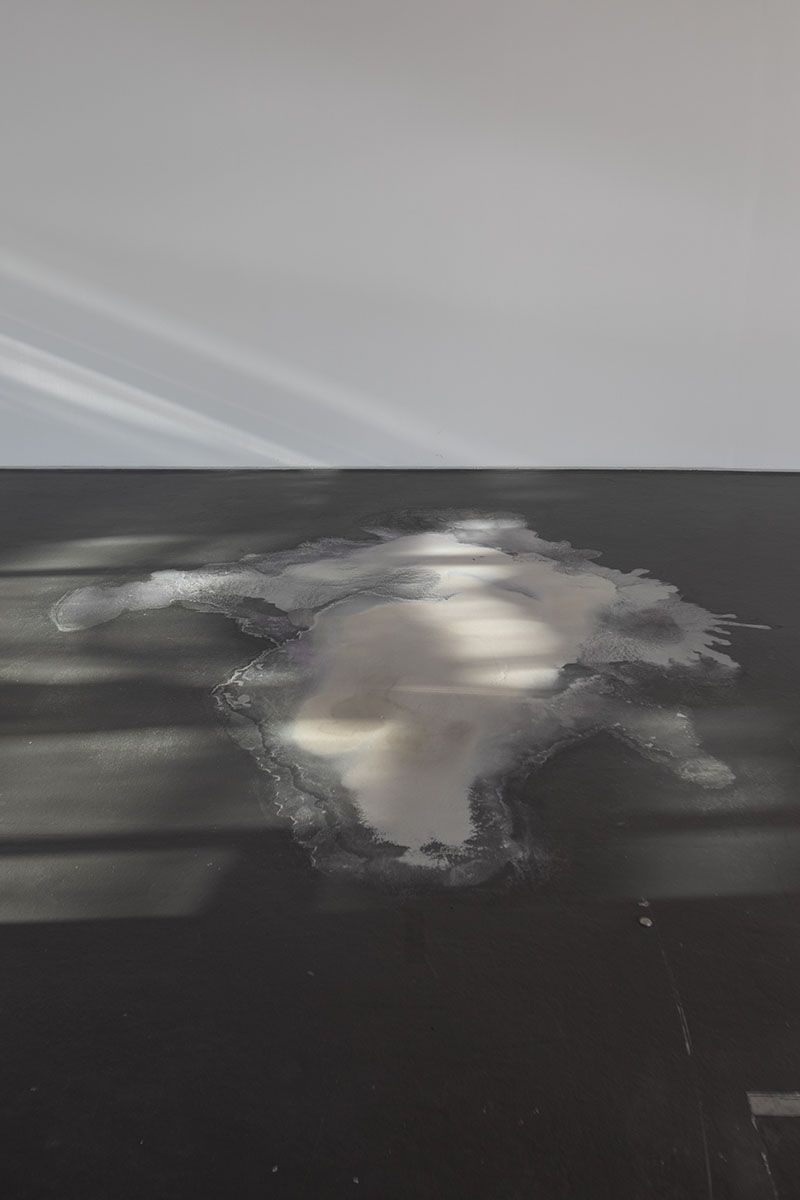
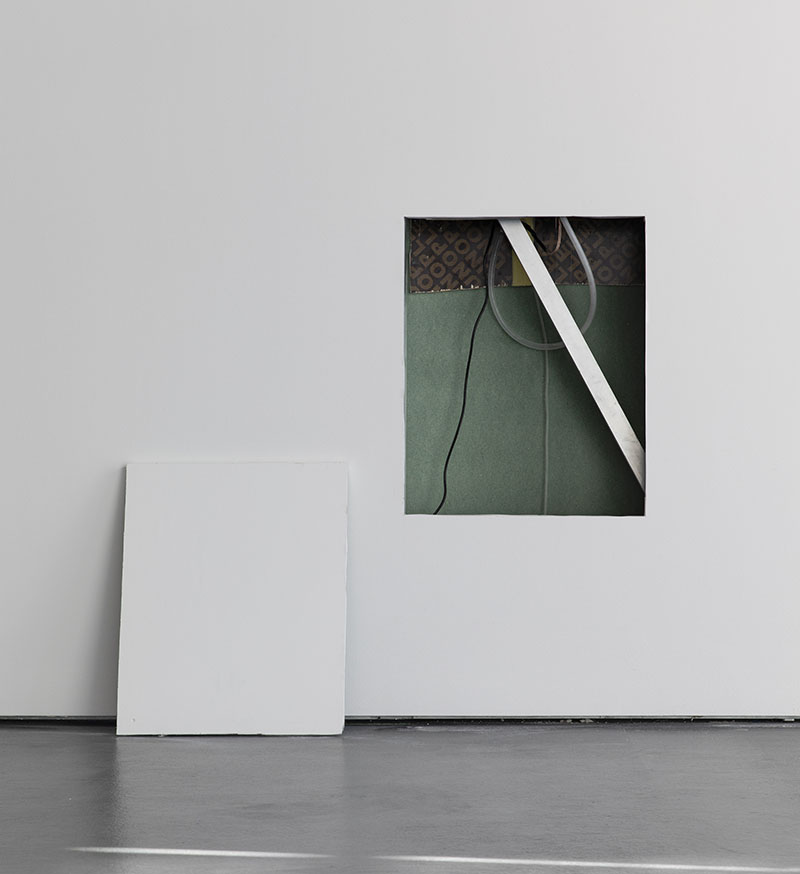
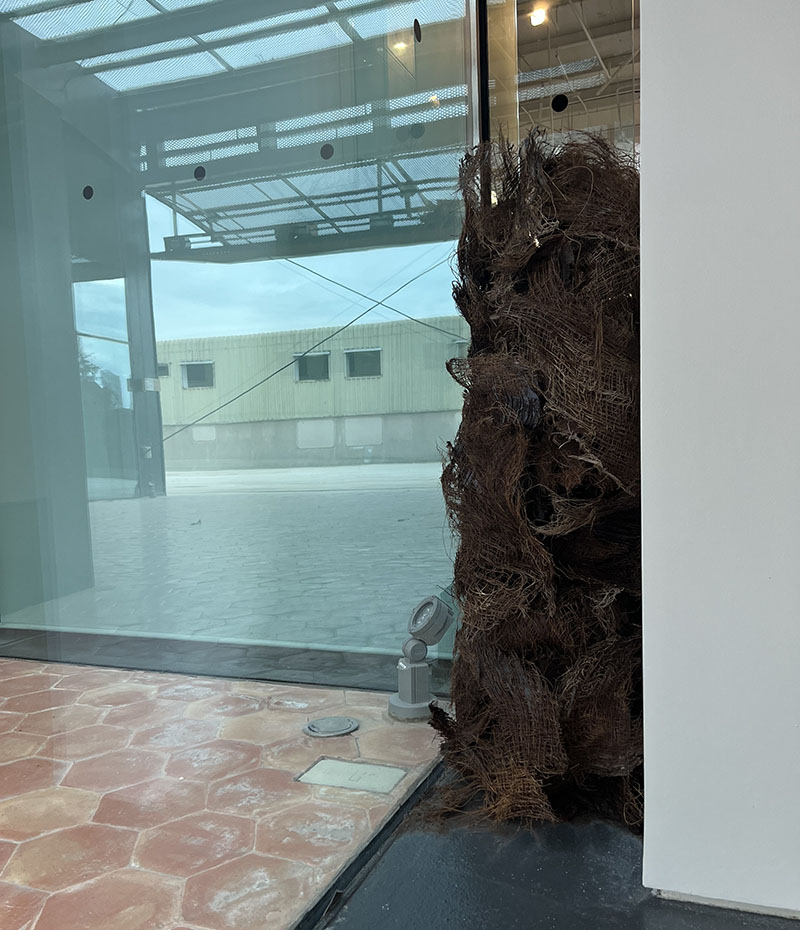
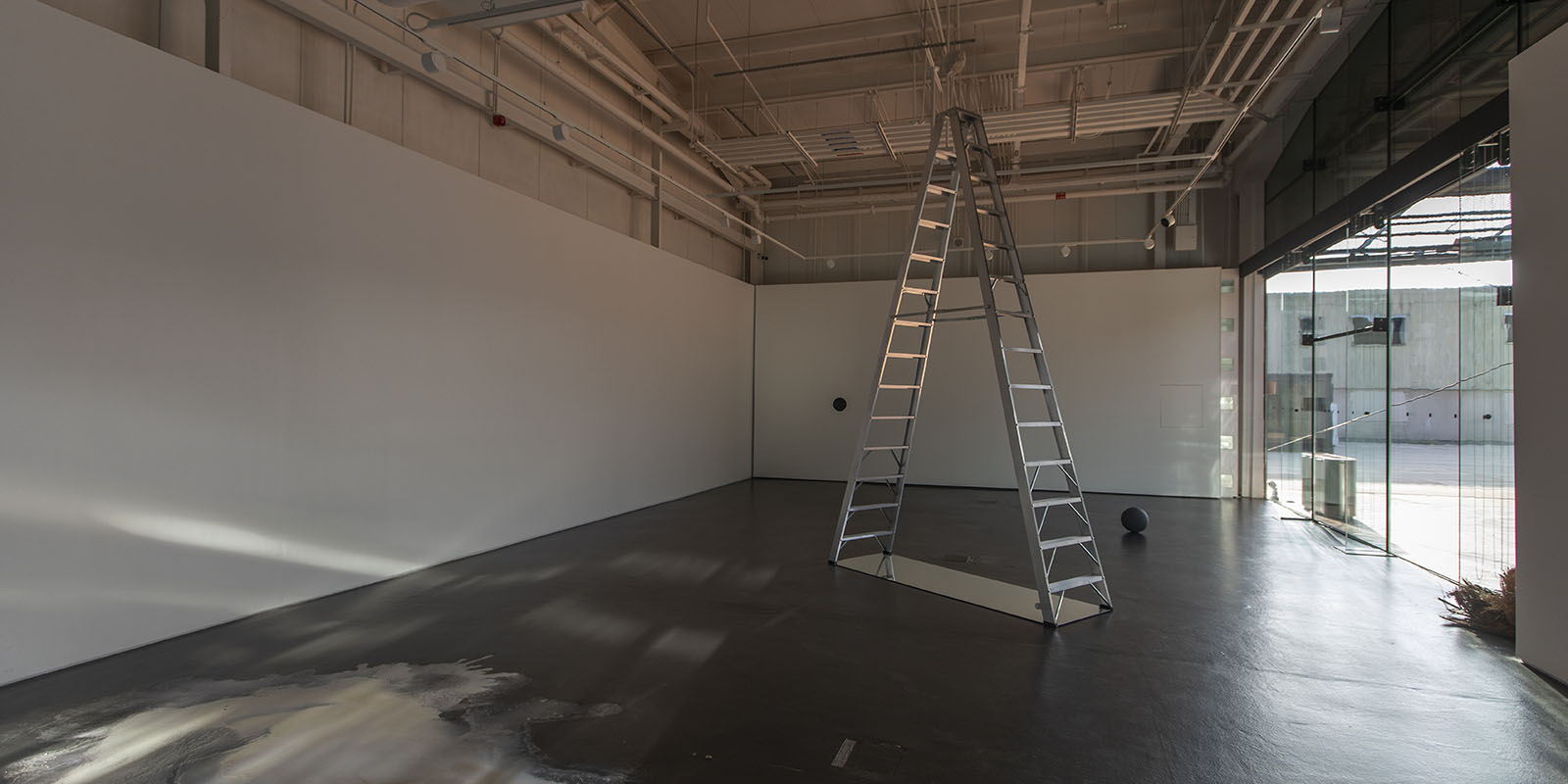
Mahshid Rafiei’s show Of Mythic Proportions considers the pursuit for origins from two angles: linguistic, via the transformation of Arabic and the quest for a “pure” Arabic, and archeological, in the question of what “original” and authentic mean. Illusion and revelation are her tools here: working across a variety of media, she unravels images of perfection to show their grotty, messy construction. A drip of water from a wall highlights the fact that the fine, smooth facade is not the wall itself: merely an exterior hiding the organ-like workings of the building – the air-conditioning, the plumbing, the electrics – that snake along in the gap between two exteriors, showing its smooth facade to unsuspecting visitors on the other side. A mirror, titled chora, folds in on itself, its myriad reflections scrunching up such that they become a dark sphere, a single point in time.

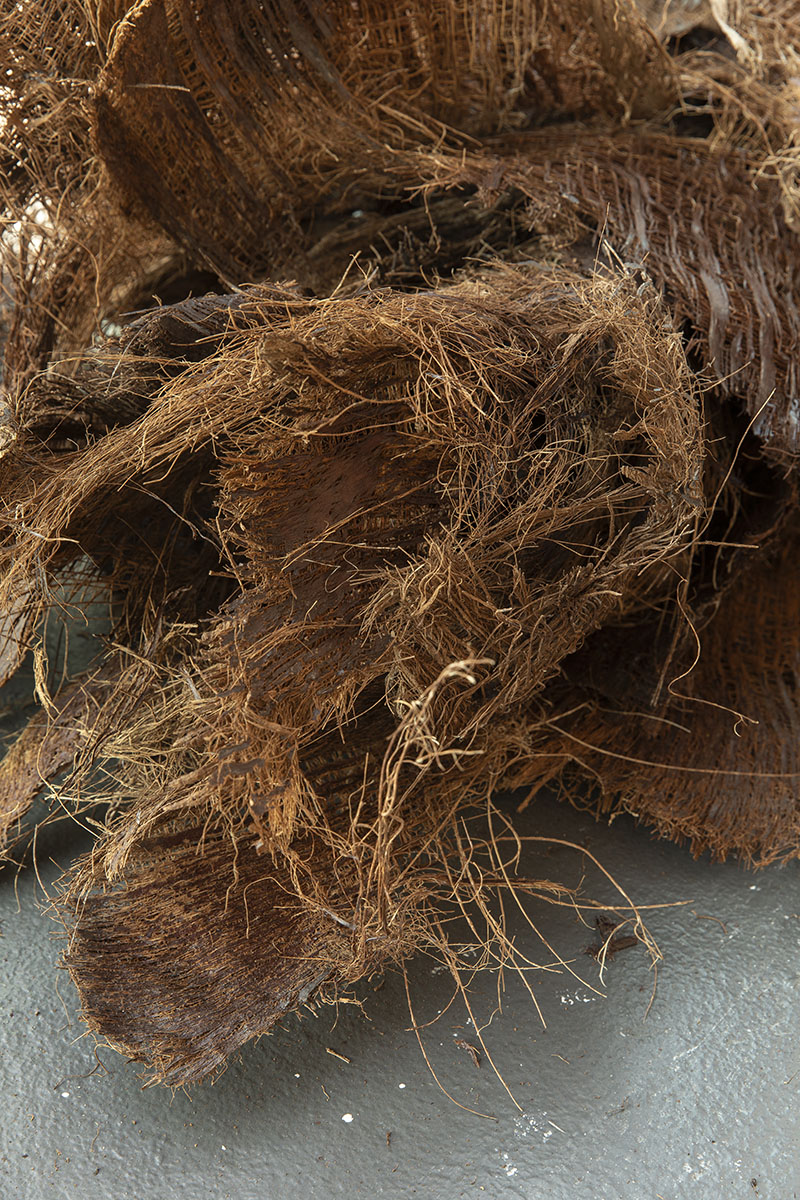
Rafiei sites these illusions in the real world, gingerly watching how they play out politically and socially. Her sculptures and interventions in the 421 gallery draw on a long period of research, and refer back to this source material glancingly or metaphorically: they are explorations or meditations on this source material, rather than literal manifestations of it. Her sound piece, spitting water out onto the wall and causing seeping water damage, alludes to the rhetoric around conservation in the UAE, where the idea of heritage does heavy-lifting. Its very existence battles against the racist terra nullius idea that the UAE were a group of camel-herders before the arrival of oil and the Europeans. And heritage is also important to the project of nationhood, specifically one based on the idea of a core population of Arab Bedouins, which is ritually performed at heritage festivals throughout the winter months. The intangible heritage relating to Bedouin identity supersedes its physical manifestations: few of the early mud-brick, coral or areesh-style house persists. Many have crumbled or been torn down, and changed environmental protection laws now regulate against traditional methods such as coral construction, because of the environmental vulnerability of coral reefs. As a consequence, many heritage sites in the UAE are walls that have been rebuilt, but have still gained heritage status due to their importance to the national narrative. The reconstructions are thus venerated as originals, as true heritage, as the ideals of whatever authenticity people are looking for when they run their hands over centuries-old sandstone, wood and mud-brick.
Language provides another illusion of purity. For an essay in this publication, and in preparation for the show, Rafiei worked with the language historian and translator Rana Issa to understand the development of Arabic. Instead of the idea of a pure Arabic that exists in the Koran and in some historical period of time, Issa demonstrated how etymologies show the incorporation of the words of different communities and periods – but also how they retain kernels of each other in their stems, suggesting a fuller picture of how human beings come to terms with trauma, melancholy, and joy better than a single word could. Take, for example, the shared stem among: “trace / partial, or اثر”, “grief /eulogy, or رثاء”, “heritage / complete ارث” and “wealth, or ثراء”, suggesting at once the impossibility of retrieving the past in full – and the conflicting feelings of grieving and appreciating the past that it gives rise to.

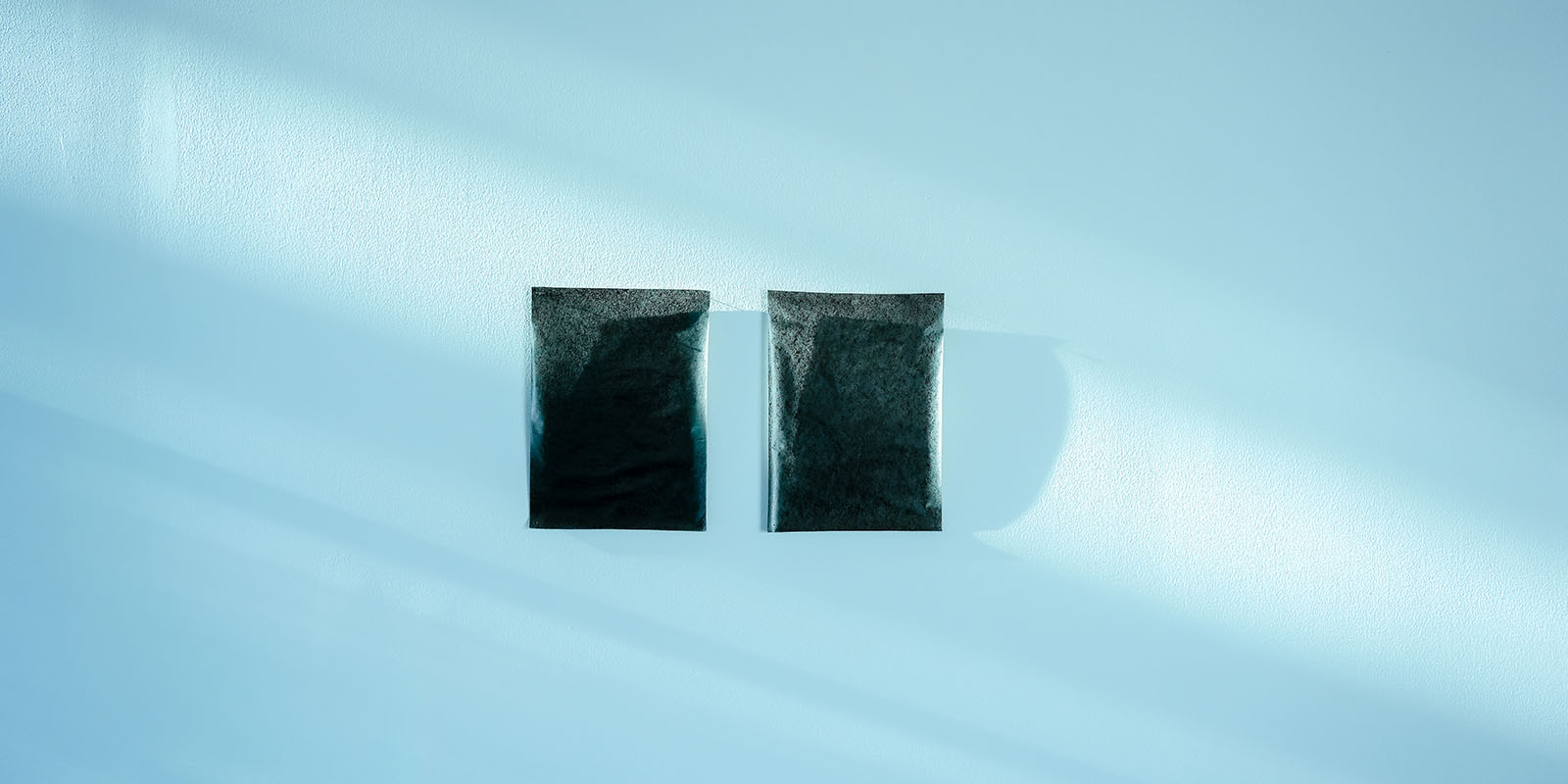
In a deeper sense, what feels contested in this exhibition is the idea of a binary itself. While many of the works play with an “is it or isn’t it” – the heritage walls that are newly reconstructed, the fly in minor witnesses that is a real fly rather than a vanitas symbol of itself, the mirror that doesn’t reflect – still others splurge outwards uncontainably. Water seeps into the exhibition room; the sound of endangered animals and the silence of extinct ones suffuses it; one imagines the infinite regression of the mirrors that lies in potentia. This is the way that language really travels and how writing functions – as a form of imagination, a stand-in for what is not present. Letters on the page take the place of someone speaking them, as if the idea of loss is baked into the written word.

Nature is also entwined with language. Linguists studying the Indo-Aryan group of languages, which stretches across Europe to the Indian subcontinent, have been able to locate ancient languages geographically by the presence of root words that exist in similar forms across the greatest number of languages. The two that appear with the most frequency are “bee” and “beech”, the latter of which is a type of tree that is limited to Central Europe, allowing the researchers to pinpoint with some specificity where the language that gave us “beech” was spoken thousands of years ago.1 I think of this factoid quite often, because my mother would often speak of her longing for the trees of Estonia – the beeches and the birch trees – where her family fled from in the 1940s. Here’s the catch: my mother never lived in Estonia, and how can you be nostalgic for a life you never had? So much of longing distorts the past until it becomes an imaginary time, held at bay by its impossibility. What if my mother, old now, sat in the shade of a birch tree; what if we pried open the dark sphere of Portrait to see its infinite reflections inside? How much of the potency of our desires – looking forward or looking back – is related to their impossibility?

Timelessness is what these seekers are after: the timelessness of an Arabic that doesn’t change, the reversion of archeological heritage to some fixed moment in time (which? 1812? 1596? The date is arbitrary) when Arab Bedouin life progressed in harmony with nature – a tough life, so they say, but an honest one. What does the desire for this illusion tell us about today? Dissatisfaction, loss, a feeling that things are not as they should be? It was ever thus. Rafiei presents timelessness here in a political sense, in a moment of Arab purity that never was, before immigrants to the Arabian peninsula – South Asians, Africans, Europeans, Americans, Levantine Arabs, Persians – came. It’s the UAE’s endless battle against exclusion and migrants’ endless battle for representation. For her research, Rafiei undertook a workshop with DCT in Al Ain to to learn how to restore earthen architecture – in effect she learned to participate in the fiction of archeological purity that she here lets crumble away. The cleanliness, the sanitised reality of life in the absolute – we scrub away the realism of everyday life, the noisy and cramped life that a mudbrick house would have offered, as we traipse through the air-conditioned spaces with their high-end light wells illuminating these conserved houses. We take part in the spectacle because we honour longevity, we honour roots and the idea of history, even as we want that history bathed clean. We want the image, not the reality, and what if we can’t get it? What does our disappointment teach us? This is the question Rafiei’s exhibition asks, for me at least. What does it teach you, when the wall is spilling out its guts, when the ideal of Arabic purity unrolls before your eyes, when the muqarna-like mirrors – the Farmanfarmaian-like mirrors? – remain undisclosed to us? What is this feeling of acknowledging the truth of the illusion? Rafiei was inspired for this show by a poem by a Bedouin woman from the 19th century.2 To assuage the grief of one of the ewes in her flock who had lost a lamb, she inflated the fleece of the sheep’s dead baby, so that the she might still believe it was alive. Illusion, Rafiei suggests, is not the antithesis of truth, but co-conspirator, guiding us amidst a world of loss.

1 See Albert G. Baugh and Thomas Cable, A History of the English Language, Fifth Edition (London and New York: Routledge, 2002), p.38

2 See Moneera Al-Ghadeer, Desert Voices: Bedouin’s Women’s Poetry in Saudi Arabia (London and New York: IB Tauris, 2009), p.8230.

We welcome school groups to tailored, curriculum-linked experiences at 421. Explore guided tours, hands-on workshops, and downloadable resources designed for different age groups. Booking is essential – find session availability, group size limits, and education packs by getting in touch with us at info@421.online

For media coverage, download high-resolution images, official press releases, artist bios, key project information, interviews, filming requests, or further assets, contact press@421.online. All materials are for editorial use only and must be credited appropriately.

Open Tuesday to Sunday, 10am–8pm. Located in Zayed Port, Al Mina, with step-free access and facilities for all visitors. Timed entry may apply for special exhibitions or events. Find transport options, accessibility details, on-site amenities, and visitor guidelines to make the most of your visit on our Visit Us page.

TOURS

SIGN UP FOR A GUIDED EXHIBITION TOUR

BOOK YOUR VISIT to 421

NEWSLETTER