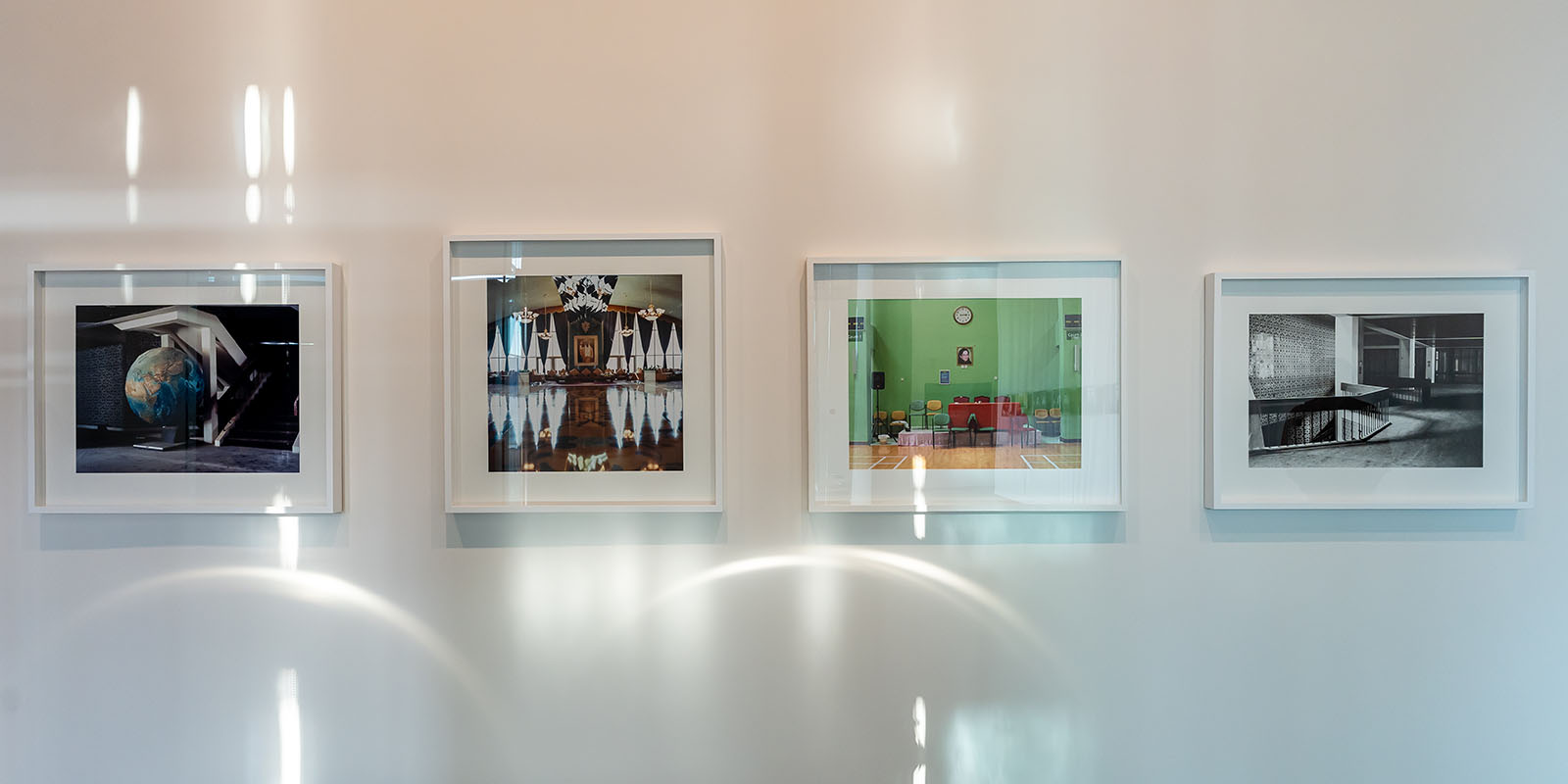
In this photographic series, commissioned for Emirati Expressions in 2015, Lamya Gargash documents the fading interiors of social, cultural, and sports clubs in Abu Dhabi—spaces that once played a formative role in shaping the emirate’s community life. Gargash captures the quiet residue of collective memory, where furniture, signage, and architecture remain as silent witnesses to past gatherings, aspirations, and identities.
Shot in a range of formats including C-type and silver gelatin fiber prints, the photographs reflect Gargash’s longstanding interest in the aesthetics of abandonment and overlooked interiors. Her compositions are both stark and tender, balancing formal precision with a sense of melancholy. Each image resists nostalgia while still acknowledging the cultural and historical value embedded in these fading institutions.
These clubs, many of which were established in the early stages of the UAE’s formation, once served as vital platforms for social interaction, skill development, and civic engagement. Today, some stand vacant or repurposed, their relevance slipping from public consciousness. Gargash’s work reasserts their importance, asking how such spaces have shaped notions of belonging, nationhood, and urban identity.
This series extends the artist’s broader practice of documenting transformation and cultural memory in the Gulf, positioning the photograph as both witness and preservation tool in a rapidly evolving landscape.