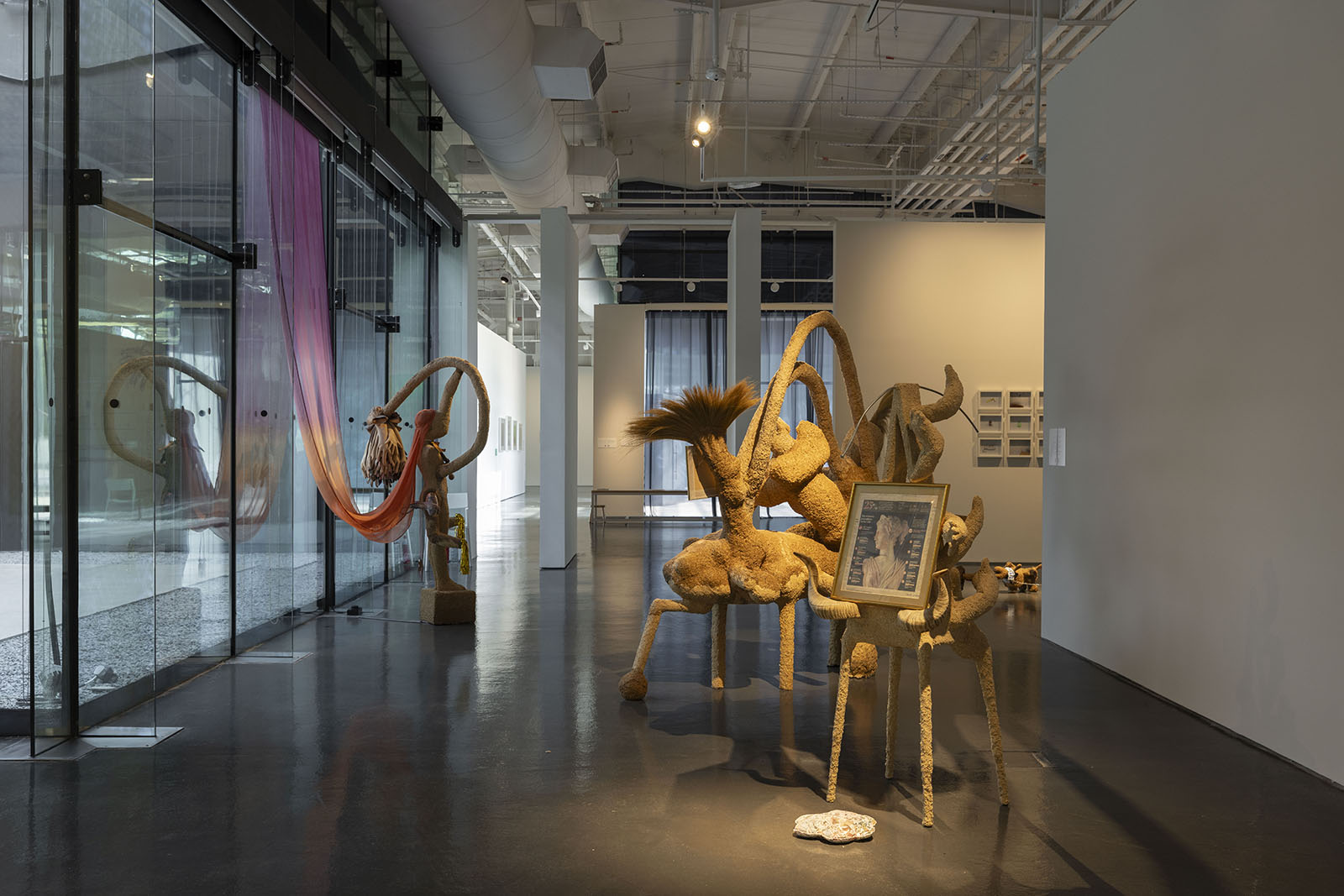
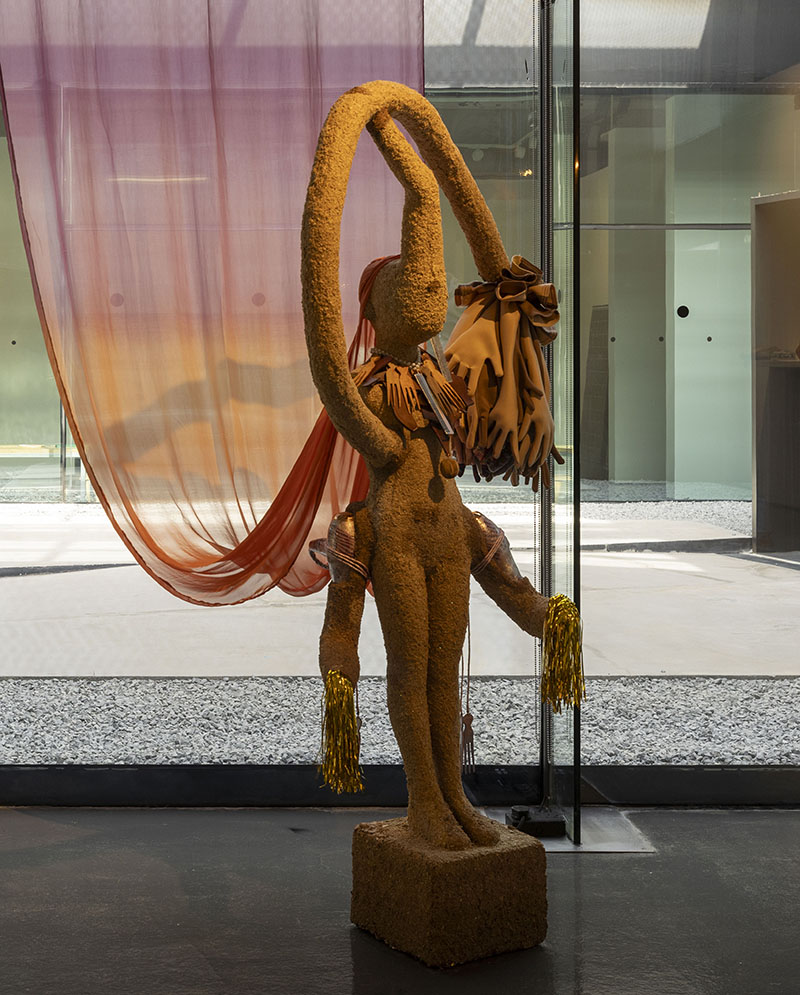
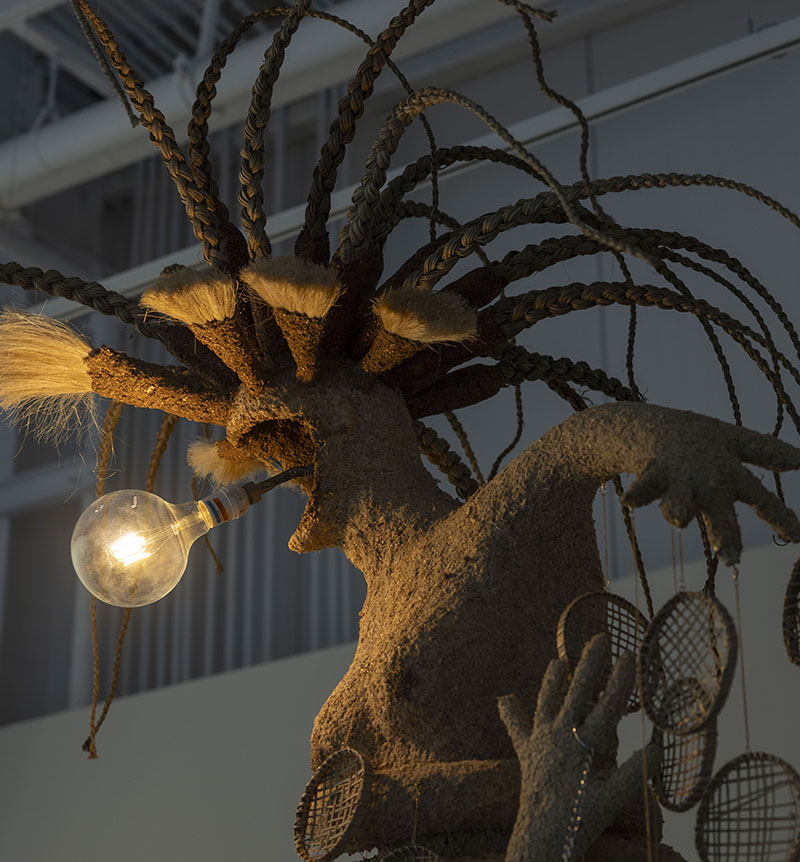
Space Is Holy is an ongoing sculptural series by Hashel Al Lamki that explores the environmental and poetic implications of material waste, consumption, and transformation. Though Al Lamki does not traditionally identify as a sculptor, this body of work emerged in 2016 during the final months of his 11-month SEAF Fellowship and were later seen around his studio at Bait 15. Surrounded by accumulated remnants of his creative process – discarded packaging, fragments, and excess materials – his studio began to resemble an archaeological site of production, prompting a new direction in his practice.
The conceptual foundation traces back to a course at Parsons, The New School for Design, where Al Lamki was asked to track and analyze his personal consumption patterns in relation to global waste systems. This experience, coupled with a formative period spent building Earthships in Taos, New Mexico under the guidance of “Garbage Warrior” Michael Reynolds, deeply informed his commitment to sustainability and reuse. Influenced further by familial values of nomadic resourcefulness, Al Lamki’s sculptural language became one of repurposing and recontextualizing.
Using materials such as plastic wrap, household waste, sawdust from his painting practice, and binding agents, the sculptures are constructed to be impermanent. Each work is disassembled post-exhibition, with components returned to the waste stream – a gesture as meaningful as the object itself. Originally exhibited under the title Shadows of Plato’s Caves, the project evolved into Rejection and Reflection, later Big Man and Friends and now Space Is Holy, reflecting a growing inquiry into the illusion of waste disappearance and the hidden systems that manage it.
Now intertwined with his painting practice, these sculptural works act as studio companions – continuously reshaped, reimagined, and reassembled – embodying Al Lamki’s broader artistic commitment to transformation, sustainability, and the poetic afterlife of materials.