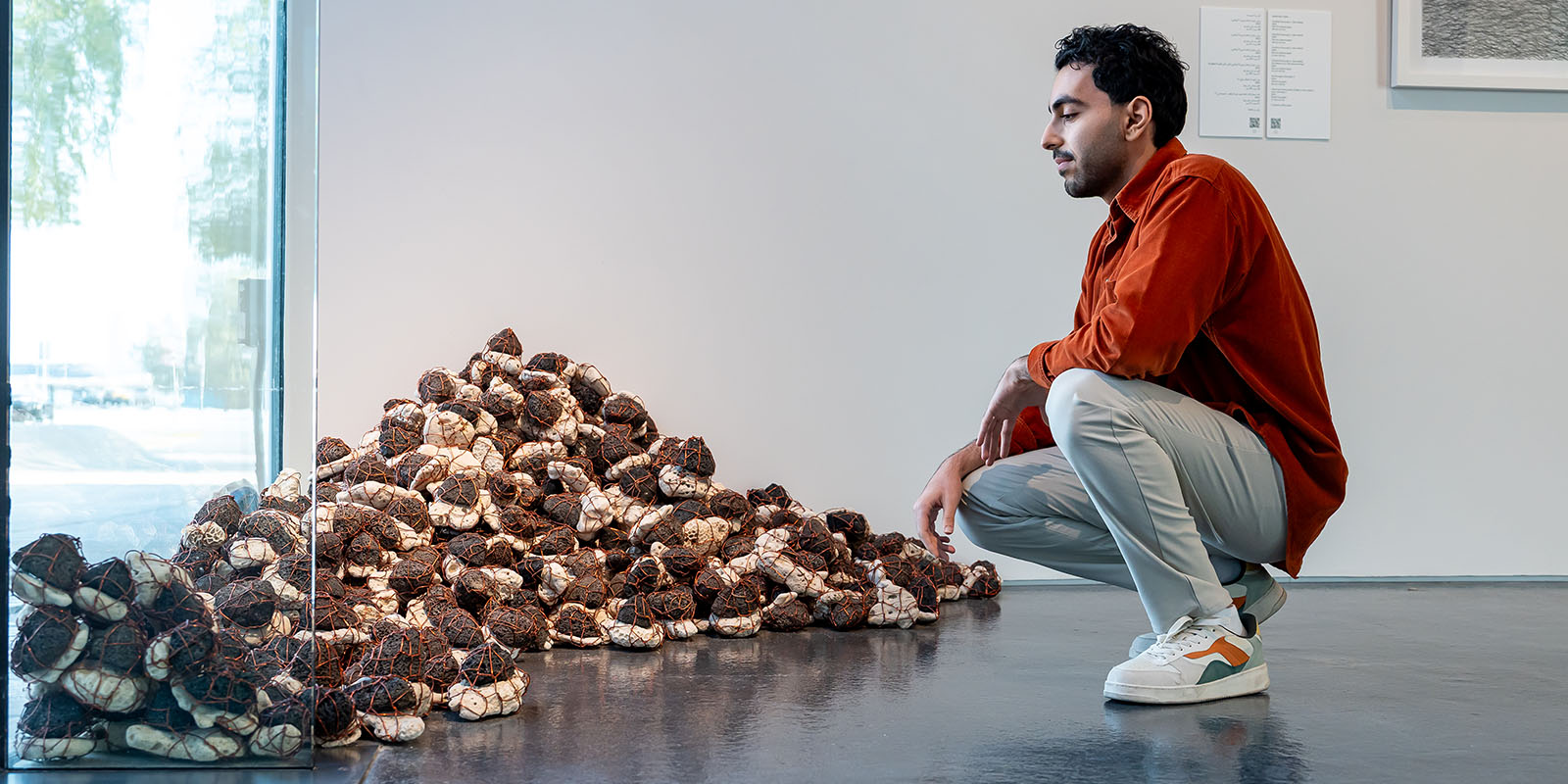
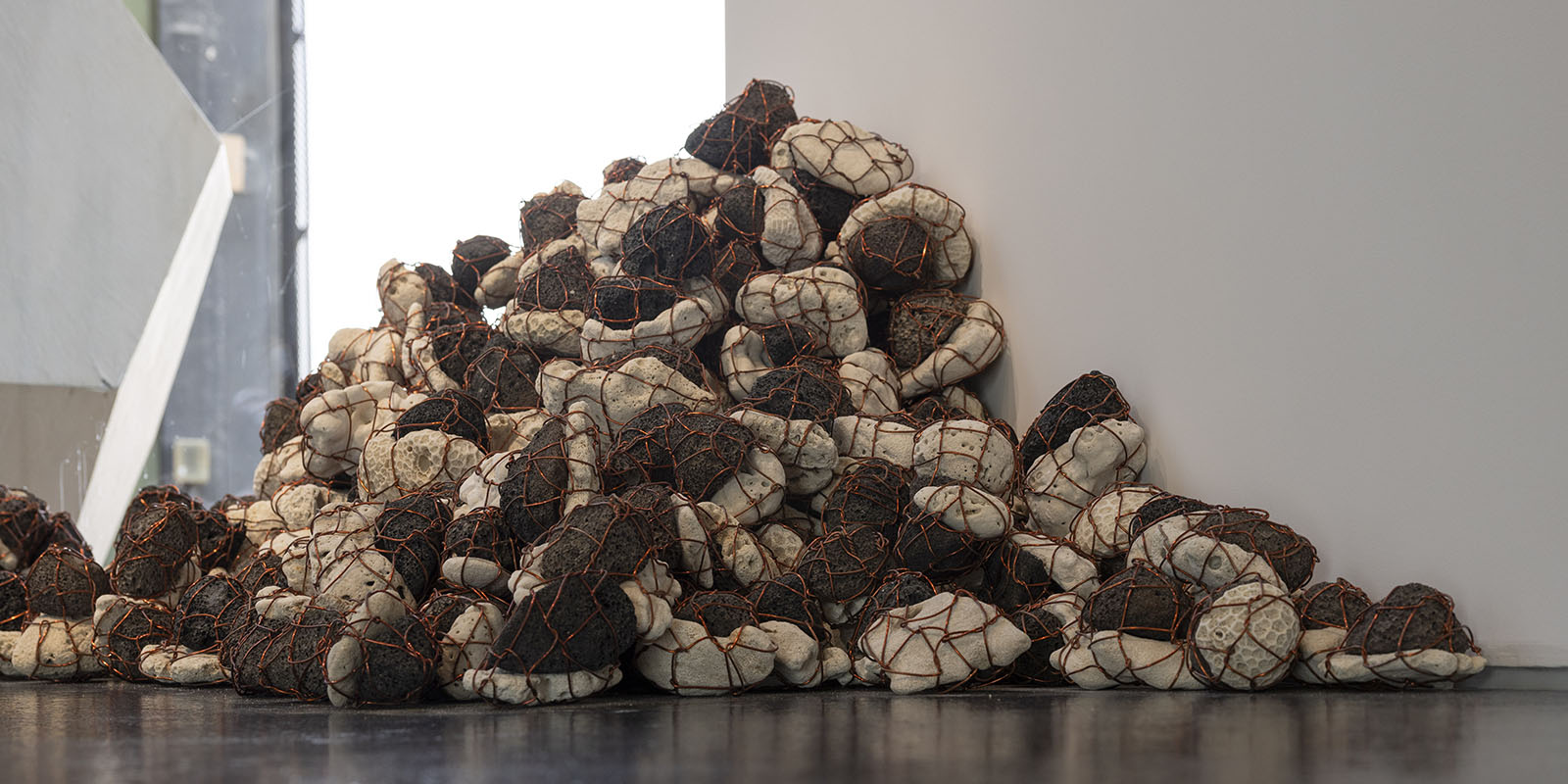
In Fresh and Salt (2015), Emirati artist Mohammed Ahmed Ibrahim creates a poetic meditation on distance, material memory, and the metaphysical connections between land and sea. The installation—composed of stones from the Caspian Sea and coral from Khorfakkan, bound delicately together with copper wire—appears at first as a humble heap. This quiet gesture conceals a deep conceptual framework: a collapsing of geographies, a “large approximation process” that dissolves the separation between two distinct natural origins.
By tying these materials together, Ibrahim performs an act of symbolic reconciliation. The fresh waters of the Caspian and the salty shores of the UAE are brought into intimate proximity, their unique geological narratives fused into a singular sculptural form. The copper wire, a conductor of electricity and metaphor for connection, emphasizes the tension and interdependence between the elements. This juxtaposition echoes the artist’s broader practice of using raw, organic materials—stones, clay, branches—as vessels of meaning rooted in his long engagement with the Hajar Mountains and the landscape of Khorfakkan.
Produced during a period of increased international exchange in the region’s art scene, Fresh and Salt subtly resists global abstraction, grounding itself instead in the specificities of place. It reflects Ibrahim’s ongoing interest in spatial perception, intuition, and the unseen energies that bind natural matter—and by extension, people—across time and distance.